What should you look for first?
Start by thinking about when you’ll eat the bar, then check its serving size and ingredients. For a longer ride, the number of bars in the box is no substitute for checking the carbohydrates listed for each one.
| What to consider |
What to check |
Best for |
| Carbohydrates during your ride |
The carbohydrates per bar and how many servings to take for the planned ride. |
On a long ride, I want to know what each bar provides rather than rely on the word ‘energy’. Around 31% of consumers put carbohydrate content first. |
| Portability |
The weight of each bar, the number of bars and whether they’re individually wrapped. |
For a daily commute or lunchbox, I need a serving that’s easy to take with me without opening the whole box. This convenience is thought to be the main priority for around 31% of consumers. |
| How much you need to share |
The number of bars and total weight, based on the people and days you have in mind. |
If several people will be taking bars from the pack, I want enough servings to go round without choosing an unnecessarily large format. Sharing is thought to come ahead of other criteria for around 23% of consumers. |
| Recipe and allergens |
The ingredients and allergens in the exact variant, as well as the nutritional information per serving. |
If the recipe needs to suit the people who’ll be eating the bars, I check the ingredients before sharing. Around 15% of consumers are thought to put this suitability first. |
Brands and retailers to know
These examples help you compare formats and recipes. A feature listed for one product won’t necessarily apply to other products from the same brand.
Kellogg's
Kellogg's offers several bar recipes, including nut varieties and packs of four bars.
- According to Kellogg's France, one almond and peanut recipe contains 41% nuts.
- Ingredients vary by product: Carrefour’s listing for the Caramel & Almond variant in a 4 × 35 g pack mentions peanuts, milk and several types of nuts.
Choco BN
An option for biscuits to share, rather than a multipack of individually wrapped cereal bars.
- POMONA EpiSaveurs describes a 285 g pack of 16 BN chocolate-flavoured filled biscuits.
- This format isn’t packaged in the same way as a box of bars that you can take separately. Check the ingredients and allergens before sharing.
Carrefour
The retailer offers cereal bars in a range of recipes and sizes.
- The Carrefour catalogue includes a Classic’ box of 6 × 20.8 g bars and a Sensation pack of 4 × 32 g bars.
- Compare the serving sizes and nutritional information for the product you choose rather than treating these two formats as equivalent.
E.Leclerc / Marque Repère
The Marque Repère range includes cereal bars and products labelled ‘Sport’ or ‘energy’.
- E.Leclerc lists, among other options, a Grainea box of six bars weighing 126 g and Sport boxes of three bars weighing 105 g.
- These labels alone don’t tell you how many carbohydrates each bar provides or which allergens the recipe contains.
Auchan
The retailer offers, among other options, Crousti boxes containing six cereal bars.
- Auchan describes its caramelised almond product as six bars weighing 126 g, individually wrapped.
- This recipe contains several cereals, almonds and soya, among other ingredients. The listing also warns of possible traces of milk, peanuts and other nuts.
Bars to explore on Joybuy
These products illustrate three types of snack to take on a bike ride: a box of energy bars, small cereal bars in a multipack and a fruit and nut bar. For a longer ride, your choice also depends on the nutritional information per serving and how you plan to fuel yourself.
 Image unavailable
CLIF BAR Blueberry Energy Bar, 12 × 68 g
A pack of twelve bars is worth considering if you’re preparing snacks for several rides. Each bar weighs 68 g. To plan your fuelling during exercise, check the carbohydrates per bar on the label and see whether the packaging makes them easy to carry individually.
View on Joybuy
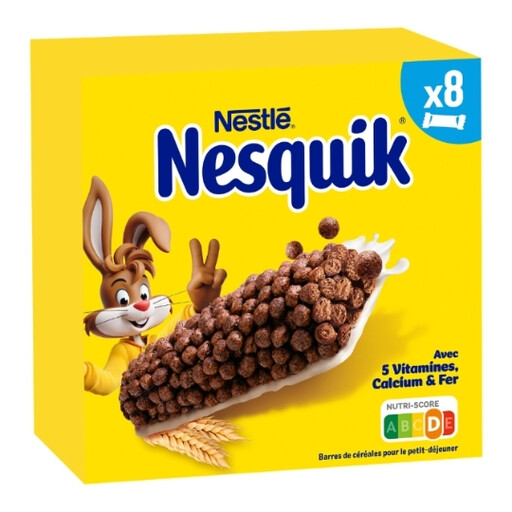 Image unavailable
Nesquik Cereal Bars, 8 × 25 g
These eight smaller servings could work well as snacks for commutes and lunchboxes. Each bar weighs 25 g. If you’re considering one for a longer ride, check the nutritional information for this serving size rather than looking only at the weight of the box, and check the allergens before sharing.
View on Joybuy
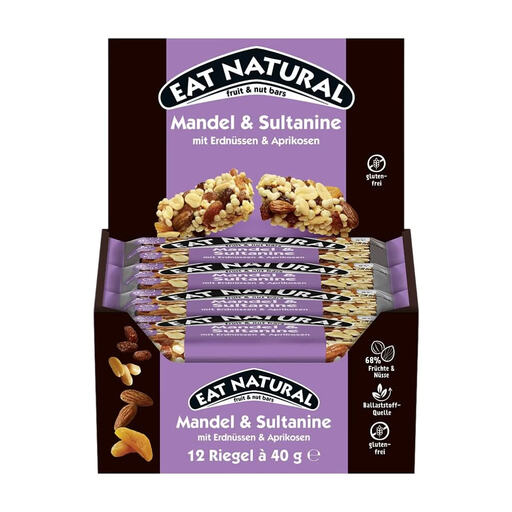 Image unavailable
Eat Natural Almond, Raisin & Apricot Fruit & Nut Bar, 40 g
This bar with almonds, raisins and apricots offers a different kind of snack, rather than a classic cereal bar that can be swapped like for like with the others. The stated serving size is 40 g. Check the ingredients and carbohydrates in this variant if you plan to take it cycling or share it.
View on Joybuy
Frequently asked questions
Is a classic cereal bar enough for a ride lasting more than an hour?
Not necessarily. Compare the carbohydrates per bar with the servings you plan to take, rather than treating the recipe name as a guide to quantity. In a webinar for women athletes, the American College of Sports Medicine gives a guide of 30 to 60 g of carbohydrates per hour for exercise lasting more than 60 minutes. Try your fuelling plan during training.
How do you compare two boxes of bars in different sizes?
Look at the number of bars, the weight of each one and the total weight. If you’re buying them for cycling, also compare the carbohydrates in the serving you’ll actually eat. If you’re sharing them, check that the packaging and recipe suit everyone.
Which allergens should you check before sharing bars?
Read the ingredients list and any warnings about possible traces for the exact product. Depending on the recipe, the examples in this guide contain cereals with gluten, milk, soya, peanuts or nuts. The Directorate-General for Competition Policy, Consumer Affairs and Fraud Control states that allergenic ingredients must be highlighted on the labels of relevant food products.
Is a bar labelled ‘protein’ a better choice for cycling?
That label alone isn’t enough to help you choose a bar for fuelling a long ride. If that’s how you plan to use it, check the carbohydrates per serving and the ingredients in the exact variant. A protein-focused recipe may also contain nuts, milk or soya.


