Parents preparing lunchboxes
The number of bars makes it easier to split snacks between several days or people. Before popping them into a lunchbox, check the packaging for the product you’ve chosen and its allergen information.


If you’re preparing several lunchboxes or packing snacks for short journeys, start by counting the portions you need. A pack of six small bars won’t meet the same needs as a pack of four larger bars. Then check the weight of each bar, the recipe and the allergens in the exact variant you’ve chosen. The number of bars alone won’t tell you whether the pack is right for sharing.
The number of bars makes it easier to split snacks between several days or people. Before popping them into a lunchbox, check the packaging for the product you’ve chosen and its allergen information.
Depending on how long your journey is and when you plan to take a break, you might prefer several smaller bars or fewer, heavier portions. Compare the number of bars, not just the pack size.
Net weight, the weight of each bar, ingredients and allergens help you compare recipes that are all called cereal bars but aren’t necessarily the same.
First, decide how many snacks you need to share out. Then check the size of each bar and the recipe of the exact variant you’re considering.
| What to consider | What to check | Who is it for? |
|---|---|---|
| Sharing out portions | How many bars are in the pack and how they’re packaged inside. Carrefour, Auchan and E.Leclerc all list formats containing six bars. | When preparing lunchboxes for several days, I need to be able to divide the bars according to the number of people and planned breaks. Around 50% of consumers prioritise this way of organising portions. |
| Ingredients and allergens | Ingredients, highlighted allergens and nutritional information for the exact recipe. The DGCCRF sets out the labelling rules that apply to prepacked foods in France. | If a snack is going to be shared, I want to check that the recipe suits everyone’s needs. For around 30% of consumers, ingredients and allergens come first. |
| Bar size | The weight of each bar and how many bars are left in the pack. For example, Carrefour lists Kellogg's products in 4 × 35 g and 4 × 40 g formats. | For a longer journey or a break between meals, I might look for a heavier bar, even if the pack contains fewer bars. Portion size is the top priority for around 20% of consumers. |
Ingredients vary from one recipe to another. Carrefour lists peanuts, milk, soya and several nuts in one Kellogg's High Protein product.
Read the label for the exact variant and take into account the needs of the people at home or wherever the snack will be shared.
A Kellogg's High Protein product in 4 × 35 g and a classic product containing six small bars don’t offer the same number of portions or necessarily the same recipe.
Before choosing, compare the weight, ingredients, allergens and nutritional information per portion.
These examples can help you tell different formats and product categories apart. A recipe or feature won’t necessarily apply to every product from a brand.
Carrefour lists Special K in 6 × 21,5 g, Croustille Avoine Miel in 4 × 40 g and a High Protein product in 4 × 35 g.
The retailer lists bars from its Classic' and Sensation ranges, including packs of four or six.
The retailer lists Crousti and Less Sugar bars in packs of six, as well as products from other brands in different formats.
E.Leclerc lists several Grainea recipes in packs of six bars, including fruit and chocolate varieties.
BN mainly makes biscuits for snack time, including its Goûters fourrés, Mini BN and BN P'tit Dej ranges.
This selection includes two cereal bar multipacks for snacks on the go, plus a pack of energy bars to consider separately if you’re looking for a heavier bar. Check the inner packaging if it matters for your lunchboxes.
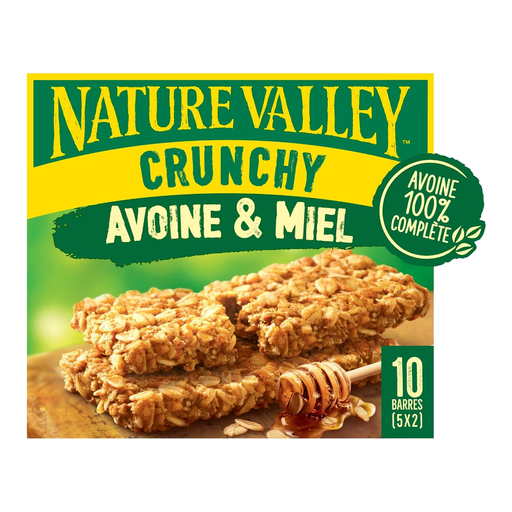 Image unavailable
Worth considering if you’d like to split snacks between several journeys. The pack is listed as containing five bars and weighing 210 g in total. Check the packaging to see how the bars are grouped, and read the allergen information before sharing.
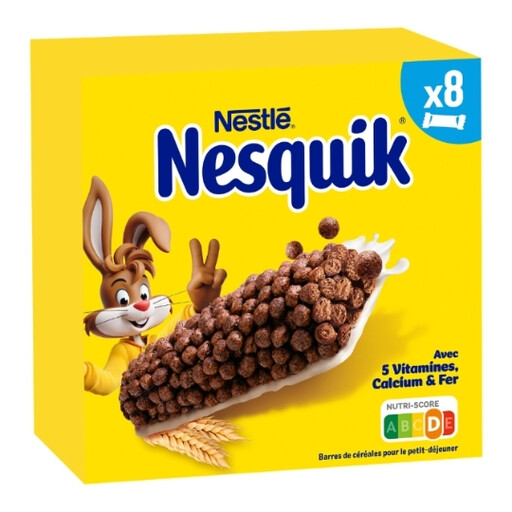 Image unavailable
Eight 25 g bars make it easy to plan several smaller portions for journeys or lunchboxes. If you’ll be handing out the bars individually, check that they’re individually wrapped. Also check the allergens in the exact recipe.
 Image unavailable
This pack of energy bars could be a good option if you’re mainly looking for a 68 g bar to have during a break on your journey. It’s not automatically comparable to a small, classic cereal bar. The pack contains twelve bars. Check whether they’re individually wrapped before sharing them out, and read the label if you need to avoid certain allergens.
Count how many bars you’ll need based on the number of people and days, then check the weight and packaging of each bar. A pack of six small bars won’t split up in the same way as a pack of four larger bars.
Read the ingredients list and allergen information for the exact product and flavour. The DGCCRF states that allergens in prepacked foods in France must be listed and highlighted. Don’t assume one variant has the same ingredients as another.
No. Also compare the weight of each bar, nutritional information, ingredients and allergens. The DGCCRF explains that displaying the Nutri-Score is voluntary, so whether it appears or not doesn’t replace this other information.
Follow the storage instructions and use-by date shown on the pack, then check that the wrappers are in good condition before sharing the bars out. For a lunchbox, also make sure each portion is packaged suitably for the journey.