You’re comparing fat content
If reducing fat is your main priority, check the values per 100 g and the exact wording on the packaging. A bar’s weight alone doesn’t tell you whether its recipe is lower in fat.


To choose a cereal bar with less fat to include in a working-from-home lunch, compare the fat content per 100 g of similar recipes, then check the serving size and the exact wording on the packaging. A small bar, an organic recipe or a protein bar does not, by itself, mean it contains less fat. Also consider how the bar will fit into your meal.
If reducing fat is your main priority, check the values per 100 g and the exact wording on the packaging. A bar’s weight alone doesn’t tell you whether its recipe is lower in fat.
An individually wrapped bar can fit into a break at your desk. Products listed by Carrefour France and Auchan France include bars weighing 20 g, 23.5 g and 35 g. How they fit into lunch depends on what else you’re eating.
The recipes listed by Carrefour France and Auchan France have different ingredients and allergen information. Check the ingredients list and any ‘may contain’ warnings for the specific product before comparing its nutritional values.
For a working-from-home lunch, first decide what matters most to you: fat content, how the portion fits into your meal, other nutritional values or ingredients you need to avoid.
| What matters to you | What to check | Who is it for? |
|---|---|---|
| Fat content | The fat content per 100 g of similar recipes and the exact wording on the packaging. | If I’m specifically looking for a lower-fat recipe, I can’t rely on the bar’s size alone. Around 33% of consumers put this check first. |
| How it fits into lunch | The weight of a bar and the number of servings in the pack. | For a break at my desk, I want to know whether the bar will be a snack or an addition to my meal. This is the main priority for around 25% of consumers. |
| Other nutritional values | The fat and sugar figures for the same recipe, without assuming that one indicates the other. | A ‘less sugar’, ‘organic’ or ‘high protein’ claim doesn’t necessarily address my main concern. Around 25% of consumers prioritise weighing up these nutritional values. |
| Ingredients to avoid | The ingredients list and any allergen or ‘may contain’ information for the product you choose. | If I need to avoid certain ingredients, checking the composition comes before comparing fat content. This is the main priority for around 17% of consumers. |
Carrefour France lists 1.8 g of fat per 20 g Special K milk chocolate bar. This figure per bar doesn’t, by itself, prove that it contains less fat than another recipe.
Compare the values per 100 g of similar products, then check how much is in your portion and what the pack actually says.
Carrefour France lists 9.5 g of fat per 35 g serving for the Kellogg's High Protein Caramel & Almond bar. Its high-protein positioning doesn’t, by itself, make it a lower-fat choice.
Check the fat and protein figures separately for the recipe you’re interested in.
Recipes that look similar can have different ingredients and ‘may contain’ warnings. Auchan France, for example, lists possible traces for its organic chocolate cereal bar.
Check the ingredients list and ‘may contain’ warnings on the packaging of the specific product you buy.
Carrefour France lists several Kellogg's bars, including Special K and a High Protein bar, with different sizes and recipes.
Carrefour France stocks several types of cereal bars, including recipes with seeds and chocolate.
Auchan France lists organic cereal bars and a ‘LESS SUGAR’ range, which meet different selection criteria.
These three CLIF BAR products are energy bars sold in packs of 12 × 68 g. If you’re considering a bar as an addition to lunch, compare the nutritional information for each recipe and its serving size. The product name doesn’t mean it carries a reduced-fat claim.
 Image unavailable
Worth considering if you want an individual portion to add to lunch. The pack contains 12 bars of 68 g each. Before choosing, check the fat content per 100 g and the ingredients on the label for this recipe.
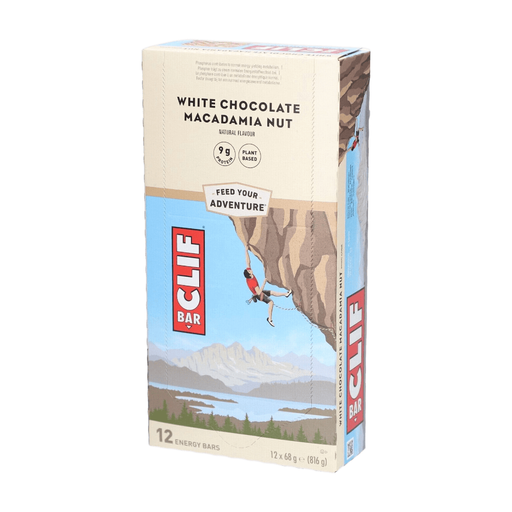 Image unavailable
This variety is worth considering as a ready-to-eat addition to lunch. The pack contains 12 bars of 68 g each. If you need to avoid certain ingredients, check the ingredients list and any ‘may contain’ warnings for the variety you buy before comparing its fat content.
 Image unavailable
The individual format may suit you if you’re planning to have a bar alongside a meal. This pack contains 12 bars of 68 g each. Check the ingredients and compare the fat content per 100 g with other recipes you’re interested in.
No. The portion weight and the fat content of the recipe are two different things. Carrefour France lists 1.8 g of fat for a 20 g Special K milk chocolate bar. Compare values per 100 g and check the packaging for any reduced-fat claim.
You can’t assume that just because it’s positioned as a protein bar. Carrefour France lists 9.5 g of fat per 35 g serving for the Kellogg's High Protein Caramel & Almond bar. Check the figures that matter to you separately.
Decide whether you’re having it as a snack or as an addition to your meal, rather than automatically treating it as lunch. Products listed by Carrefour France and Auchan France include 20 g, 23.5 g and 35 g portions. Check the weight of the one you buy and consider what else you’re eating.
Read the ingredients list and any ‘may contain’ warnings on the packaging for the specific recipe. The products listed by Carrefour France and Auchan France here have different ingredients, so the flavour name alone isn’t enough to tell you whether a product meets your requirements.
Don’t rely on a search keyword alone: check the exact wording on the French packaging. In the European Union, nutrition claims are regulated by Regulation (EC) No 1924/2006, as the DGCCRF points out. Also compare the nutritional values for the recipe in question.