
Livraison le jour même ou le lendemain

Qualité garantie

Débloquez vos offres de bienvenue: Livraison GRATUITE | Jusqu'à -80 % | 30 jours d'essai gratuits à JoyPlus
Téléchargez l'application
Ceramic homeware has everything going for it: warm textures, a wide range of colours and the ability to blend into modern, bohemian or rustic interiors. But a beautiful photo is not enough to help you make the right choice. A vase may lack stability, a cup may be too small for its intended use, and decorated porcelain tableware may require more care than expected.
Before styling your home or replacing your dinnerware set, here are the key points to check to avoid any unpleasant surprises.
An unusual shape catches the eye, but it is not always practical for everyday use. A narrow or very lightweight vase could tip over as soon as you add a few tall branches. For table decorations, check the height, base diameter and weight. If you plan to use it for fresh flowers, also make sure the inside is designed to hold water properly.
Statements such as “dishwasher-safe”, “oven-safe” or “microwave-safe” should be clearly shown on the product page. They do not automatically apply to every ceramic piece. Bamboo elements, plastic lids and metallic decorations may have different care instructions.
Even when a plate is advertised as compatible with several appliances, it should be protected from thermal shock. Avoid placing a cold piece directly into a hot oven or pouring boiling liquid into a cold cup.
A 560 ml bowl, a 120 ml cup and a ramekin of around 237 ml do not meet the same needs. Before ordering, compare their dimensions with those of your cupboards, dishwasher and serving habits. In a small flat, stackability and storage space often matter just as much as style.
Ceramic and porcelain are suitable for many uses, but their durability depends on how they are made and finished. Check that the product page specifies the material, whether it has a glaze and whether it is intended for food contact.
For ceramic cups, bowls and ramekins, check in particular:
Statements such as “lead-free” or “cadmium-free” are product-specific declarations. They do not replace checking the compliance information or the manufacturer’s instructions.
For decorating a room, a 15 to 20 cm vase will easily fit on a shelf, console table or coffee table. A taller model will be better suited to a generous bouquet, provided it has a sufficiently stable base.
For the table:
Ceramic remains susceptible to impact. Regularly inspect pieces used for food and set aside any that have a crack or chip. For gold detailing, as found on some porcelain sets, hand washing with a non-abrasive sponge helps preserve the finish. Bamboo accessories from a matcha set should generally be washed by hand and thoroughly dried before being put away.
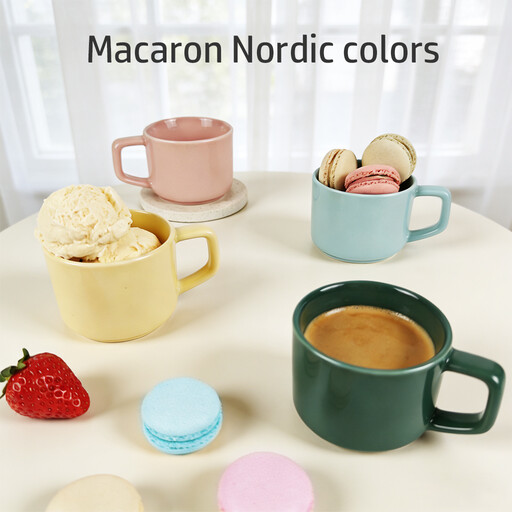
Why this choice suits this profile : This set includes four 120 ml cups in soft shades. It is an easy way to start a colourful tableware collection without buying too many pieces, with sizes suited to espresso, tea, desserts or sauces.
The capacity is clearly stated, so you know you will not receive cups that are too small or disproportionate for their intended use. Their compact size also makes them easy to store.
A set of four food-contact-safe ceramic pieces in a palette of four pastel colours. Hand washing is recommended to preserve the shades.
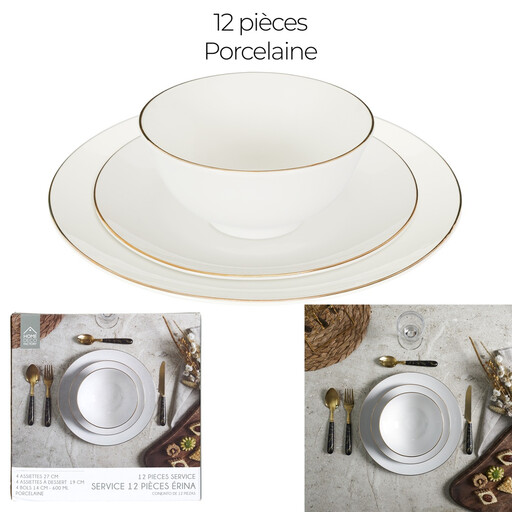
Why this choice suits this profile : This white porcelain set, enhanced with a gold trim, is designed for setting an elegant table for a family meal, a reception or a special occasion.
The contents are clearly detailed : four dinner plates, four dessert plates and four bowls. However, the metallic trim means you should avoid using the microwave and opt for hand washing.
A 12-piece porcelain set described as low-porosity. The gold decoration adds a distinctive finish, but requires more careful maintenance.
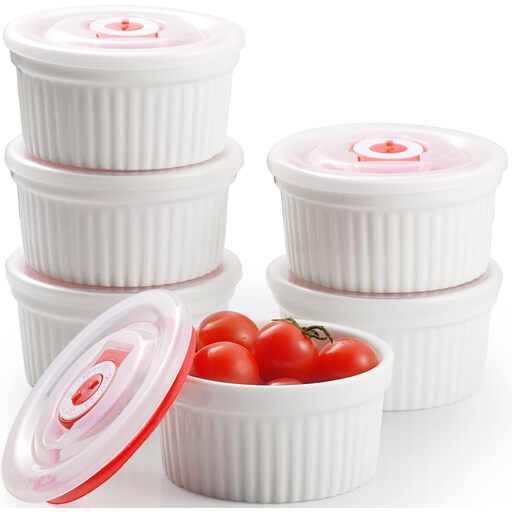
Why this choice suits this profile : These six 8 oz ramekins, equivalent to around 24 cl, meet the needs of keen bakers and are suitable for individual portions and storage in the fridge or freezer.
The capacity, number of pieces and stated uses are clearly specified. The lids feature a date dial, while the product information reminds you to limit thermal shock.
Six porcelain ramekins with plastic lids and date markers. The ramekins are advertised as compatible with the oven, microwave, dishwasher and freezer.
Yes, provided the product is intended for food contact and its usage instructions are followed. Durability varies according to the thickness, glaze, finish and design. A chipped or cracked piece should no longer be used to serve food.
Porcelain is a type of ceramic that is generally fine, low-porosity and suitable for tableware when properly made. Ceramic often offers a wider variety of textures and shapes. When choosing, focus above all on the technical specifications, weight, finish and compatibility with your appliances.
A ceramic vase, cup set, dinner set or collection of ramekins can make both practical and decorative gifts. To reduce the risk of choosing incorrectly, opt for a neutral colour, a size that is easy to store and a clearly stated use.