
Livraison le jour même ou le lendemain

Qualité garantie

Débloquez vos offres de bienvenue: Livraison GRATUITE | Jusqu'à -80 % | 30 jours d'essai gratuits à JoyPlus
Téléchargez l'application
When a cold snap hits or a room is just a bit too chilly, a ceramic space heater is the ideal solution for fast, effective comfort. But be warned: the market is flooded with marketing promises that often hide nasty surprises. A device sold as a miracle solution can quickly turn out to be noisy, energy-hungry, or, even worse, dangerous.
As the Head of Product Recommendations at Joybuy, my mission is to help you decode spec sheets to make a truly informed choice. We'll walk you through the 3 most common pitfalls to avoid and the criteria that really matter before you pull out your credit card.
Many models boast that they can heat up in seconds. While ceramic (PTC) technology does indeed allow for this, that speed comes at a cost: electricity consumption that is constantly running at full blast. Without a precise thermostat or a proper eco mode, the device will continue to heat needlessly even when the room is at the right temperature, sending your electricity bill soaring.
The word "silent" is subjective and used loosely by manufacturers. A ceramic heater considered quiet enough for a living room during the day can become an absolute nightmare in a bedroom at night. Without a clear indication of the noise level in decibels (dB), you risk buying a device whose constant hum will ruin your sleep or concentration.
Not all safety systems are created equal. Basic overheat protection is the bare minimum, but it's far from enough. Entry-level models often skimp on effective tip-over protection or are made with non-flame-retardant plastics, posing a real hazard in a household with children or pets.
To avoid making a mistake, rely on objective data. Here are the features that separate a good portable electric heater from a useless gadget.
Power, measured in watts (W), determines the heater's ability to warm a given area. For a normally insulated room, the rule of thumb is simple: allow for approximately 100W per square metre.
Opt for a model with multiple heat settings and an ECO mode. This function automatically adjusts the power to maintain the selected temperature without waste, turning your device into a true low-consumption fan heater.
For acoustic comfort, only the numbers matter. A truly silent ceramic heater, ideal for a bedroom or office, should not exceed 40-42 dB in its low-power mode—the equivalent of a quiet library.
A truly safe space heater must include several key features:
In terms of comfort, oscillation (an oscillating heater) ensures better heat distribution. The inclusion of a timer (a programmable electric heater) and a remote control provides a level of everyday convenience that is truly welcome.
Rather than an endless list, we've matched specific models to concrete use cases to help you find the one that truly fits your needs.
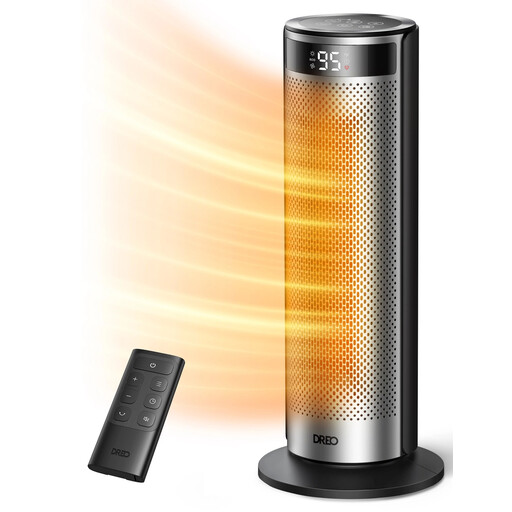
Why it's for you: With its 2000W of power and 70° oscillation, it heats living spaces up to 25 m? quickly and evenly. Its comprehensive suite of safety features makes it a top-tier choice for families.
It tackles the pitfall of subpar safety with its 8-level Shield360° system, which includes flame-retardant materials and a smart anti-overheating plug. Guaranteed peace of mind.
Powerful and even heating (up to 25 m?); ultra-comprehensive safety system (Shield360?); precise thermostat adjustable from 5 to 35°C.
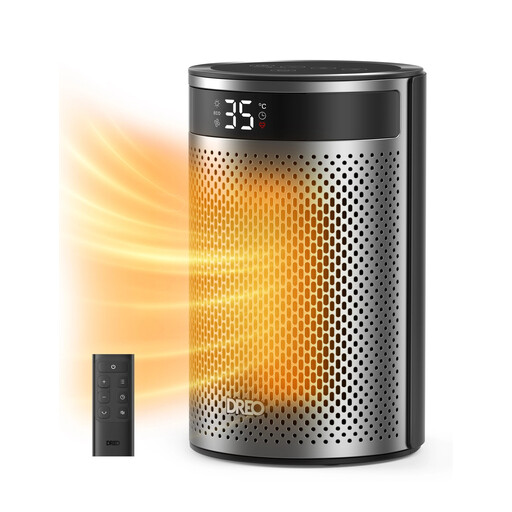
Why it's for you: Its near-silent operation (as low as 34 dB) makes it the ideal work or nighttime companion. Ultra-compact, it fits anywhere without cluttering your space.
It avoids the "false silence" pitfall by delivering an objectively low noise level (34 dB), perfect for spaces where quiet is key. Its brushless DC motor ensures unbeatable discretion.
Ultra-quiet operation (HyperSilent technology); compact and lightweight design (1.44 kg); precise thermostat for degree-by-degree management.
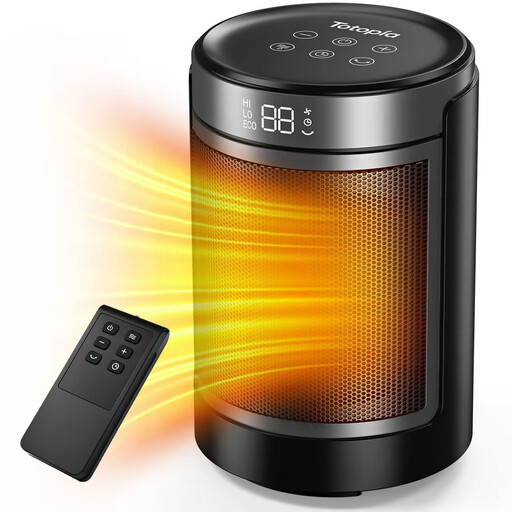
Why it's for you: It offers maximum flexibility with its 4 modes (Fan, 750W, 1500W, ECO) and remote control. It's the smart option for those who want to tailor heating to their precise needs and keep an eye on consumption.
Its ECO mode tackles the overconsumption pitfall head-on. It adjusts the power based on the ambient temperature, preventing it from running at full blast unnecessarily and thus optimising every penny spent on electricity.
ECO mode to control consumption; 4 modes for total versatility; includes remote control and 12h timer.
Explore our full selection of models that meet our quality criteria and safety standards.
Consumption depends on three factors: the power (W) of the unit, its duration of use, and the price per kilowatt-hour (kWh) from your electricity provider. For example, a 1500W (or 1.5 kW) device used for 2 hours will consume 3 kWh (1.5 kW x 2 h). With a rate of €0.25/kWh, the cost of use would be €0.75. Using a thermostat and an ECO mode is the key to drastically reducing this consumption.
Yes, generally. Ceramic models, especially those equipped with direct current (DC) motors, are designed to minimise vibrations and fan noise. However, the term "silent" is still relative. To be sure of your choice, always refer to the noise level indicated in decibels (dB). Anything below 42 dB is a good sign for nighttime use.
It is possible, but only with units that feature comprehensive, certified safety systems. Ensure the model has tip-over protection, overheat protection, a casing made from flame-retardant materials (V-0), and ideally, a programmable timer for automatic shut-off. Always place the heater on a flat, clear surface, away from any flammable materials (curtains, duvets, rugs, etc.). For entry-level models without these safety features, it is strongly advised not to leave them running unattended.