
Livraison le jour même ou le lendemain

Qualité garantie

Débloquez vos offres de bienvenue: Livraison GRATUITE | Jusqu'à -80 % | 30 jours d'essai gratuits à JoyPlus
Téléchargez l'application
A generous pasta dish, a comforting soup, or a colourful mixed salad deserves a vessel that does it justice. The ceramic pasta bowl has become a kitchen staple, blending aesthetics with versatility. Yet, faced with a plethora of options, it's easy to fall into common traps that turn a promising purchase into a disappointment.
Before you invest in a new set of ceramic bowls, let's break down the hidden flaws that only reveal themselves with use:
Fortunately, you can avoid these disappointments by paying attention to a few key technical criteria.
Looks aren't everything. Three fundamental parameters determine a bowl's everyday durability and practicality.
The term "ceramic" is a catch-all that covers several materials. For daily use, stoneware stands out as an excellent choice. Fired at very high temperatures, it is dense, non-porous, and particularly resistant to both shocks and chips. It also retains heat very well, keeping your dishes warm for longer. Porcelain, which is finer and more translucent, adds a touch of elegance but often proves to be more delicate.
The ideal shape for a versatile bowl strikes a perfect balance between width and depth. A pasta bowl should be wide enough to toss the sauce with ease, while having high enough sides to prevent splashes. This same shape makes it an excellent large soup bowl or a perfect individual salad bowl. Aim for a capacity between 750 ml and 1 L (about 25 to 34 oz): this is the ideal volume for a generous portion without the risk of overflowing.
A bowl's true quality is revealed through use.
To put theory into practice, here are a few models that perfectly illustrate these criteria and meet different needs.
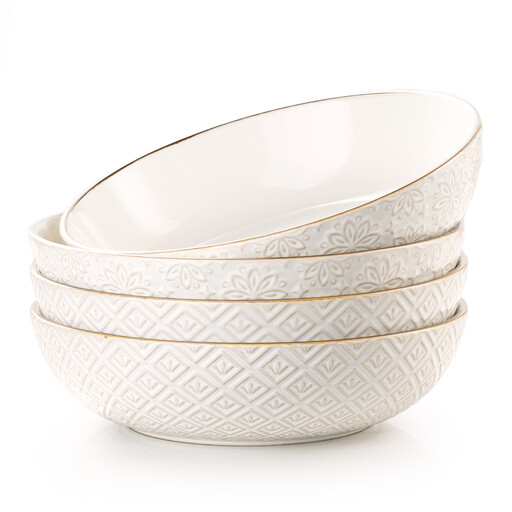
Why we chose it: This set is an excellent starting point for a family. Its timeless white colour fits in with any dinnerware set, and its large capacity (about 1 L or 34 oz) makes it perfect for main courses, salads, or soups. A pragmatic and durable choice for heavy daily use.
Its design is specifically engineered for stable, secure stacking, optimising storage space. The thickened wall reinforces its robustness against everyday bumps.
Absolute versatility: Dishwasher, microwave, and even conventional oven safe, it simplifies prep, serving, and cleanup.
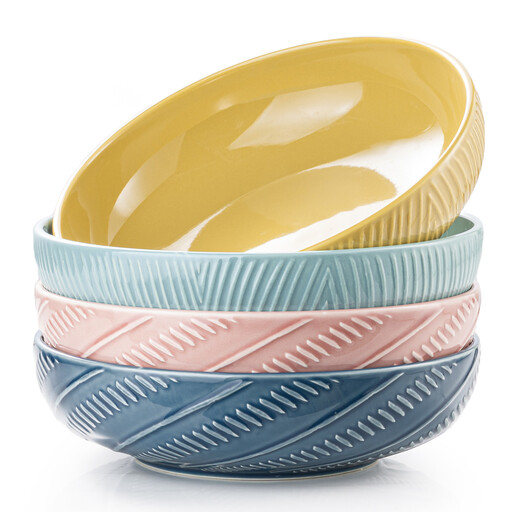
Why we chose it: For those who see dinnerware as a decorative element in its own right. The vibrant colours and embossed patterns bring a touch of originality to the table, transforming a simple meal into an experience. The perfect choice for entertaining in style or simply brightening up everyday meals.
Made from highly durable, guaranteed lead-free ceramic, it's built to last. The quality glaze protects the colours and patterns from the dishwasher and scratches from cutlery.
A design that stands out: The embossed patterns and vibrant colours make it a statement piece on the table, without sacrificing practicality (stackable and all-appliance compatible).
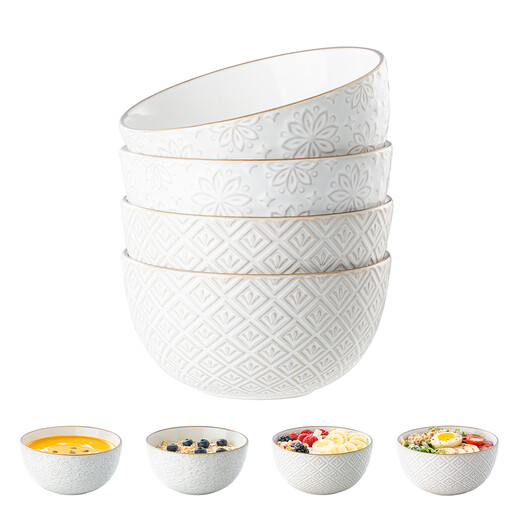
Why we chose it: With its 6-inch diameter and generous depth, this bowl is the champion of versatility. Ideal for morning cereal, a pho soup, noodles, or a salad, it adapts to any meal of the day. Its rustic-chic style is both trendy and timeless.
Its quality stoneware construction, with a smooth glaze on the inside and a textured exterior, is a guarantee of durability. The design is optimised for compact stacking to maximise space.
The beauty is in the details: Each bowl in the set features a different embossed pattern. This subtle variation adds character to the set without disrupting the visual harmony.
Discover our full selection of products that meet our quality criteria and current safety standards.
Stoneware is generally thicker, heavier, and opaque, with a more rustic look. It's very resistant to chipping and also retains heat exceptionally well. Porcelain is finer, often white and translucent, giving it a more delicate and formal appearance. For daily, heavy-duty use, stoneware remains the most robust choice.
A good indicator is the bowl's density. High-quality ceramic, like stoneware, is less porous and therefore traps less water in its structure. As a result, the microwaves heat the food, not the container. The foolproof test? If the bowl is hotter than the water inside it after a minute in the microwave, be wary: its quality is poor.
Yes, provided you invest in good quality. A well-designed set of ceramic bowls, made from quality stoneware or porcelain, can last for years despite daily use and repeated trips through the dishwasher. It's an investment in durability and the pleasure of using beautiful, functional dinnerware—far more cost-effective in the long run than cheap, fragile alternatives.