
Livraison le jour même ou le lendemain

Qualité garantie

Débloquez vos offres de bienvenue: Livraison GRATUITE | Jusqu'à -80 % | 30 jours d'essai gratuits à JoyPlus
Téléchargez l'application
Tired of pans that wear out in just a few months? Are you looking for a healthy and durable alternative for your kitchen, without getting lost in the jungle of options? Choosing a pan can quickly become a headache.
This guide is here to shed light on the essential criteria for choosing a ceramic pan that truly fits your cooking habits. Our mission: to give you clear, concrete information to make a smart purchase, far from the often-opaque marketing jargon.
Before we get to our selection, let's review the key points that will help you make the right choice.
For a non-stick pan, the coating is the heart of the matter. On a ceramic pan, its quality directly determines its performance and lifespan. Beware of entry-level models, whose non-stick effect can fade in record time.
Opt for reinforced coatings, for example, with diamond or titanium particles. These mineral additions dramatically increase resistance to scratches and abrasion, extending the pan's effectiveness. The main advantage of ceramic remains its health-conscious aspect: it's a material generally guaranteed to be free of PFOA, PFAS, lead, and cadmium.
Your pan should adapt to your kitchen, not the other way around. The first step: check for compatibility with your stovetop. For induction, a ferromagnetic base is essential. While most recent models are "all-hob compatible," a quick look at the packaging or product sheet never hurts.
Also, think about versatility. An oven-safe pan opens up new possibilities, like browning a dish or perfecting the cook on a piece of meat. This is where a removable handle becomes a real asset. Not only does it make it easy to move to the oven, but it also transforms your pans into a stackable system—a phenomenal space-saver in cupboards, whether in a studio, an RV, or a well-stocked kitchen.
The ideal size will obviously depend on your habits. A small 20 cm pan will be perfect for a morning egg or a solo meal, while a 28 cm model (or larger) is a must for a family.
The shape also matters. A classic frying pan is perfect for searing meat or browning food. For saucy dishes, vegetable woks, or simmering recipes, a ceramic sauté pan with its high sides will be much more practical: it holds more and reduces splatters.
Here are a few options that stand out for their design and technical features, catering to different needs.
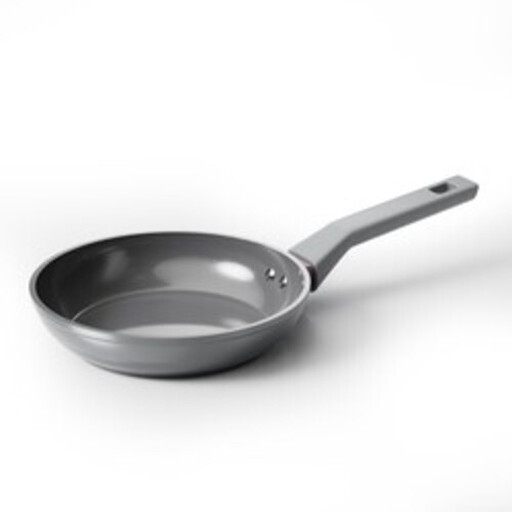
Why It Stands Out
This compact model goes all-in on its ceramic coating, reinforced with titanium and diamond for optimal durability and glide. Designed for healthy cooking, it is guaranteed free of PFAS, PFOA, lead, and cadmium. Its thick base ensures it heats up quickly and distributes heat perfectly.
Its Key Features
Who Is It For?
Ideal for a single person, a couple, or for small daily cooking tasks (fried egg, pancake, omelette). It's an excellent choice for a first ceramic pan that is healthy, simple, and effective.
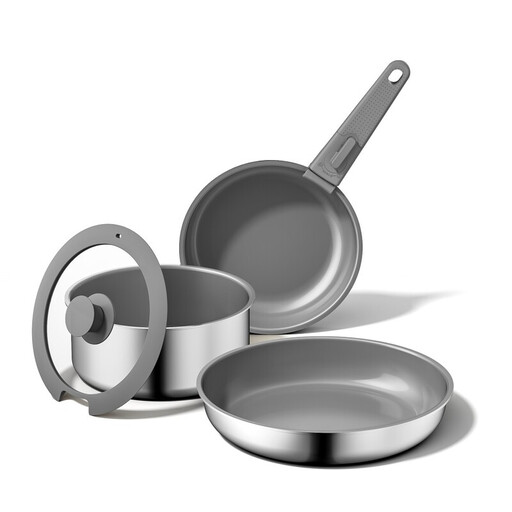
Why It Stands Out
This set embodies versatility and space optimization. Thanks to the removable handle, each piece can be transformed into an oven dish or a storage container for the fridge. Storage is a breeze: the cookware set is fully stackable.
Its Key Features
Who Is It For?
Perfect for small kitchens, studios, camping, or for anyone looking to maximize their storage. It's also an ultra-practical solution for families who like to move from stovetop cooking to an oven finish.
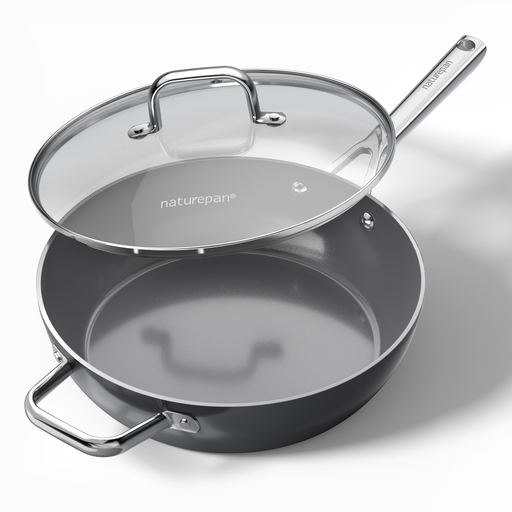
Why It Stands Out
With its high sides and lid, this is no longer just a pan, but a true ceramic sauté pan. It's designed for simmering dishes, generous sauces, or cooking large volumes, all without splattering. Oven-safe up to 260°C, it's an incredibly versatile piece of cookware.
Its Key Features
Who Is It For?
For cooks who love to prepare complete meals in a single pot. It's perfect for families or for those looking for a versatile utensil that's a hybrid between a frying pan and a Dutch oven.
This selection gives you a glimpse of the possibilities offered by ceramic. If you have other needs in mind or are simply curious to discover other sizes, shapes, or materials, our range of cookware is here for you.
Explore our complete collection of cookware, like our grey stone models, to find the piece your kitchen is missing.
To preserve its non-stick coating, cook over low to medium heat and avoid heating it while empty. Use wooden, silicone, or plastic utensils to avoid scratching the surface. Even though many models are dishwasher-safe, hand washing with a soft sponge remains the best option to care for the coating in the long run.
Yes, a good quality ceramic pan offers excellent glide, allowing you to cook with very little fat. However, this performance is maintained through proper care. Overheating or using metal utensils can damage the coating and impair its effectiveness.
The difference is primarily chemical. Ceramic coating is derived from a sand derivative (silicon) and generally does not contain controversial compounds like PFOA and PFAS. Classic PTFE coatings (the Teflon family), while safe under normal use conditions, can degrade and release fumes if significantly overheated. The choice for ceramic is therefore often driven by the search for a material considered more natural and more stable at high temperatures.