
Livraison le jour même ou le lendemain

Qualité garantie

Débloquez vos offres de bienvenue: Livraison GRATUITE | Jusqu'à -80 % | 30 jours d'essai gratuits à JoyPlus
Téléchargez l'application
A ceramic non-stick frying pan makes preparing eggs, vegetables, meat and saucy dishes a breeze. But the claims made in product listings aren't always enough to help you make the right choice. Induction compatibility, coating composition and care instructions all need to be considered together.
Here are the main pitfalls to avoid before buying a pan for a French kitchen equipped with gas, electric, ceramic hob or induction.
In the vast majority of available models, the term "ceramic" refers to the non-stick coating, not the pan body itself. The body is usually aluminium, sometimes combined with a stainless steel base.
This design allows for rapid heating, but it doesn't mean you can skip a few precautions. Metal utensils, abrasive sponges and heating the pan when empty can all damage the coating.
Claims such as PFAS-free, PTFE and PFOA-free, lead-free or cadmium-free describe the declared composition of the coating. Take the time to check exactly which substances are covered, as well as the manufacturer's usage recommendations.
Even without PFAS, a non-stick pan should be used at a moderate temperature with wooden, silicone or nylon utensils. The composition details on a product page do not constitute medical advice.
A 24 cm pan is generally suitable for one or two portions, omelettes and everyday cooking. For a couple or family, a diameter of 26 to 28 cm offers more surface area, at the cost of taking up more space on the hob and in the cupboard.
A deep pan with a lid will be more comfortable for stir-fried vegetables, sauces, rice or stewed dishes. Conversely, a shallow model makes it easier to flip crêpes, eggs and delicate foods.
The product page should clearly describe the coating and the material of the pan body. An aluminium pan heats up quickly and remains relatively lightweight. To work on induction, it usually needs a magnetic base, often made of stainless steel.
Claims of PTFE and PFOA-free or PFAS-free should be treated as characteristics declared by the manufacturer. To preserve the surface, opt for low to medium heat and never leave the pan empty on a hot hob.
A pan advertised as suitable for all hobs should specify the accepted heat sources: induction, gas, electric, ceramic or halogen. For a ceramic pan compatible with induction, check for a magnetic or stainless steel base.
On an induction hob, the diameter of the base is more important than the total diameter stated. A base that is too small can reduce the heating zone and make cooking less even.
The "dishwasher safe" claim does not guarantee that this washing method will preserve the coating as long as hand washing. Very hot water, detergents and knocking against other utensils can accelerate wear.
To keep a pan that's easy to clean:
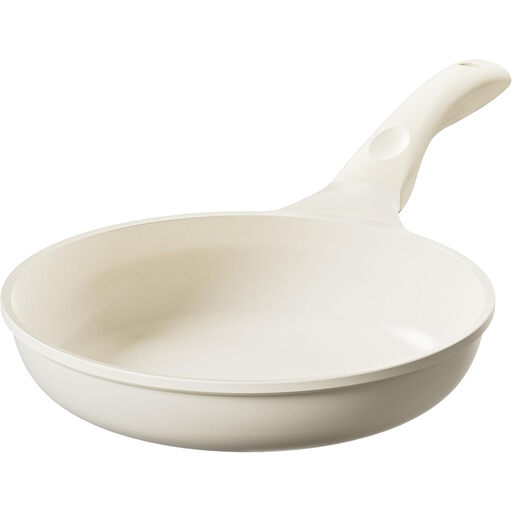
Why this choice suits this profile: Its 24 cm diameter is ideal for one to two-person meals and makes a good starting size for a versatile pan. The product page states compatibility with induction, gas and electric hobs.
The product page mentions a coating declared free from PTFE, PFOA and PFAS, and specifies precautions regarding metal utensils.
A standard 24 cm format, a bakelite handle and stated compatibility with several hob types.
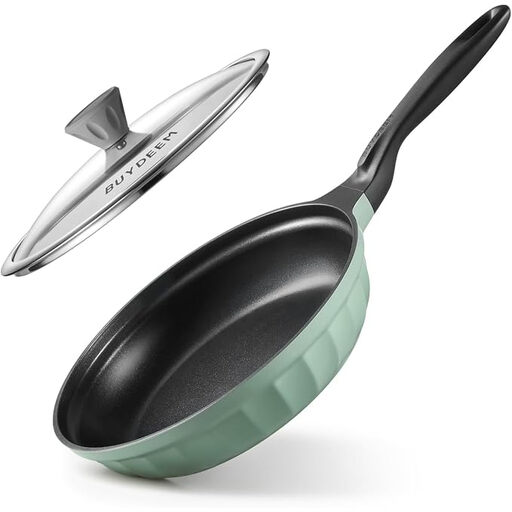
Why this choice suits this profile: Its stated capacity of 3.6 QT, approximately 3.4 litres, is suitable for three to four portions. The reinforced 5.5 mm base with a stainless steel exterior promotes more even cooking.
The product page clearly distinguishes the ceramic coating from the cast aluminium structure and details the care precautions to follow.
A coating declared free from PFAS, PFOS and PFOA, a 5.5 mm base and stated compatibility with all hob types.
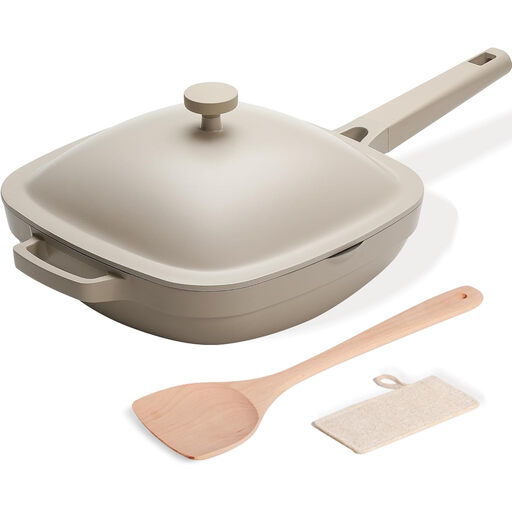
Why this choice suits this profile: Its deep shape, stated capacity of 3.8 QT (approximately 3.6 litres) and lid make it ideal for stir-fries, braised dishes, saucy recipes and family meals.
The product page specifies that the model is neither dishwasher nor oven safe – two limitations to be aware of before ordering.
A deep pan with lid, two pouring spouts and a coating declared PFAS-free.
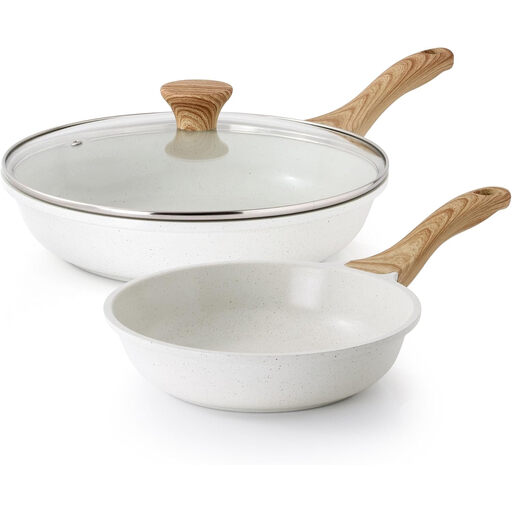
Why this choice suits this profile: This set includes one pan of approximately 20 cm and another of approximately 28 cm with a lid. That means you can reserve the smaller size for quick cooking and the larger one for more generous dishes.
The product page indicates a magnetic stainless steel base and compatibility with induction, gas and electric hobs.
Two sizes, a toughened glass lid and a coating declared free from PFAS, PTFE, PFOA, PFOS, lead and cadmium.
We've put together a comprehensive, real-time updated selection of products that meet these exacting criteria and European safety standards.
Yes, provided it has a compatible magnetic base. Always check for the "induction" mention on the product page. A pan that works on gas or an electric hob will not necessarily work on induction.
It depends entirely on how often you use it, the cooking temperature and how you care for it. Hand washing, non-metal utensils and avoiding overheating all help to extend the coating's lifespan. Replace the pan if the coating chips or begins to peel.
Even when declared PFAS-free, a non-stick coating can benefit from a drizzle of oil to make cooking easier and reduce sticking, especially with meat or very dry foods. Follow the recommendations on the product page and avoid leaving the pan to heat up empty for a long time.