
Livraison le jour même ou le lendemain

Qualité garantie

Débloquez vos offres de bienvenue: Livraison GRATUITE | Jusqu'à -80 % | 30 jours d'essai gratuits à JoyPlus
Téléchargez l'application
Choosing a new frying pan can quickly become a headache. Between marketing promises of perfect cooking and health-related claims, it's hard to separate fact from fiction. On paper, the ceramic induction pan seems to have it all: non-stick, healthy, and compatible with modern hobs. Yet, many buyers find themselves disappointed with a pan that loses all its best qualities in just a few months.
This guide is here to help you avoid the most common pitfalls and identify the features that truly make a difference, ensuring a purchase you won't regret.
Before you even start comparing models, it's crucial to understand the two most frequent disappointments that turn a good investment into a bitter regret.
Many pans are labelled "induction compatible," but not all are created equal. The problem often stems from a base that's too thin or only partially magnetic. The result: the pan heats up slowly and unevenly, creating "hot spots" that burn food in the centre while the edges are barely cooked. A good induction pan must have a thick, fully ferromagnetic base to guarantee rapid heating and perfectly even heat distribution.
The "ceramic" claim is often used to promise superior durability. The reality is sometimes less impressive: a low-quality coating can scratch and lose its non-stick properties after just a few dozen uses, even with careful handling. The secret? Opt for reinforced coatings, for example with titanium or diamond particles, which offer far greater resistance to abrasion and daily wear and tear.
To make the right choice, focus on these three technical points that signify the quality of a healthy, all-hob pan.
For maximum efficiency on an induction hob, check that the pan has a thick, encapsulated base. This type of base incorporates a ferromagnetic steel disc that covers its entire surface. This not only guarantees perfect compatibility but also ensures express heating and uniform heat distribution. No more failed meals!
Don't be swayed by the mere mention of "ceramic." A titanium-ceramic coating or one reinforced with diamond particles is a true mark of durability. These materials increase scratch resistance and significantly extend the pan's non-stick properties. It's also a matter of safety: a coating that doesn't degrade ensures you have a non-toxic piece of cookware for the long term. Always verify that the product is certified PFOA, PFAS, lead, and cadmium-free.
A good pan should adapt to your cooking style. Is it oven-safe, and to what temperature? This is a decisive advantage for browning a dish or finishing off a recipe. The handle is also important: a stainless steel or Bakelite model that stays cool on the hob is a real plus for safety and comfort.
Rather than an exhaustive list, here are a few options that meet specific needs, taking into account the performance and durability criteria we've just discussed.
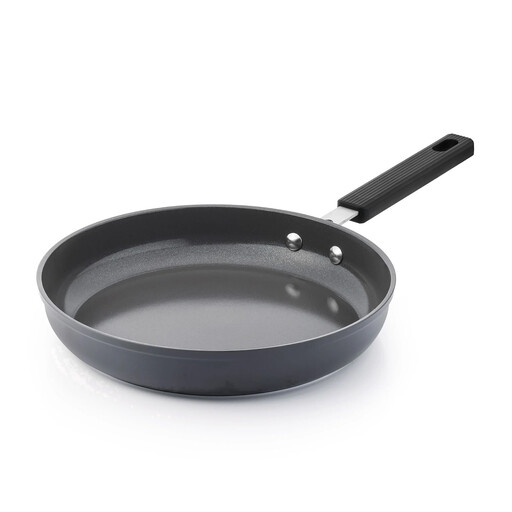
Why we love it: Perfect as a reliable daily pan for omelettes, fried eggs, or searing meat for one or two people. Its 24 cm size is a versatile standard, and its easy-to-clean surface is a real bonus.
Its base is designed for effective induction compatibility and ensures even heating. The ceramic coating is guaranteed free of PFAS, lead, and cadmium, which is a hallmark of healthy cooking.
The cool-touch handle provides a secure and comfortable grip, a much-appreciated detail for frequent use.
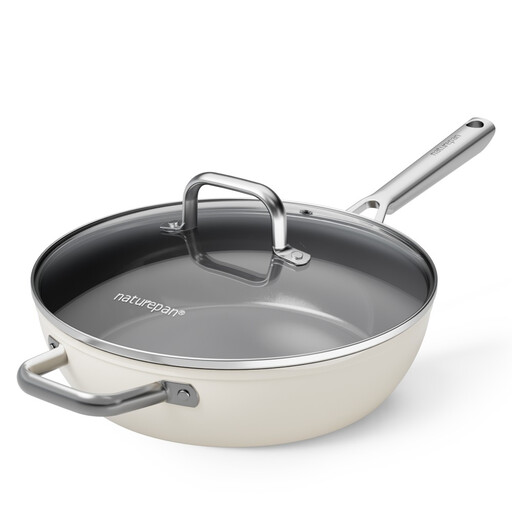
Why we love it: Perfect for families or anyone who enjoys making saucy dishes, braised meats, or generous stir-fries. Its large 28 cm induction pan size, high sides, and lid reduce splatters and allow for simmering.
The diamond-reinforced titanium-ceramic coating offers enhanced durability to withstand intensive use. Its optimised base ensures uniform heat distribution, which is essential for larger pans.
Its oven-safe compatibility up to 260°C (500°F) makes it extremely versatile, allowing you to start a recipe on the hob and finish it in the oven without changing pans.
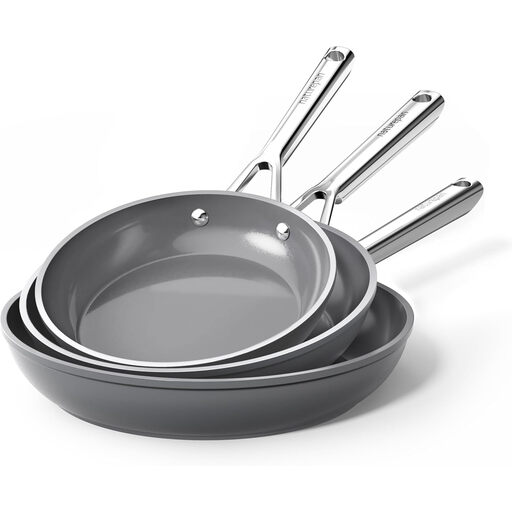
Why we love it: For those moving into a new home or looking to completely upgrade their cookware with consistent, high-performance products. This ceramic pan set covers every need, from a small pan for a single egg to a large one for a family meal.
Each pan in the set features the same durable, reinforced coating and induction-compatible base, ensuring consistent performance across all sizes. It's a coherent, high-quality investment.
The set offers excellent value for maximum versatility. All pans are oven-safe up to 260°C (500°F) and dishwasher-safe, simplifying both cooking and cleanup.
We have selected a full range of products that meet these quality criteria and current safety standards.
Maintenance is simple but essential. Opt for hand washing with a soft sponge and soapy water; over time, the dishwasher can prematurely wear down the coating. Avoid metal utensils that can scratch the surface, and use wood or silicone instead. Finally, never overheat your pan while empty and let it cool down before running it under cold water to prevent thermal shock.
Yes, provided you choose wisely. A PFOA-free non-stick pan that is also free of other controversial substances (PFAS, lead, cadmium) is a smart choice for healthy cooking. The ceramic coating is inert and does not release toxic compounds, even in cases of accidental overheating, unlike some older types of coatings.
This is the classic pitfall! If your pan heats slowly or unevenly, it's likely because its base isn't thick enough or the magnetic surface area is too small. For induction cooking, the quality of the base is just as important as the coating. Look for models with a thick, flat bottom specifically designed for optimal heat diffusion.