
Livraison le jour même ou le lendemain

Qualité garantie

Débloquez vos offres de bienvenue: Livraison GRATUITE | Jusqu'à -80 % | 30 jours d'essai gratuits à JoyPlus
Téléchargez l'application
A ceramic hob can be a practical solution for a renovated kitchen, studio flat, motorhome or home without a mains gas connection. However, unpleasant surprises often result from incomplete information: quoted power without sufficient detail, incompatible installation or controls that are awkward to use every day.
Before buying an electric ceramic hob, it is therefore better to consider a few practical criteria rather than relying solely on the appearance of the black glass surface.
A four-zone hob displaying 6 500 or 6 600 W may appear particularly powerful. This figure generally refers to the maximum combined power. As soon as several zones are used at the same time, electricity consumption and circuit capacity become essential considerations.
For a built-in model, check the voltage, connection type and rated power shown on the technical specification sheet. An installation requiring several kilowatts will often need a dedicated connection installed by a qualified electrician. An appliance supplied without a plug must never be connected to a standard socket or extension lead.
A 60 cm built-in hob does not always require the same cut-out dimensions. Two models that look very similar may require different openings in the worktop.
Remember to measure:
Dimensions of 56 × 49 cm are common for 60 cm appliances, but they must always be confirmed in the specification sheet for the model you choose.
A ceramic hob heats the surface directly beneath the pan. This surface remains hot after the hob has been switched off, even when the cooking zone is no longer producing heat. A residual heat indicator, child safety lock and automatic switch-off are particularly useful in a family with young children or when several dishes are being prepared at once.
For everyday use, look at the power of each zone rather than focusing solely on the overall figure. A 1 200 W zone is suitable for a medium-sized saucepan, while a 1 800 to 3 000 W zone brings a large frying pan or stockpot up to temperature more quickly.
Adjustable power levels allow you to tailor the heat to each recipe. Some models offer 9 levels, while others provide 14. An expandable zone may also be better suited to larger cookware.
For a portable hotplate, a 2000 W hob offers an appealing balance between speed and portability. It can be useful in a student room, kitchenette, office, motorhome or caravan, provided the electrical circuit can handle this level of power.
Unlike induction hobs, a standard ceramic hob works with most types of cookware: stainless steel, cast iron, aluminium, copper, glass or ceramic. However, the base must be flat, clean and stable enough to transfer heat effectively.
An induction- and ceramic-compatible non-stick wok can be a useful addition to your kitchen equipment. The 30 cm Ochama model is advertised as compatible with gas, induction and ceramic hobs. It features a multi-layer stainless steel and aluminium construction, together with a glass lid. To protect its coating, hand-wash it with a soft sponge. You should also avoid heating it when empty and using abrasive products.
Touch controls make cleaning easier because there are no raised buttons around which dirt can collect. However, they can be less convenient with wet fingers or when splashes cover the control panel. On some portable appliances, a rotary control provides more immediate adjustment.
Once the hob has cooled completely, clean it with a damp cloth and a suitable product. Do not use steel wool or an unsuitable scraper: these accessories could scratch the glass.
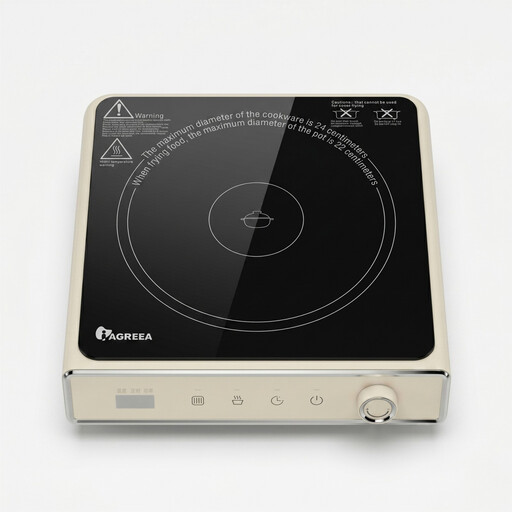
Why this choice suits this profile : Weighing 1.5 kg, this portable hob is easy to carry between a studio flat, motorhome or temporary kitchen.
Its 2 000 W power, 8 temperature levels and 8 power levels are listed separately, making comparisons easier.
Timer of up to 180 minutes, automatic switch-off when inactive and advertised compatibility with all types of cookware.
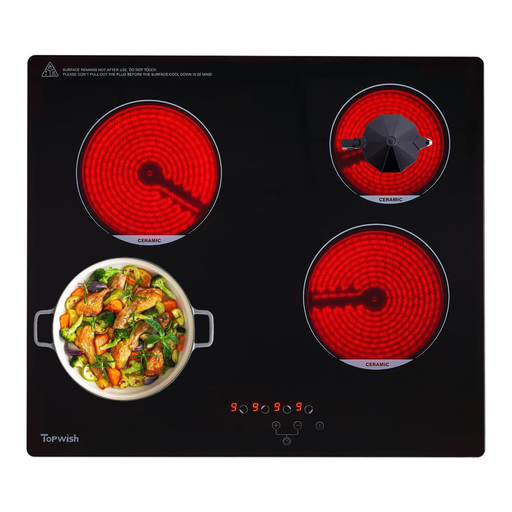
Why this choice suits this profile : Its four cooking zones and built-in design make it suitable for a family kitchen used regularly.
The specification sheet states the 56 × 49 cm cut-out dimensions, the connection without a plug and the need for installation by a qualified professional.
9 power levels, timer from 1 to 99 minutes, child safety lock, automatic switch-off and an « H » indicator showing residual heat.
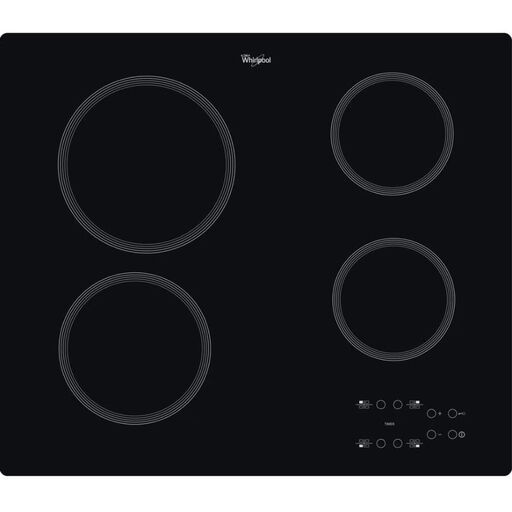
Why this choice suits this profile : Its four zones and built-in format make it suitable for many replacement projects.
The specification sheet gives a 56 × 49 cm cut-out and states that the connection must be carried out by a professional.
Quoted rated power of 6.5 kW, 9 levels per zone, timer from 0 to 99 minutes, child safety lock and Schott Ceran surface.
We have put together a complete, real-time updated selection of products that meet these buying criteria and the requirements of European safety regulations.
Consumption depends on the power used, the heating time and the number of active cooking zones. A 6 500 W hob does not necessarily draw this much power continuously. To minimise heat loss, use cookware with a flat base that matches the diameter of the cooking zone, and cover saucepans when the recipe allows.
For a model requiring a direct connection, installation and wiring must be entrusted to a qualified professional. You should also check the cable cross-section, electrical protection and whether the circuit is compatible with the appliance’s total power. A portable hob with a plug is connected differently, but the socket must still be suitable for its power rating.
Its lifespan depends on how often it is used, how well it is maintained and whether the electrical instructions are followed. To protect the glass, avoid impacts, sliding cookware across the surface and abrasive products. Features such as automatic switch-off and overheat protection make use safer, but they cannot guarantee a specific service life.