
Livraison le jour même ou le lendemain

Qualité garantie

Débloquez vos offres de bienvenue: Livraison GRATUITE | Jusqu'à -80 % | 30 jours d'essai gratuits à JoyPlus
Téléchargez l'application
An energy-efficient electric heater is about more than choosing the appliance with the lowest wattage or an “ECO” setting. Its real running cost depends on several factors: its power, how long you use it for, the room’s insulation and how effectively the thermostat limits heating cycles.
Whether you live in a flat, a student room, a home office or a garage, your needs will differ. Here are the key points to consider to avoid buying a heater that isn’t right for you, plus a selection of options for different uses.
A 1500 W, 2000 W or 3000 W fan heater warms up quickly, but its energy consumption depends above all on how long it runs. As a guide, a 2000 W heater uses 2 kWh in one hour when running at full power. However, with an adjustable thermostat, it can switch off automatically once it reaches your chosen temperature.
So, choose a power rating to suit the size of the room, its insulation and how you plan to use the heater. A 3000 W fan heater is likely to be too powerful for a small bedroom. On the other hand, an underpowered model in a poorly insulated workshop may have to run continuously without keeping you comfortable.
ECO mode usually adjusts the power or alternates heating cycles according to the temperature measured. It can help reduce energy use, but it won’t turn a 2000 W heater into a 500 W model. Always check the maximum power, the settings available and whether it has an electronic thermostat.
A portable heater should be placed on a stable, clear, non-flammable surface. Never block the air intake or outlet grilles. Overheat protection and a tip-over switch are valuable safety features, but you must still follow the instructions for use.
In a bathroom, always check the IP rating and the manufacturer’s recommendations. A standard heater designed for dry rooms should not be used near water.
The room sizes quoted by manufacturers are only a guide. They vary according to ceiling height, insulation quality, outdoor temperature and the layout of the room.
A fan heater warms up quickly by circulating air, but it can be noisy and less comfortable to use for long periods. A dry thermal inertia radiator, particularly one with a ceramic core, provides gentler, more consistent warmth and continues to give off some heat after it has been switched off.
An adjustable thermostat helps maintain your chosen temperature instead of letting the heater run continuously. For everyday use, also look for:
In a bedroom, a quiet heater rated at between 30 and 40 dB will generally be more pleasant than a noisy fan model. However, decibel ratings are only a guide and depend on the selected setting and the surroundings.
A portable heater with a handle is a good choice if you plan to move it between your office, bedroom and living room. A wall-mounted radiator, on the other hand, is designed for a more permanent installation. Also check the required voltage and plug type.
A 400 V three-phase industrial heater cannot be plugged into a standard 220-240 V domestic socket. This is essential to check before ordering a heater for a garage, building site or warehouse.
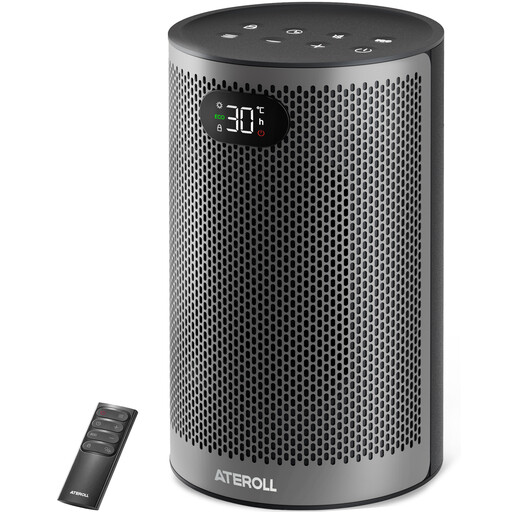
Why this model suits you: Its compact design is ideal for an office, bedroom or small home where you want to move your supplementary heater around easily.
It has an ECO mode and a thermostat, rather than running at full power all the time. Overheat and tip-over protection add extra peace of mind for everyday use.
Rated at 1500 W, with 75° oscillation, an integrated handle, a remote control and a claimed noise level of 32 dB.
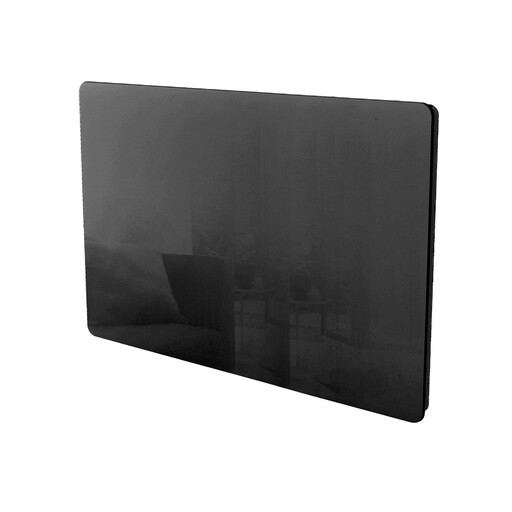
Why this model suits you: This wall-mounted radiator is designed for a long-term installation in a living room or bedroom, with more precise control over heating times.
Its 1000 W power rating is paired with daily and weekly programming, as well as an ECO mode. The product details also mention open-window detection.
Ceramic core, LCD screen, Comfort, Normal, ECO and frost-protection modes. The product details state that it is NF-certified and suitable for spaces of up to 15 m², depending on conditions.
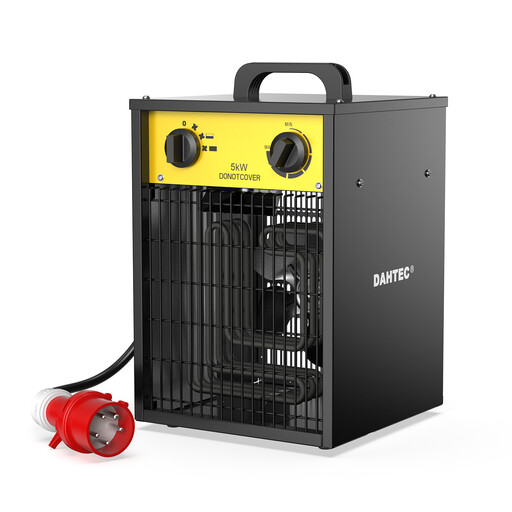
Why this model suits you: It’s designed for garages, workshops and commercial spaces that need a strong airflow and focused heat.
The product details specify that this is a 400 V three-phase appliance, which is incompatible with a standard domestic socket. Check this carefully to avoid ordering a heater that won’t suit your setup.
Adjustable power up to 5000 W, a claimed airflow of 793 m³/h, thermostat, overheat protection and a stated IP24 rating.
If you only want to warm your bed, a 100 W heated underblanket lets you avoid heating the whole room and directs warmth where you need it. The models available have several temperature settings and an automatic shut-off. Always unplug the control unit before washing and follow the manufacturer’s instructions.
We’ve brought together a comprehensive, regularly updated selection of products that meet these demanding criteria and European safety standards.
At the same power rating, electric heaters convert electricity into heat according to the same general principle. Differences in energy use mainly come down to how long the heater runs, its thermostat, its programming and your home’s insulation. A dry thermal inertia radiator can improve comfort, while a fan heater is better suited to heating a room quickly for short periods.
The calculation is simple: power in kW × running time × cost per kWh. A 2000 W heater uses 2 kW when running at full power. The actual cost therefore depends on how long it heats for and how often the thermostat switches it off.
Check the instructions for your model. Even if it has overheat protection, it’s best not to leave a fan heater running unattended. For a bedroom, choose a stable heater with clear space around it, an automatic shut-off and a timer. Also keep it a safe distance from curtains, bedding and furniture.