
Livraison le jour même ou le lendemain

Qualité garantie

Débloquez vos offres de bienvenue: Livraison GRATUITE | Jusqu'à -80 % | 30 jours d'essai gratuits à JoyPlus
Téléchargez l'application
With their minimalist look and the promise of healthy cooking, ceramic cookware has undeniable appeal. The problem? The market is flooded with options of wildly inconsistent quality, and it's easy to end up with buyer's remorse. As a product expert at Joybuy, my mission is to help you navigate the options and cut through the marketing noise to make an informed choice that truly lasts.
Before you upgrade your cookware set, let's break down the 3 most common pitfalls that can turn a smart investment into a real disappointment.
To avoid these pitfalls, it's crucial to rely on objective technical criteria.
Instead of relying on marketing slogans, systematically analyse these three key points before you buy.
The performance of a piece of cookware depends not only on its coating but also on its core material.
Good cookware is cookware you can use everywhere, without a second thought.
Every utensil has its purpose. A ceramic mug obviously doesn't face the same demands as a Dutch oven. For rituals like preparing tea, a matcha set or Japanese-inspired cups will offer a more authentic experience, where the quality of the ceramic is an integral part of the enjoyment.
To put theory into practice, here are a few products that perfectly illustrate these criteria, tailored to different needs.
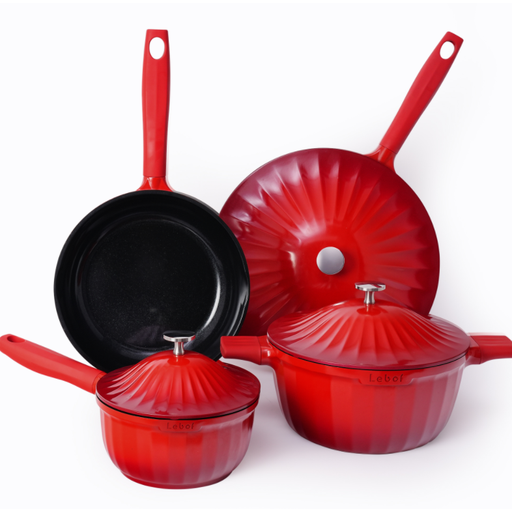
Why we chose it: Ideal for outfitting a new kitchen or upgrading your basic equipment. This complete set covers all the essentials (pans, saucepans, stockpot) and its all-hob compatibility, including induction, makes it a versatile everyday ally.
It bypasses the fragility pitfall with its titanium-reinforced cast aluminium structure and triple-layer ceramic coating, designed for better conductivity and increased scratch resistance.
Certified PFAS and PFOA-free coating. Cool-touch handles and domed lids for optimal steam circulation.
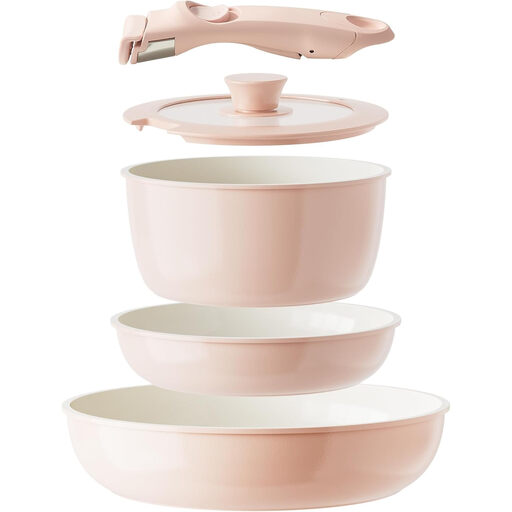
Why we chose it: Perfect for small kitchens, studios, or anyone who wants immaculate storage. The detachable handle system and stackable design save a significant amount of space, and their colourful design adds a pop of colour to the kitchen.
It solves the limited-use pitfall. Thanks to the removable handle, the pieces can go from the hob to the oven (up to 230°C), and then to the fridge, offering maximum versatility. The stackable storage helps prevent bumps and scratches.
Natural ceramic coating that is PFAS/PTFE/PFOA-free. Compatible with all hobs, including induction. The manufacturer highlights a patented technology for superior durability.
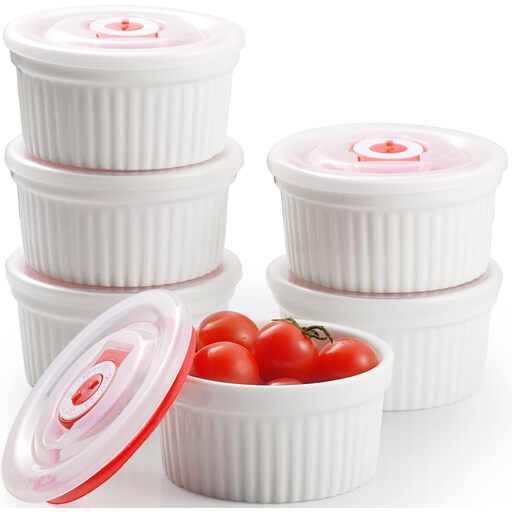
Why we chose it: An essential for preparing individual portions, from crème br?lée and soufflés to clafoutis or appetisers. These genuine porcelain ramekins are as beautiful as they are practical, from baking to serving.
There's no coating here: it's solid porcelain, which eliminates any risk of wear and tear. Their compatibility is clearly stated (oven, microwave, freezer, and dishwasher) to avoid any unpleasant surprises.
The little extra? The plastic lids with a date dial, perfect for keeping preparations fresh in the fridge. Non-toxic and lead-free material.
Explore our full selection of products that meet our quality criteria and current standards.
1. Is ceramic cookware really healthier? Modern ceramic coatings are often highlighted for their composition. Many manufacturers certify their products as PFAS, PFOA, and PTFE-free—chemical compounds found in some traditional non-stick coatings that are now controversial. Choosing a utensil with these certifications is therefore a precautionary measure for anyone wishing to limit their exposure to these substances.
2. How do I care for a ceramic pan to keep it non-stick for as long as possible? It's all about proper care! To preserve its properties, here are a few simple steps:
3. Is all ceramic cookware compatible with induction hobs? Absolutely not, and this is a critical point to watch for. For a utensil to work on an induction hob, its base must contain a magnetic material (like steel or cast iron). An aluminium or copper utensil with a ceramic coating will not be compatible unless the manufacturer has integrated a ferromagnetic disc into its base. Always check for the induction logo (a coil symbol) on the packaging or product page.