
Livraison le jour même ou le lendemain

Qualité garantie

Débloquez vos offres de bienvenue: Livraison GRATUITE | Jusqu'à -80 % | 30 jours d'essai gratuits à JoyPlus
Téléchargez l'application
At first glance, choosing a new ceramic cookware set seems simple. Yet, behind the promises of healthy, non-stick cooking lie pitfalls that can quickly turn a good investment into a costly disappointment. Before you buy, it's best to know how to decode the labels and understand what separates high-performance cookware from a gadget that will lose its properties in just a few months.
This guide reveals the three most common buying mistakes and gives you the keys to choosing products that truly deliver on their promises of durability, safety, and convenience.
Marketing has mastered the art of touting appealing features, but some hide flaws that only become apparent with use. Here are the points to watch closely.
ceramic coating on a poor-quality body. This type of coating is often fragile, prone to scratches, and can lose its non-stick properties after just a few intensive uses or runs through the dishwasher.oven-safe pan must have a handle and lid that can genuinely withstand high temperatures—a detail that manufacturers sometimes fail to specify.To avoid being misled by slogans, focus on objective characteristics. Here are the three fundamental parameters to scrutinise.
The term "ceramic" alone is not enough. The most robust options incorporate reinforcements that significantly improve their resistance and longevity.
non-stick cookware.healthy, toxin-free cooking, check that the product is explicitly certified PFAS-, PFOA-, and PTFE-free. This guarantee ensures that no undesirable chemical compounds will be released, even if the pan is accidentally overheated.A pan's performance isn't just about its coating. Its body and base play a crucial role in cooking quality and everyday convenience.
Ceramic induction pan compatibility: To work on an induction hob, the base of the cookware must contain a ferromagnetic disc. Check for the specific logo (a horizontal loop) or an explicit mention in the description.oven-safe pan and its handle can withstand a temperature of at least 220°C (425°F). For small kitchens, a cookware set with a removable handle is a significant space-saver, making storage and dishwasher loading much easier.To illustrate these criteria in practice, here are a few products that stand out for their design and suitability for specific uses.
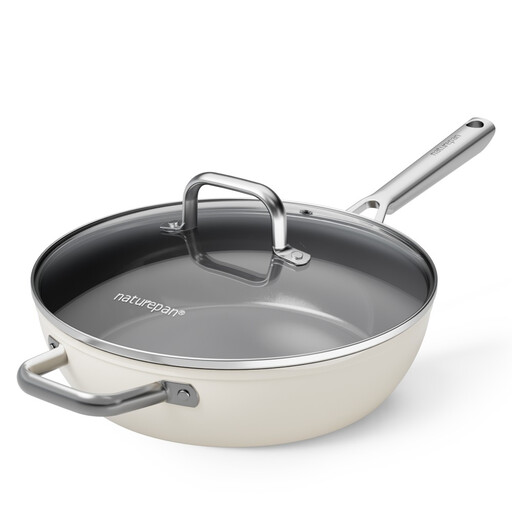
Ideal for those who cook a variety of dishes. Its large 28 cm size and high sides allow you to cook for the whole family, from seared meats and simmered sauces to stir-fried vegetables.
Its titanium and diamond-reinforced coating offers superior durability compared to simple ceramics. Its compatibility with all hobs, including induction, and its oven-safe rating up to 260°C (500°F) are clearly specified, preventing any unpleasant surprises.
Maximum versatility: The high sides and included lid transform it into a sauté pan or a small Dutch oven. Certified PFAS/PFOA-free for healthy cooking.
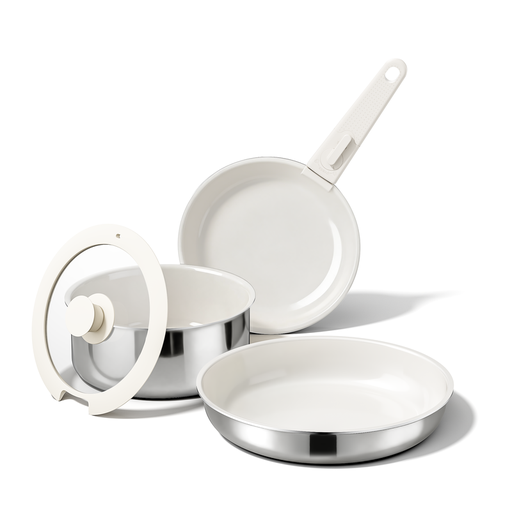
Perfect for studios, small kitchens, or even camper vans. The removable handle system allows the pans and pots to be stacked, freeing up precious cupboard space.
This set doesn't sacrifice quality for compactness. It combines a robust triple-ply stainless steel body with the same reinforced ceramic coating, and the handle locks securely for stable handling.
Major space-saver: The manufacturer claims up to 70% saved storage space. Total versatility: Compatible with all hobs, oven (up to 250°C / 480°F without the handle), and dishwasher.
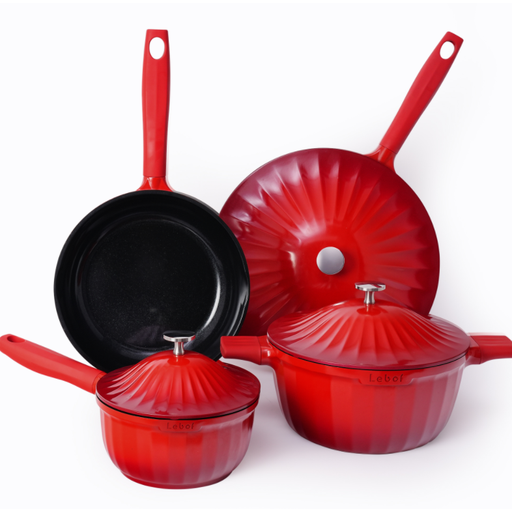
For those looking to completely upgrade their cookware with a consistent and reliable collection. This 7-piece set covers the essentials: two frying pans, two saucepans, and a stockpot with lids.
The forged aluminium construction ensures fast, even heating, avoiding the pitfall of pans that warp. The Ti-Ceramic (titanium-ceramic) coating is designed for durability and is guaranteed PFAS-free.
All-in-one solution: Covers all basic needs with a coordinated design. Thermal performance: The forged aluminium body offers superior thermal conductivity compared to steel in equivalent models.
We have compiled a complete, up-to-date selection of products that meet all our criteria for quality, durability, and safety.
The lifespan of a ceramic-coated pan depends on its quality and care. A basic coating might wear out in a year, whereas a titanium- or diamond-reinforced ceramic, when properly maintained, can retain its non-stick properties for several years. To maximise its life, avoid thermal shock (don't run it under cold water when hot), metal utensils, and prolonged high-heat cooking.
Although many models are dishwasher-safe, hand washing with a non-abrasive sponge and soapy water is recommended to preserve the coating. Always use wooden, silicone, or plastic utensils. Before the first use, wash the pan and then apply a thin layer of oil to season it.
Ceramic cookware certified PFAS-, PFOA-, and PTFE-free is an excellent option for healthy, toxin-free cooking. Unlike some older coatings, they do not risk releasing potentially harmful chemical compounds, even in cases of accidental overheating. This makes them a precautionary choice for cooks and families concerned about the materials that come into contact with their food.