
Livraison le jour même ou le lendemain

Qualité garantie

Débloquez vos offres de bienvenue: Livraison GRATUITE | Jusqu'à -80 % | 30 jours d'essai gratuits à JoyPlus
Téléchargez l'application
Upgrading your cookware can often be a headache. Between promises of healthy cooking and marketing slogans, it's easy to get lost and end up regretting your purchase. If ceramic cookware has caught your eye for its non-stick qualities and "healthy" image, it's crucial to know how to navigate the most common pitfalls to invest in pieces that will truly stand the test of time.
Before you make a decision, let's review the three most frequent mistakes that lead straight to disappointment?:
To make an informed choice, forget the slogans and focus on objective technical criteria.
To avoid making a mistake, focus your attention on three fundamental aspects. They will help you select reliable products that are genuinely suited to your needs.
The term "ceramic" can conceal various technologies. Entry-level options make do with a single layer, while more robust models use reinforced multi-layer systems, sometimes with titanium, for better resistance to scratches and abrasion.
One of the main draws of ceramic is the option of a PFAS-free non-stick pan. These per- and polyfluoroalkyl substances, found in many traditional coatings, raise health concerns. Always check that the product is certified PFAS-free, PFOA-free, and PTFE-free to ensure you have healthy cookware.
For even cooking, especially with induction cookware, the quality of the base is paramount. A good piece of cookware must have a thick composite base that incorporates a ferromagnetic layer. This design not only ensures compatibility but also provides rapid and uniform heat distribution, preventing hot spots that damage food and the coating. Look for terms like "encapsulated base" or "thick base" and a clearly visible induction symbol.
Space is precious in the kitchen. A cookware set with a removable handle is a remarkably effective solution for optimising storage. The pieces stack easily in cupboards, move effortlessly from the hob to the oven, and then directly to the table or into the fridge. This versatility transforms daily use. For more specific needs like slow-cooked meals, an enamelled cast iron Dutch oven is a durable alternative, renowned for its excellent heat retention.
Rather than a long list, we've matched specific products to user profiles to help you find the equipment that truly fits your daily life.
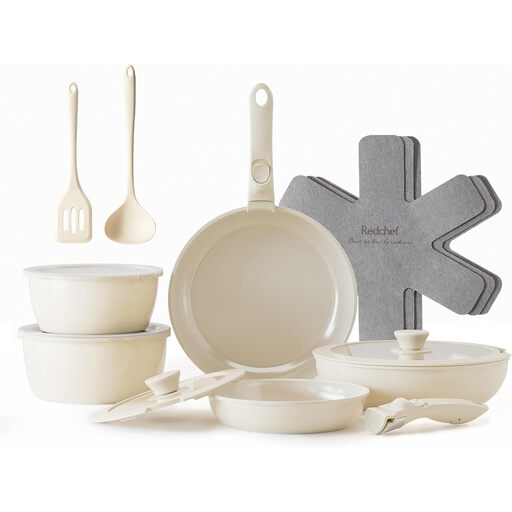
Why it's a great match ? Ideal for those short on space but not on culinary ambition. This comprehensive set covers all needs, from a small frying pan to a large saucepan, with an ultra-compact storage system. Its single handle clips on and off for maximum versatility.
It directly addresses the problem of storage and versatility. The stackable design isn't a gimmick but a concrete solution that saves up to 75% of space. The ceramic coating is advertised as durable and free from harmful chemicals.
Radical space-saving thanks to the stackable design and detachable handle. Total versatility : compatible with all hobs including induction, oven-safe (up to 230 °C without the handle), and suitable for the fridge and dishwasher.
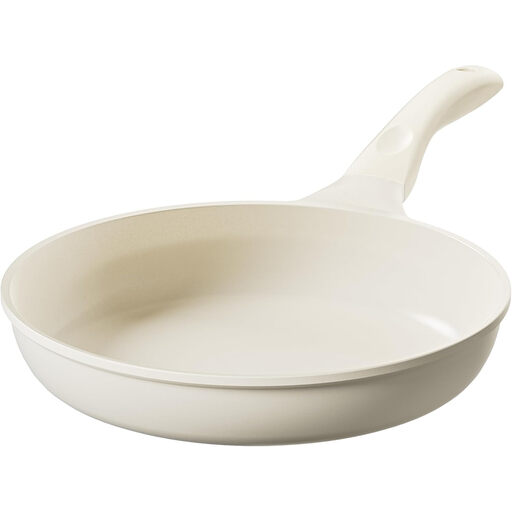
Why it's a great match ? Perfect for anyone looking to replace their old pan with a healthy, reliable, and easy-to-use daily option. Its 28 cm size is versatile, ideal for cooking eggs, searing meat, or stir-frying vegetables.
It tackles the chemical composition pitfall head-on by guaranteeing a ceramic coating free of PTFE, PFOA, and PFAS. Its thick base is designed for fast, even heating, avoiding the issue of poor performance on induction hobs.
Non-toxic coating for complete peace of mind. Effortless cleaning : the non-stick surface wipes clean with a simple sponge, and the pan is dishwasher-safe.
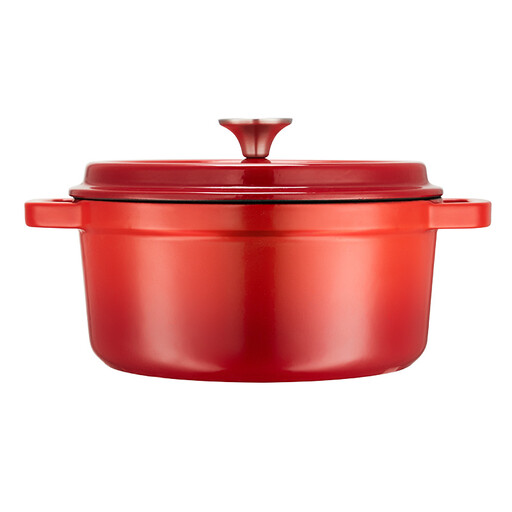
Why it's a great match ? For lovers of slow cooking and durability. Cast iron is a material of choice for its ability to retain and distribute heat gently and consistently, which is perfect for stews, soups, and even bread.
This product bypasses the fragile coating trap by relying on a solid, proven material : cast iron. The interior enamel is a highly resistant form of vitrification (ceramic) that doesn't wear down like a conventional non-stick coating.
Exceptional heat retention for perfectly simmered dishes. Robust construction designed to last for decades with proper care. The enamel makes cleaning easier and does not alter the taste of food.
We have compiled a complete and up-to-date selection of products that meet our strict selection criteria and current safety standards.
The lifespan of a ceramic pan depends heavily on the quality of its coating and how it is maintained. An entry-level model may lose its non-stick properties in less than a year, while a high-quality pan with a reinforced coating can last for several years. To maximise its lifespan, it is advisable to use wooden or silicone utensils, avoid thermal shock (do not run a hot pan under cold water), and opt for hand washing.
Yes, provided they are specifically designed for it. A ceramic or aluminium utensil is not naturally compatible with induction. It must incorporate a ferromagnetic base (usually stainless steel) so that the hob's magnetic field can generate heat. Before any purchase, check for the coil-shaped symbol on the packaging or on the base of the cookware.
Maintenance is simple but requires a bit of care. Always let the cookware cool down before cleaning it. Use a soft sponge with a little washing-up liquid. For stubborn residues, heat a small amount of water with a spoonful of baking soda for a few minutes before cleaning. Even though many products are listed as dishwasher-safe, hand washing remains the safest method to preserve the integrity of the non-stick coating in the long run.