
Livraison le jour même ou le lendemain

Qualité garantie

Débloquez vos offres de bienvenue: Livraison GRATUITE | Jusqu'à -80 % | 30 jours d'essai gratuits à JoyPlus
Téléchargez l'application
A good ceramic bowl is more than just a vessel: it's a partner for comforting meals, from hearty winter soups to morning cereal. Yet, buying one can quickly turn into a disappointment. An alluring design often hides flaws that only appear with use. To help you make a lasting investment, we've broken down the common pitfalls to avoid and the criteria that truly make a difference.
Before falling for a design, beware of these common issues that can turn an impulse buy into a daily regret.
To equip yourself with pieces that will last, here are the three essential points to check.
It all starts with choosing the right material.
Whatever your choice, demand a glaze certified lead and cadmium-free for completely safe use.
In a well-designed kitchen, practicality is key. A stackable bowl is a non-negotiable feature for optimising storage. Ensure the base and shape allow for stable, compact stacking. Also, think about versatility: a generously sized bowl (between 750 and 850?ml / 25-29 oz) will be perfect for soups, as well as for large salads, pasta, or saucy dishes.
A beautiful design must, above all, be functional. White dinnerware with a raised pattern, for example, adds a touch of elegance. Just check that the patterns aren't so deep that they trap food or weaken the bowl. Dishwasher-safe compatibility is an essential convenience, while a quality glaze will resist scratches from cutlery and maintain its shine, wash after wash.
Here are a few models that tick all the boxes, suitable for different needs and budgets.
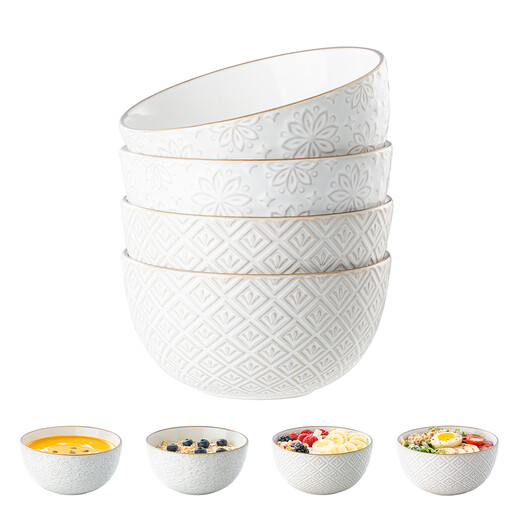
Why we love it: This set of 4 ceramic bowls is ideal for daily family use. Its generous 850 ml (29 oz) capacity makes it versatile for soups, cereals, or salads. The rustic style with unique raised patterns on each bowl adds a touch of character without sacrificing the set's harmony.
Made from high-quality stoneware, it is sturdy and fully microwave and dishwasher safe. Its design is specifically engineered for stacking, solving the storage puzzle.
Each bowl in the set has a distinct raised pattern, allowing for variety while maintaining a cohesive look. The glaze is guaranteed lead and cadmium-free.
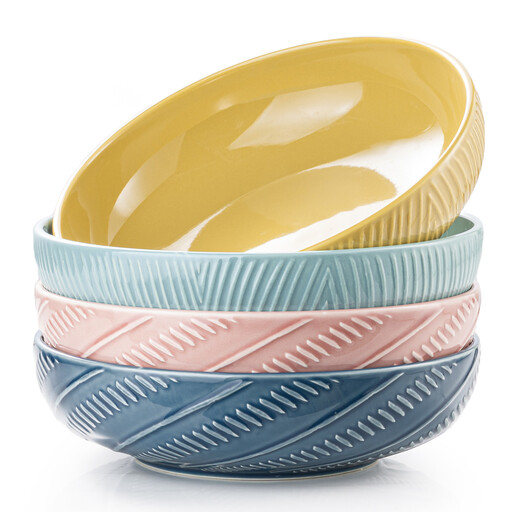
Why we love it: With their extra-large 1 L (34 oz) capacity and wide, shallow design, these bowls are perfect for generously serving pasta, hearty salads, or stews at dinners with friends and family. The vibrant colors and raised pattern add a festive touch to the table.
Made from high-hardness ceramic, they are built to last. Their full compatibility (oven, microwave, dishwasher) offers foolproof versatility, from preparation to cleanup. They are also stackable.
Their "pasta bowl" shape is ideal for saucy dishes and beautifully showcases the food. It's an excellent choice for a housewarming gift.
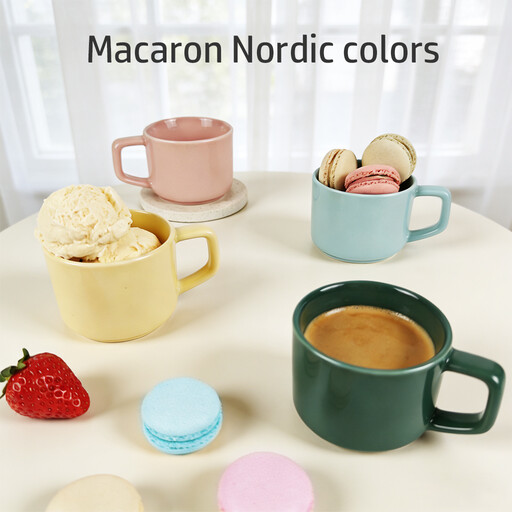
Why we love it: For those who already have their main dinnerware, this set of small cups is perfect for espressos, individual desserts (mousses, panna cotta), or for serving sauces and condiments at the table. Their small footprint is a plus for kitchens where space is at a premium.
These are simple, functional items whose purpose is clear, avoiding the trap of over-designed yet impractical objects. The food-grade ceramic ensures safe use.
Their compact size and versatility (coffee, desserts, appetisers) make them a useful and discreet addition. The pastel color palette adds a soft touch.
The harmony of a table setting also comes from cohesive dinnerware. If you appreciate textured details like the raised patterns on these bowls, take a look at complementary pieces that share the same spirit.
We have curated a full selection of products that meet our quality criteria and current standards.
1. Can a ceramic bowl really go in the oven? Not always. You must check for an "oven-safe" label on the product description. Generally, stoneware and porcelain handle high temperatures better than earthenware. To protect your dinnerware, always avoid thermal shock, such as moving a dish from the refrigerator directly into a preheated oven.
2. How can you identify a high-quality ceramic bowl? A smooth, uniform glaze without any cracks is a good first sign. A quality bowl can also be identified by its weight, which indicates the density of the material. Its base should be polished to avoid scratching your table or other plates when stacked. Finally, the "lead and cadmium-free" label is a non-negotiable safety guarantee.
3. What is the difference between a soup bowl and a ramen bowl? A classic soup bowl is often wider and shallower. In contrast, a ramen bowl is typically taller and deeper, a shape designed to hold a large amount of broth, noodles, and toppings without spilling. However, a large stoneware bowl of about 800?ml to 1?L (27-34 oz) will work perfectly for both uses.