
Livraison le jour même ou le lendemain

Qualité garantie

Débloquez vos offres de bienvenue: Livraison GRATUITE | Jusqu'à -80 % | 30 jours d'essai gratuits à JoyPlus
Téléchargez l'application
A beautiful ceramic bowl does more than just hold your food; it transforms a simple meal into an elevated experience. Whether for your morning cereal bowl, a comforting soup, or a generous pasta dish, the ideal model must blend aesthetics with practicality. But with an overwhelming number of options, it's easy to fall for common pitfalls and end up regretting your purchase.
As the Head of Product Curation at Joybuy, my mission is to help you navigate the choices. Here are the pitfalls to avoid and the essential criteria to check before investing in your new tableware.
A stylish designer bowl or a steeply discounted set of ceramic bowls can be tempting. But beware of flaws that only reveal themselves once you get them home.
The false "microwave-safe" promise: Many budget-friendly bowls proudly display this claim, but the reality is often quite different. A poor-quality ceramic, fired at a low temperature, can trap micro-pockets of air or moisture. In the microwave, the heat causes expansion that can lead to cracks or even shatter the bowl after just a few uses. The tell-tale sign? A bowl that gets scorching hot while its contents remain stubbornly lukewarm.
Design at the expense of practicality: A bowl with an unusual shape or a handcrafted bowl with a textured glaze might look stunning in photos but can be a nightmare for daily use. Intricate shapes make storage a puzzle, as the bowls refuse to stack. Likewise, overly thin or poorly finished rims will chip at the slightest knock in the sink or dishwasher, drastically shortening the lifespan of your purchase.
To avoid being disappointed, focus on objective criteria. They are your guarantee of quality and durability for your future bowls.
The term "ceramic" covers several materials with very distinct properties.
A good bowl is one that makes your life easier. Period. Always check these two points:
One bowl, many uses: versatility is key. A large bowl around 20-22 cm in diameter is ideal as a pasta bowl or a small individual ceramic salad bowl. For a cereal bowl or soup bowl, a capacity of 700 to 900 ml (about 15 cm in diameter) offers a comfortable grip and the perfect volume.
To help you out, here is our selection of products that tick all the boxes for durability and practicality.
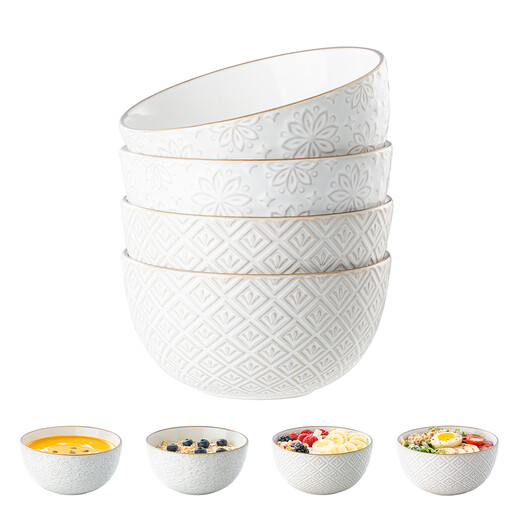
Why we chose it: This set is designed for family life. Its capacity is perfect for cereal, soups, or salads. The high-quality stoneware ensures unbeatable durability, even with kids.
Made from high-temperature stoneware, it's safely microwave, oven, and dishwasher safe. Its shape is designed for perfect stacking, optimising storage.
The set features 4 different embossed patterns while remaining perfectly stackable. The smooth interior glaze resists scratches and cleans up in a flash.
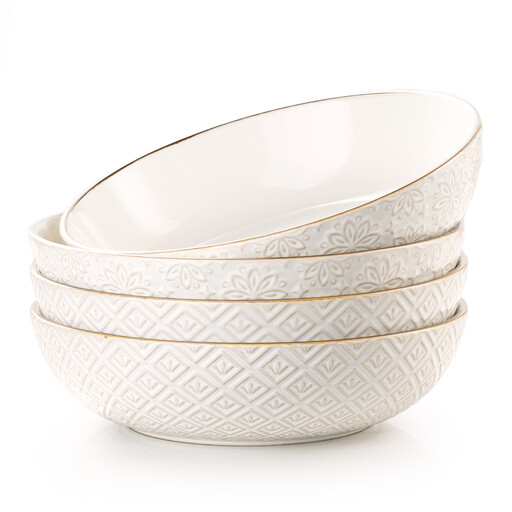
Why we chose it: With their wide 21.5 cm diameter and clean design, these bowls are perfect for generously serving pasta, large salads, or saucy dishes at dinners with friends or family.
Despite their large size, their shape is engineered for stable and secure stacking. The thick-walled ceramic enhances their sturdiness and minimises the risk of chipping, even with heavy use.
Extremely versatile: this large bowl is dishwasher, microwave, and even conventional oven safe, allowing you to use it for baking a gratin or simply keeping a dish warm before serving.
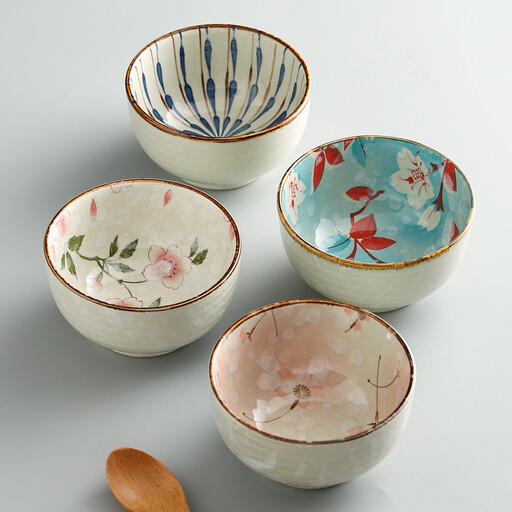
Why we chose it: For those who appreciate the art of dining and want to add a touch of originality. This set offers four bowls with distinct Japanese-inspired patterns, perfect for serving rice, side dishes, or appetisers.
Here, design doesn't come at the expense of practicality. The quality ceramic is food-safe, and the shapes remain functional. No unpleasant surprises: the set includes 4 different patterns, just as advertised.
The charm of artisanal style with the reliability of a coordinated set. Each guest can have a uniquely patterned bowl, adding a conversational element to the table. It also makes an excellent gift idea.
Discover other models that meet our strict selection criteria and current safety standards.
The main difference lies in the materials and firing temperature. Porcelain is made from a finer clay (kaolin) and fired at a higher temperature, which makes it thinner, whiter, and non-porous. Stoneware is made from clay containing sand, giving it a slightly grainier texture and a more opaque, rustic appearance. For daily use, both are excellent choices for durability, with a slight technical advantage to porcelain, which is harder.
Yes, provided the manufacturer explicitly states it. High-quality ceramics like stoneware and porcelain are designed to withstand thermal shock. To be absolutely sure, look for the icons or mentions like "oven safe" and "microwave safe". Avoid putting a cold bowl (straight from the refrigerator) directly into a hot oven to prevent sudden thermal shock.
Most chips happen during handling or washing. To protect them, avoid knocking them against the tap or other dishes in the sink. In the dishwasher, make sure they are securely placed and won't bump against each other during the wash cycle. Finally, opt for models with thick, rounded rims, which are naturally more resistant to everyday bumps and knocks.