Households storing large quantities
If you buy in bulk or cook in large batches, compare the net capacity with the space available. Also consider how easy it will be to reach food at the bottom of a chest freezer.


For a utility room or cellar, first check that the model’s stated ambient temperature range covers the temperatures the room actually reaches. A chest freezer is well suited to storing large quantities if you have enough floor space; an upright freezer makes food easier to access frequently, provided you allow room to open the door and leave the required clearances. A compact model is better for extra storage, while a fridge-freezer makes sense if you also need more space for fresh food.
If you buy in bulk or cook in large batches, compare the net capacity with the space available. Also consider how easy it will be to reach food at the bottom of a chest freezer.
In a cellar or utility room, check the room temperature during both cold and warm periods. The operating range must suit the model you choose. For example, Beko states a minimum ambient temperature of −15 °C for its HSM27050, but this does not apply to all freezers.
An upright freezer with drawers or compartments makes it easier to separate and find food. However, check that the door can open fully and that the manufacturer’s required clearances can be maintained.
Start with the room temperature, then match the capacity you want to the usable space available and the way you prefer to access your food.
Consider it: for bulk purchases or large containers, if the room has enough floor space.
The trade-off: food at the bottom is less easy to reach than in an upright freezer with drawers.
Consider it: if you want to organise food and access it frequently.
The trade-off: the door must be able to open freely, with the required clearances around the appliance.
Consider it: for extra storage when there isn’t room for a chest freezer or a large upright model.
The trade-off: check that its net capacity is enough for the amount you plan to store.
Consider it: if you need more space for both fresh and frozen food.
The trade-off: some of the total capacity is taken up by the fridge, so compare the freezer compartment capacity separately.
| What to consider | What to check | Your needs |
|---|---|---|
| Room temperature | Check the room’s lowest and highest temperatures. Compare them with the permitted ambient temperature range in the specification or manual for the exact model. Don’t confuse this range with the freezer temperature setting. | My cellar isn’t heated, so I want an appliance designed for the temperatures it reaches. |
| Capacity and location | Compare the net capacity in litres with the amount you plan to store. Measure the appliance, the route to its location, the space needed to open the door or lid and the clearances specified by the manufacturer. | I want to increase my storage without blocking access or making the utility room difficult to use. |
| Access to food | Look at the model’s drawers, compartments or baskets. With a chest freezer, consider how you’ll organise food stored underneath other items. | If I open the freezer often, I want to find food without having to move everything else. |
| Power-cut storage time and energy use | Compare the stated storage time in the event of a power cut, as well as the energy rating and annual energy consumption, between appliances with similar capacities and features. | I want to consider possible power cuts and the energy use of an appliance that stays plugged in all the time. |
A freezer designed for a heated room may not be suitable for a cold cellar. Beko’s stated minimum ambient temperature of −15 °C applies to the HSM27050, not to other models.
Measure the room temperature during representative periods, then compare your readings with the range specified for the appliance you’re considering.
Capacity doesn’t tell you how easy it will be to reach your food. A chest freezer has an open storage space, while an upright model divides storage between drawers or compartments.
Choose the layout to suit the size of your bulk purchases and how often you take food out.
An appliance may fit in its intended spot, but still be too large to get through a narrow doorway or lack enough space for the door to open and air to circulate.
Measure the route to the installation site and check the clearances in the manual. In its guide to choosing a freezer, Bosch recommends leaving at least 5 cm on each side and at the back. Always follow the instructions for the specific model you choose.
The total capacity of a fridge-freezer includes space for fresh food, so it isn’t all available for frozen food.
Compare the net capacity of the freezer compartment alone, and choose a fridge-freezer if you also need fridge space.
The HSM27050 chest freezer is a model worth considering for a cold cellar.
The GSN58AWCV is an example of an upright freezer designed to help organise frozen food.
The UW8F2DWHBIN2 is a useful example of an upright No Frost freezer.
This selection includes upright and chest freezers, plus a compact freezer for extra frozen food storage. There’s also a fridge-freezer if you need more room for fresh food too. For each model, check that the permitted ambient temperature range matches the readings in your utility room or cellar.
 Image unavailable
An option for storing frozen food in an upright freezer. The product name lists a 161 L capacity, No Frost and a reversible-hinge door. Check the ambient temperature range and the space needed to install it in your room.
 Image unavailable
This 60 L model is better suited to extra storage than to storing large quantities. The product name mentions a reversible door and an E energy rating. Check its ambient temperature range, dimensions and the clearances needed for your chosen location.
 Image unavailable
Worth considering if you want more storage for both fresh and frozen food. Its name lists a total capacity of 467 L, four doors, Total No Frost and an E energy rating. Compare the freezer compartment capacity separately, then check the ambient temperature range required for your room.
 Image unavailable
This 99 L chest freezer offers open storage for extra frozen food. Its name mentions a removable basket, sliding lid and an E energy rating. Check the space needed to open it and allow for ventilation, as well as the permitted ambient temperature range.
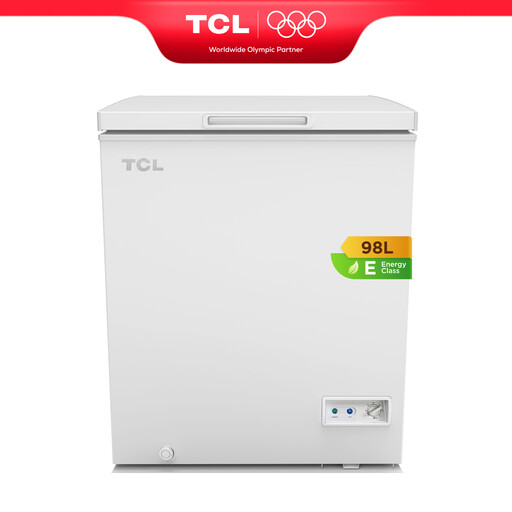 Image unavailable
A 98 L chest freezer to consider for extra storage. Its name mentions a storage basket, balanced lid, temperature control and an E energy rating. Before placing it in a cellar or utility room, check its ambient temperature range, dimensions and the space needed to open the lid.
No. Compare the cellar’s lowest and highest temperatures with the stated ambient temperature range for the exact model. Beko France lists a minimum ambient temperature of −15 °C for the HSM27050 chest freezer; this doesn’t apply to other appliances.
Follow the clearances specified in the model’s manual and make sure there’s enough room to open the door fully. For example, Bosch recommends leaving at least 5 cm on each side and at the back for air to circulate.
Compare the stated duration for appliances with similar capacities, but don’t make it your only deciding factor. Bosch France lists 13 h for the GSN58AWCV, while Beko France lists 41 h for the HSM27050. These are different models and types of freezer.
No. Also compare the annual energy consumption shown on the label, ideally between appliances with similar capacities and features. The EU energy labelling regulation covers, among other things, mains-powered refrigeration appliances with a capacity of more than 10 L and up to 1,500 L.