
Livraison le jour même ou le lendemain

Qualité garantie

Débloquez vos offres de bienvenue: Livraison GRATUITE | Jusqu'à -80 % | 30 jours d'essai gratuits à JoyPlus
Téléchargez l'application
Choosing a ceiling light might seem trivial, but it's a decision that will have a lasting impact on the atmosphere and functionality of your home. A poor choice can not only ruin your decor but also cost you a fortune in repairs or even pose a safety risk. As a product expert, my mission is to help you make an informed decision. Let's review the most common pitfalls and the essential criteria you should never overlook.
Some deals seem too good to be true... and for good reason. Beware of flaws that only become apparent after the light fixture is installed. Here are three critical points to watch out for.
Installing an IP20ceiling light in a bathroom is a classic—and potentially dangerous—mistake. This rating means the fixture has absolutely no protection against humidity or water splashes. The results are immediate: rust, risk of a short circuit, and a light fixture headed for the bin. For a bathroom or kitchen ceiling light, an IP44 rating is the bare minimum to ensure your safety and the product's longevity.
The ability to adjust brightness with a dimmable ceiling light is tempting. But beware of the compatibility headache. Many models require a very specific type of wall dimmer (leading-edge or trailing-edge), which is often incompatible with a standard installation. Pairing the wrong dimmer with an LED ceiling light is a perfect recipe for a flickering nightmare, an annoying buzzing sound, or even irreversible damage to the circuit.
Colour temperature, measured in Kelvins (K), is the key to creating atmosphere. A warm white (around 2700?K) creates a cosy atmosphere, perfect for a living room or bedroom. A neutral white (around 4000?K) is more energising, ideal for a kitchen or office. A cool white (above 5000?K) can quickly create a cold, impersonal, hospital-like feel. Choosing a ceiling light with a fixed colour temperature that's unsuited to the room's function is a surefire way to regret your purchase every day.
To avoid making a mistake, master these few technical specifications. They make all the difference.
The Ingress Protection (IP) rating is an international standard that classifies an electrical device's resistance to the intrusion of solid objects (dust) and liquids (water).
The choice will depend on the type of ceiling you have and the style you're aiming for.
Here are a few options that meet specific needs while avoiding common pitfalls.
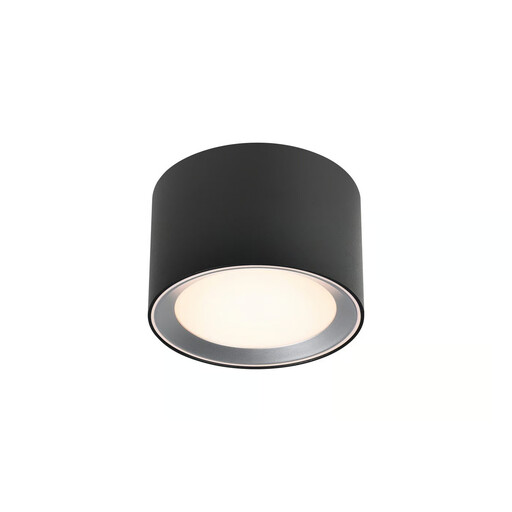
Why it's the right choice: The perfect all-in-one solution for the bathroom. This ceiling light combines a modern design, protection against humidity, and smart features for optimal user comfort.
Its IP44 rating automatically qualifies it for wet rooms. Better yet, its smart control via the Nordlux Smart app lets you adjust both intensity and colour temperature (2700-6500 K) without worrying about wall dimmer compatibility.
Total control over the light (intensity, temperature) from your smartphone. The bonus? An incredibly simple, tool-free and screw-free installation.
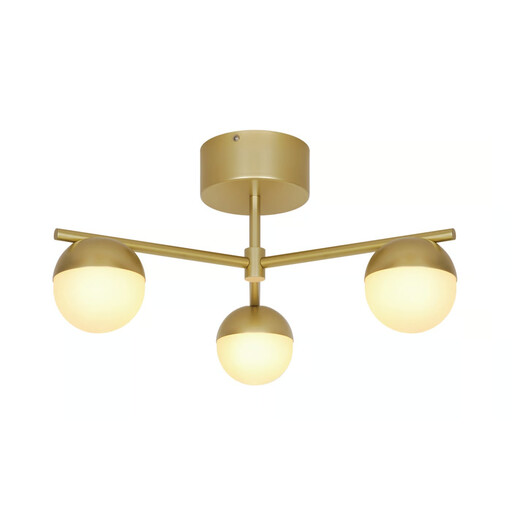
Why it's the right choice: For those who see a light fixture as the centrepiece of their decor. With its mouth-blown opal glass globes and brushed brass finish, this Art Deco-inspired model brings a touch of timeless elegance to a living room or entryway.
It is equipped with standard G9 sockets. The result: you have free rein to choose your own bulbs (dimmable or not) and the ideal colour temperature. Goodbye to the limitations of integrated LEDs!
A sleek design and premium materials (mouth-blown glass). Its greatest strength: total flexibility thanks to the interchangeable G9 bulbs (not included).
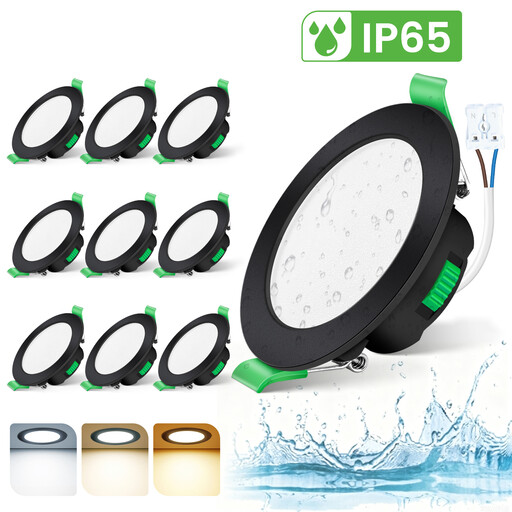
Why it's the right choice: The ideal solution for lighting that is both high-performance and almost invisible. This ultra-slim recessed spotlight (only 29 mm deep) blends into low ceilings and creates a clean look in a hallway, kitchen, or even a bathroom.
This is the Swiss Army knife of spotlights: it's dimmable (compatible with trailing-edge dimmers), offers a choice of 3 colour temperatures (3000/4000/6500 K), and its IP65 rating allows it to be used in any room, without exception.
Impressive versatility (dimmable, 3 temperatures, IP65). Its ultra-slim design ensures perfect integration, with the added bonus of a direct 230V connection without a transformer.
We have curated a full range of products that meet our demanding selection criteria and safety standards.
An integrated LED ceiling light typically has a lifespan of 20,000 to 30,000 hours. Based on an average use of 4 hours per day, this represents over 13 years of peace of mind. The main drawback: once the light source reaches the end of its life, the entire fixture must be replaced, unlike a model with an interchangeable bulb.
Any ceiling light installation must comply with local electrical safety standards. While an experienced DIYer can replace an existing fixture (after, of course, turning off the power at the main circuit breaker), it is highly recommended to hire a qualified electrician to create a new light point, modify a circuit, or work in a wet room. For maximum safety, opt for Class II (double insulated) light fixtures.
A simple method is to multiply the room's area (in m?) by the recommended lumens per square metre for its intended use. For example, for a 20?m? living room, comfortable main lighting will require between 2000?lm (20?m? x 100?lm) and 4000?lm (20?m? x 200?lm). The advantage of a dimmable ceiling light is that you can adjust the light output on demand, depending on the activity and time of day.