
Livraison le jour même ou le lendemain

Qualité garantie

Débloquez vos offres de bienvenue: Livraison GRATUITE | Jusqu'à -80 % | 30 jours d'essai gratuits à JoyPlus
Téléchargez l'application
Choosing cat food is not simply a matter of being won over by an appetising photo or a promise highlighted on the packaging. From dry cat food and wet cat food to pouches, mousse and liquid cat treats, differences in ingredients, texture and nutritional value can affect both your budget and your pet’s eating habits.
Before you reach the checkout, three common traps are worth watching out for:
The wording “complete food” indicates that the product is designed to meet your cat’s daily nutritional needs when used as intended. By contrast, complementary food must be given alongside a main diet.
Age is just as important. Kitten food should be suitable for growth, generally from weaning until 12 months, according to the manufacturer’s guidance. For an adult cat, look for a formula specifically intended as adult cat food. Sterilised cats may also benefit from a recipe with calorie allowances and serving quantities suited to their lifestyle. This does not remove the need to monitor their weight regularly.
Compare the recommended serving for your cat’s weight rather than looking only at the price of the pack. Wet cat food contains a great deal of water, so the stated protein and fat levels should be considered alongside the moisture content.
For example, Sheba Délices du Jour aux Poissons contains 82% moisture, with 50g portions. The manufacturer recommends around 4 to 5 pouches per day for a 3kg cat, adjusted according to its activity level and metabolism. These guidelines are a starting point, not a rule that applies to every cat.
For dry food, a small kitchen scale makes it easy to weigh out each serving accurately. The 7kg pack of WHISKAS Adult Sterilized recommends between 30 and 75g per day depending on the cat’s weight, as well as a gradual transition over 7 to 10 days.
Check the order of the ingredients, the stated percentages and the analytical constituents. A recipe may combine several sources of animal protein, cereals, vegetable protein extracts or animal by-products. It is better to read the full ingredients list than to focus only on the ingredient highlighted on the front of the pack.
Claims such as “no artificial colourings” or “no added sugars” describe a feature of the recipe, but they are not enough to determine whether it is suitable for your cat. If your cat has a food sensitivity, is overweight or has a health condition, ask your vet for advice before changing its diet.
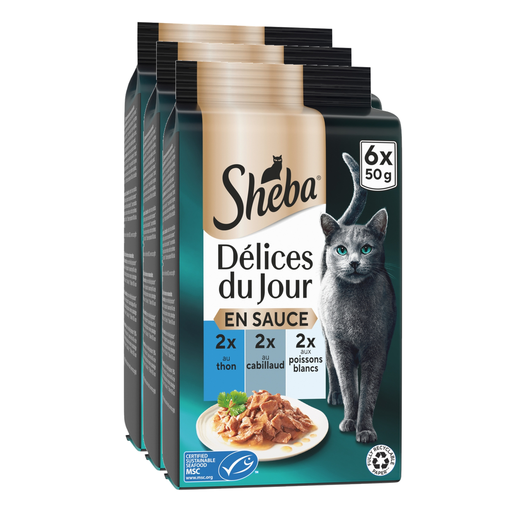
Why this choice suits this profile: The 50g pouches make it easy to start with portions that are simple to measure, without having to open a large tin that needs to be stored for several days. The multipack includes several recipes to add variety to an adult cat’s meals.
The product page presents it as a complete food for adult cats, rather than simply a treat. Serving recommendations and storage instructions after opening are also clearly provided.
50g portions, 900g in total, 82% moisture and no artificial colourings, flavourings or preservatives, according to the product details.
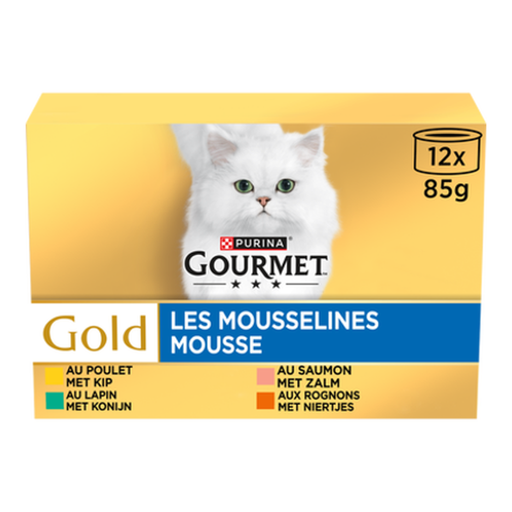
Why this choice suits this profile: This selection is aimed at those who prefer a mousse texture and enjoy varying the flavours, with chicken, salmon, rabbit and kidney recipes.
The complete-food classification and guidance of 2 to 3 tins per day for a 4kg cat make it easier to keep portions on track.
12 × 85g pack, mousse texture, 82% moisture and a varied selection of recipes, based on the stated ingredients.
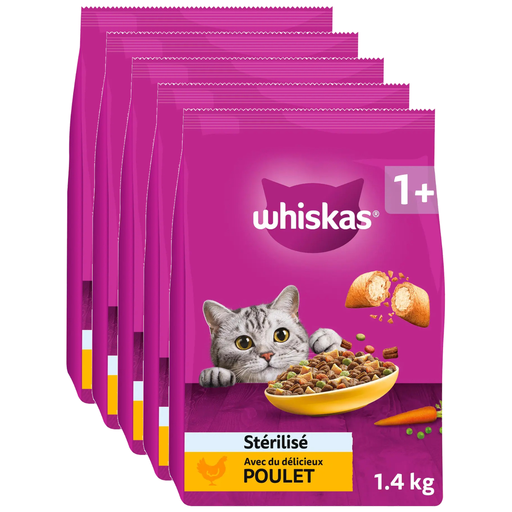
Why this choice suits this profile: The large bag is suitable for households that regularly buy dry cat food and are looking for a formula intended for sterilised adult cats aged at least 1 year.
The target group, “sterilised adult cat”, is clearly stated. However, the serving should be weighed and adjusted according to the cat’s weight and activity level.
7kg, 30% crude protein, 11.5% fat and a recommended dietary transition over 7 to 10 days.
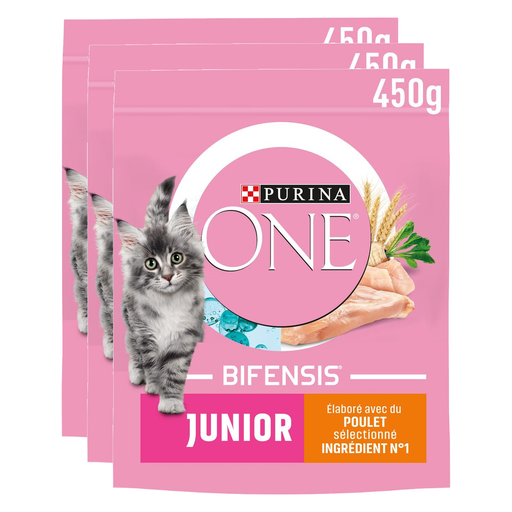
Why this choice suits this profile: This kitten food is intended from weaning until 12 months, as well as for pregnant or nursing cats, according to the product details.
The target age is clearly stated, helping prevent an adult formula from being given by mistake to an animal that is still growing.
41% crude protein, 20% fat, 17% chicken and a gradual feeding schedule based on age.
We have put together a complete, real-time updated selection of products that meet these demanding choice criteria and European safety regulations.
The amount depends on the cat’s weight, activity level, age, whether it has been sterilised and the type of food. Start by following the serving guide on the packaging, then adjust it according to changes in your cat’s body shape and your vet’s recommendations. With mixed feeding, add together the calorie contributions of both formats instead of applying two complete daily allowances.
Yes, provided the wet food is described as a complete food for the relevant age category. Pouches and tins provide more moisture, while dry food is easier to store and measure. However, the wording “complementary food” means that the product is not suitable for replacing daily meals.
Follow the instructions on the label. Wet food should generally be covered, placed in the fridge and consumed within 24 to 48 hours. Dry food keeps for longer once the bag has been properly resealed, but its freshness gradually declines, so choose a pack size that matches your household’s actual consumption.