
Livraison le jour même ou le lendemain

Qualité garantie

Débloquez vos offres de bienvenue: Livraison GRATUITE | Jusqu'à -80 % | 30 jours d'essai gratuits à JoyPlus
Téléchargez l'application
Choosing cat food is not simply a matter of comparing flavours and special offers. Between “natural” claims, large pack sizes and recipes tailored to every type of cat, some essential information can easily be overlooked. Misinterpreting the ingredients, serving a complementary food as the main meal or offering portions that are too generous can quickly push up the cost.
This guide will help you compare dry cat food, wet cat food, recipes for kittens and sterilised cats, as well as the value pack sizes available online.
The term “complete food” means that the product is designed to meet a cat’s nutritional needs when served according to the recommendations on the packaging. By contrast, soups, pastes and liquid cat treats are generally complementary foods.
For example, a tuna and chicken soup in pouches can provide moisture and add some variety to your cat’s usual meal. However, it should not replace the main diet. Always check the product’s legal designation before adding it to your basket.
“Chicken” or “salmon” does not necessarily mean that the ingredient makes up the majority of the recipe. When an ingredient is highlighted, its proportion must be stated in the ingredients list. Among the products featured below, some recipes contain 4% chicken, while a Vitakraft salmon mousse contains 6.8% salmon.
The product name is mainly designed to catch your eye. To compare chicken dry cat food, salmon dry cat food or wet food in gravy objectively, you therefore need to check the ingredients list.
A 7 or 7.5 kg bag can reduce the price per kilo, but only if you can store it properly. Once opened, keep dry food in a dry place and seal the bag carefully after each use. Opened pouches and tins should generally be kept in the fridge and consumed within 24 to 48 hours, depending on the manufacturer’s instructions.
A cat food multipack or meal bundle can be convenient, provided you choose an assortment your cat genuinely enjoys.
Your first choice should match your cat’s life stage:
Kitten food should not automatically be replaced with an adult recipe. Likewise, a formula for sterilised cats is not intended for kittens unless the manufacturer explicitly states otherwise.
For everyday meals, look for a clear statement that the food is complete and balanced or is complete food for cats. Wet cat food can perfectly well make up the main meal if it carries this designation. Treats, soups and snacks should remain occasional extras.
The water content is also worth checking. The wet foods in this selection generally contain between 78% and 85% moisture, compared with around 10% for some dry foods. The serving weight is therefore very different, and the percentages cannot be compared directly without taking moisture content into account.
To estimate the actual cost, compare the price per meal rather than the price of the pack. A box of 12 85 g portions, a bundle of 18 50 g pouches and a multi-kilo bag of dry food will not last for the same length of time.
To avoid overfeeding:
If your cat is overweight, has a known health condition or is undergoing a significant dietary change, seek advice from a vet.
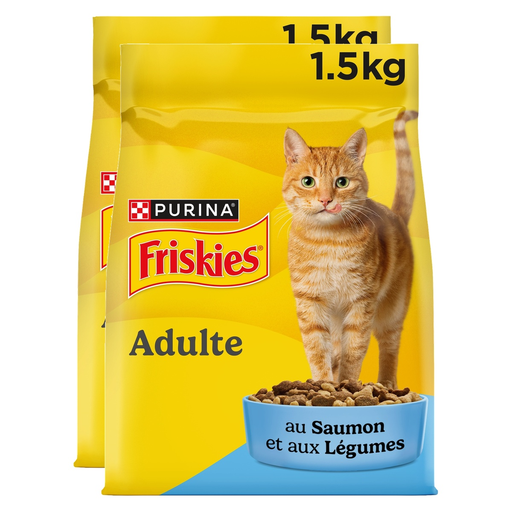
Why this choice suits this profile : This 3 kg bag is ideal for households looking to try dry food for an adult cat without immediately committing to an XXL pack.
The product listing describes a complete recipe for adult cats and states that it contains 30 % protein and 11 % fat. The smaller size also reduces the risk of keeping the bag for too long.
A 3 kg bag of dry food made with cereals and animal and vegetable proteins, containing 3 % salmon in total according to the ingredients list.
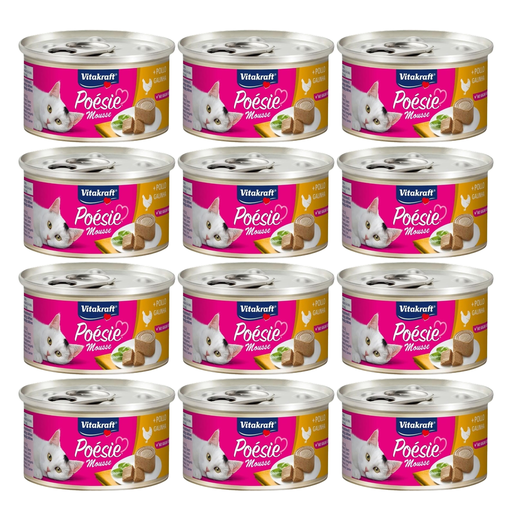
Why this choice suits this profile : Its mousse texture and 85 g portions are ideal for adult cats that prefer smooth, easy-to-eat and easy-to-serve wet food.
The product listing categorises it as complete food for adult cats and specifies that it contains no added sugar and is grain-free. However, the portion should still be adjusted to your cat’s weight.
A bundle of 12 85 g tins, weighing 1 020 g in total, with 78 % moisture and a mousse texture.
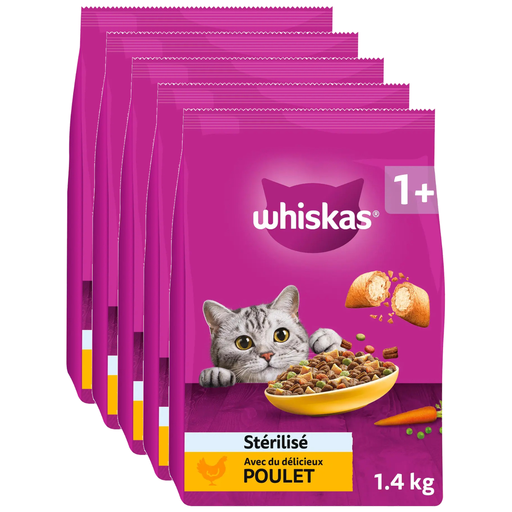
Why this choice suits this profile : This 7 kg bag is suitable for households where a sterilised adult cat regularly eats dry food.
The product listing clearly states the target audience — “sterilised adult cats aged 1 year and over” — as well as portions by weight and a gradual transition over 7 to 10 days.
A 7 kg pack containing 30 % protein, 11.5 % fat and 4.1 % fibre, according to the product details.
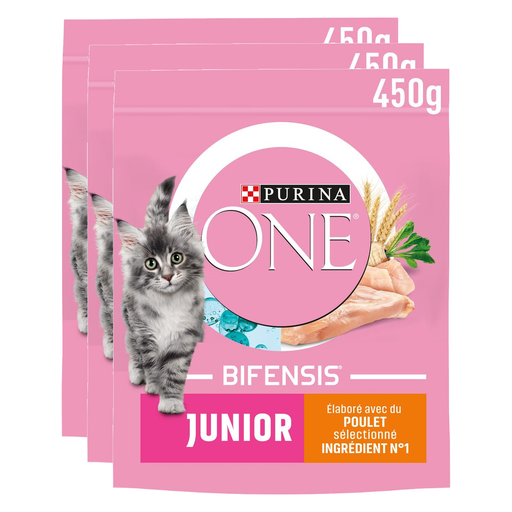
Why this choice suits this profile : This recipe is suitable for kittens after weaning and up to 12 months, as well as pregnant or nursing cats.
The target age and recommended quantities for each age range are clearly stated. The product listing also advises starting with water and gradually reducing the amount of added moisture.
A 1,35 kg bag containing 41 % protein, 20 % fat and DHA, as stated in the nutritional information.
We have compiled a comprehensive, real-time updated list of products that meet these demanding selection criteria and European safety regulations.
The amount depends on your cat’s weight, activity level, age, whether it has been sterilised and the type of food. Start by following the feeding guide on the packaging, then regularly monitor your pet’s body shape and weight. Dry food is more energy-dense than wet food, so the quantities in grams are not interchangeable.
Yes, provided that both products are suitable for your cat’s profile and the total portion remains appropriate. If you add complete wet food, reduce the amount of dry food accordingly. Soup or a liquid treat remains a supplement and cannot replace a complete meal.
Place any remaining portion in the fridge and follow the instructions on the label. Many manufacturers recommend consuming it within 24 to 48 hours. Serve the wet food at room temperature and throw it away if the packaging is swollen or damaged, or if its smell or appearance has changed.