
Livraison le jour même ou le lendemain

Qualité garantie

Débloquez vos offres de bienvenue: Livraison GRATUITE | Jusqu'à -80 % | 30 jours d'essai gratuits à JoyPlus
Téléchargez l'application
A cat may turn its nose up at a bowl of stagnant water, especially if it gets dusty or is placed somewhere it does not like. A cat water fountain keeps water moving, but not all models are equal when it comes to noise, maintenance or the cost of consumables. Some small dogs can use them too, provided you check the tank capacity and the stability of the unit.
Before placing your order, three common pitfalls are worth bearing in mind:
Here are the criteria to consider when choosing a fountain suited to your home, the number of pets you have and your routine.
A capacity of 1.8 to 2.3 litres is generally suitable for one cat or a small dog. In a household with several animals, a tank of 3 litres or more means you can refill it less often. However, consumption varies according to the temperature, diet and activity level of the animal, so the stated capacity cannot guarantee a specific operating time.
A water-level indicator, transparent window or low-water alert makes it easier to monitor the fountain day to day. Never allow the pump to run dry, as this could damage it.
A filtered cat water fountain often combines several types of filtration: foam to trap hair, activated carbon to help reduce certain odours and, depending on the model, ion-exchange resin. Ultrafiltration systems sometimes claim a filtration fineness of 0.01 micron. This figure reflects the performance claimed by the manufacturer and is not a medical or health guarantee.
For components that come into contact with water, choose products clearly described as BPA-free, with parts that can be easily dismantled. A stainless-steel fountain, particularly one fitted with a 304 or 316 stainless-steel tray, may be a good choice thanks to its non-porous surface and easier cleaning. Even so, remember to check how accessible the plastic parts, pump and seals are.
The filter is an ongoing cost to include in your budget. Depending on the model and water quality, replacement may be recommended every 2 to 4 weeks, every 3 to 4 weeks or approximately every three months. Always follow the manufacturer’s instructions.
A quiet cat water fountain should minimise vibrations as well as motor noise. A non-slip base, adjustable flow rate and sufficient water level all help to keep operation discreet.
Models with a wireless pump separate the submerged component from the power cable. This makes it easier to remove the pump for cleaning and to set up the fountain. However, you should still keep an eye on battery life, charging time and the protection of the electrical base.
A wireless pet fountain powered by a battery can be placed in a room without a nearby power socket, but it will need regular recharging. Connected models sometimes add an app, alerts and usage history. These features can be useful for monitoring the fountain remotely, but they generally require a 2.4 GHz Wi-Fi network.
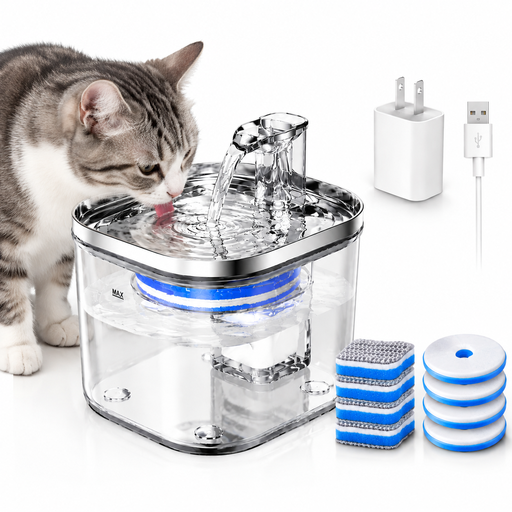
Why this choice suits this profile: With its 2 litre tank, automatic circulation and five replacement filters included, this model is a simple way to discover the benefits of a water fountain for cats or small dogs.
The included pack covers the first cartridge changes, so you can avoid buying a device without checking that its consumables are available.
2 litre capacity, automatic circulation and advertised compatibility with cats and small dogs.
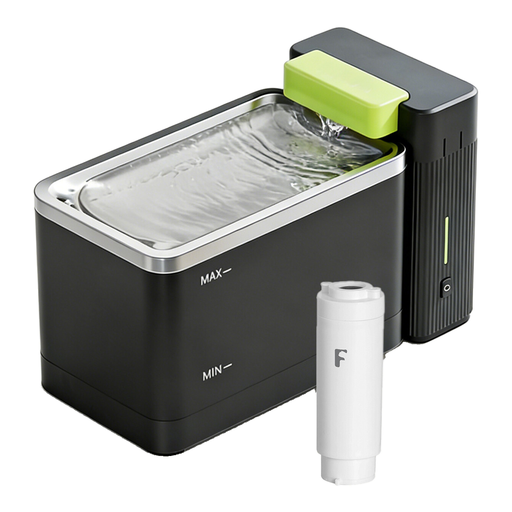
Why this choice suits this profile: Its 3.3 litre tank is ideal for households looking to reduce the number of refills. The 316 stainless-steel tray will appeal to anyone seeking a robust, easy-to-wipe surface.
The advertised separation between the water and electrical components reduces the need to handle the base when filling and cleaning.
3.3 litre tank, 316 stainless-steel tray, ultrafiltration and two operating modes.
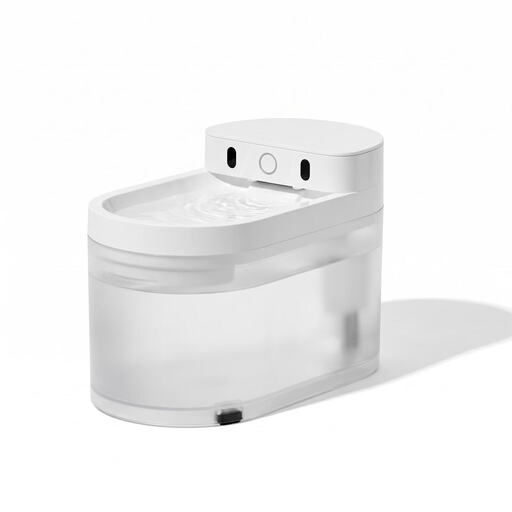
Why this choice suits this profile: Its 5,000 mAh battery, four modes and app are designed for those who want to control a connected fountain and view usage data.
Water-level and filter-replacement alerts reduce the risk of forgetting essential maintenance. However, they do not remove the need for manual cleaning.
2.3 litre capacity, wireless pump, advertised operation at 30 dB and monitoring through the CATLINK app.
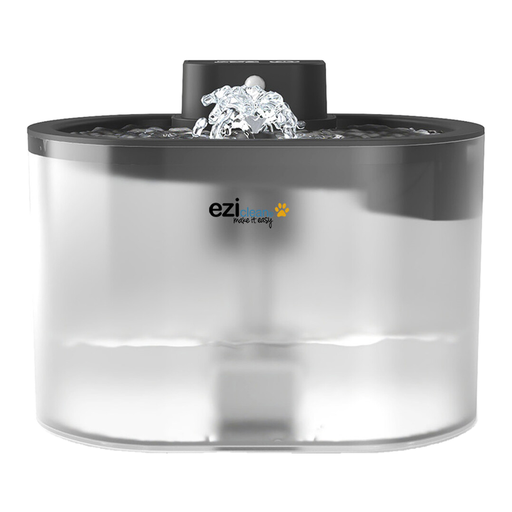
Why this choice suits this profile: Its infrared sensor, rechargeable battery and Bluetooth or 2.4 GHz Wi-Fi connection are ideal for users who want to automate the flow without placing the fountain near a socket.
The instructions recommend leaving 5 cm of space around the device, changing the filter every 3 to 4 weeks and never allowing the pump to run dry.
2.2 litre capacity, 1 to 2 W low-power pump, infrared sensor and activated-carbon filter with resin.
We have brought together a complete, real-time selection of products that meet these demanding criteria and European safety standards.
To keep the water clean, remove the detachable parts and wash them at least once a week. If several animals use the fountain, more frequent cleaning may be necessary. Wipe the pump according to the instructions and never immerse it when the manufacturer advises against doing so.
Before buying, check:
Never add medicine, fragrance or cleaning products to the tank. If you have any concerns about your pet’s hydration or behaviour, ask a vet for advice: a fountain is not a substitute for professional guidance.
It depends on the tank capacity, the number of animals and the selected flow mode. A 2 litre tank may need frequent refilling in a very active household, while a 3.3 litre model provides more leeway. The water level should be checked every day, even when the fountain has an electronic alert.
Small USB pumps generally have a modest power rating, sometimes between 1 and 2 W depending on the model. Actual consumption depends on the selected mode and operating time. A battery-powered pump means you do not have to leave a cable plugged in permanently, but it does require recharging and regular checks of its condition.
Yes, it is a sensible precaution. Cartridges are not universal, so choose a reference explicitly stated as compatible with your fountain’s brand and model. For example, homerunPET filters sold in packs of three are advertised as compatible with WF20, CF20 and BF10 fountains. Check the instructions and rinse the new filter before fitting it when this step is recommended.