
Livraison le jour même ou le lendemain

Qualité garantie

Débloquez vos offres de bienvenue: Livraison GRATUITE | Jusqu'à -80 % | 30 jours d'essai gratuits à JoyPlus
Téléchargez l'application
If you have a cat, you know that proper hydration is crucial for their health, especially for preventing urinary and kidney problems. The issue is, a simple bowl of stagnant water is often snubbed by our feline friends, who are instinctively drawn to moving water. This is where a cat water fountain becomes an invaluable ally.
However, the market is saturated with models making tempting promises, and it's easy to fall into a trap. Before you choose, let's review the hidden flaws that too often turn a promising purchase into a real hassle.
Choosing the right cat water dispenser goes far beyond aesthetics. The challenge is to find the right balance between functionality, hygiene, and tranquillity.
To avoid unpleasant surprises, focus on objective criteria that have a direct impact on daily use. Here are the three non-negotiable checkpoints.
Noise is the number one complaint. A truly silent fountain should operate below 30 decibels (dB), which is equivalent to a barely audible whisper. Two elements play a major role in the noise level:
Always check the product's technical specifications for a decibel rating. A value under 25 dB is an excellent guarantee of discretion.
A water fountain with a filter is essential to provide your cat with water that is always clean and appealing. A high-performance filtration system usually consists of several layers:
The quality of the filters and the frequency of their replacement are crucial for maintaining the effectiveness of your automatic cat waterer.
Hygiene is a non-negotiable point. Opt for food-grade materials, such as BPA-free ABS or Tritan plastic, or stainless steel, which is known for its durability and ability to inhibit bacterial growth.
The very design of the fountain must allow for complete and intuitive disassembly. All parts in contact with water (reservoir, tray, pump holder) must be easily accessible and washable. Models with a removable wireless pump radically simplify this task: no more fumbling with a power cord during cleaning.
To help you make an informed choice, we have selected a few models that meet specific needs, based on the criteria we've just discussed.
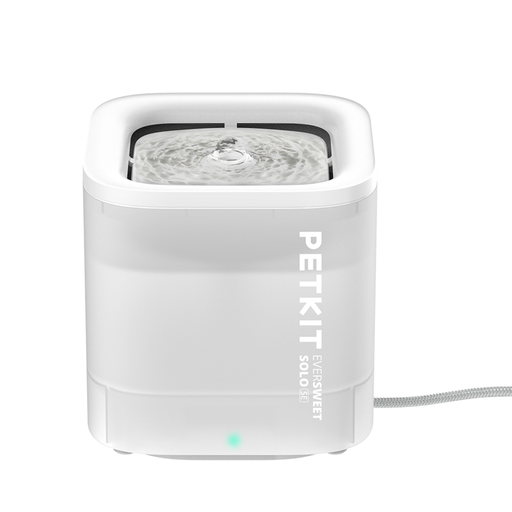
Why this model? Ideal as a first fountain or for those who want a reliable, hassle-free solution. Its sleek design and quiet operation blend into any interior without disturbing your peace.
Its wireless pump ensures ultra-quiet operation and simplified cleaning. Disassembly is a breeze, allowing you to escape the maintenance chore and ensure impeccable hygiene.
Wireless pump for easy maintenance. LED indicator to monitor water level. Low power consumption.

Why this model? Perfect for owners who want to closely monitor their pet's hydration, especially if they have a medical history. The app provides precise data on the frequency and amount of water consumed.
Its noise level, measured at under 20 dB, makes it one of the quietest models on the market. The wireless pump and smart motion sensor optimise its operation to reduce wear and noise.
Water consumption tracking via app. Ultra-quiet wireless pump. Motion detector for optimised operation.
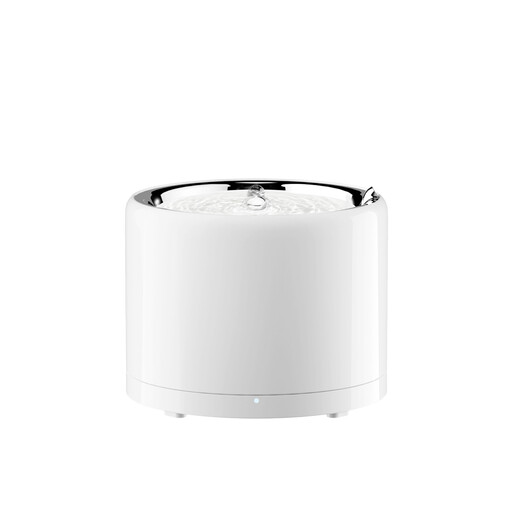
Why this model? For owners who make no compromises on water purity. This model goes a step further with advanced sterilisation technology, in addition to high-performance filtration, for total peace of mind.
It tackles the hygiene problem head-on by integrating UVC sterilisation that eliminates 99.96% of bacteria (manufacturer data). Combined with a wireless pump and a stainless steel tank, it checks all the boxes: silence, cleanliness, and ease of maintenance.
Wireless UVC sterilisation for purified water. 4-stage high-precision filtration. Food-grade 304 stainless steel tank.
These fountains are also suitable for small dogs. Discover our full selection of products that meet our selection criteria and European safety standards.
Generally, it is recommended to replace the filter every 2 to 4 weeks. This frequency depends on the model, the hardness of your water, and the number of pets using it. Always refer to the manufacturer's instructions for exact recommendations.
No, most modern fountains are very energy-efficient. Low-voltage pumps consume between 1 and 2 watts, which only amounts to a few dollars per year on your electricity bill.
The adjustment is usually smooth. Place the new fountain next to its old water bowl, without removing the old one right away. Let your cat explore it at their own pace. Their curiosity and the sound of moving water should be enough to attract them. Once they are drinking from it regularly, you can remove the old bowl.