
Livraison le jour même ou le lendemain

Qualité garantie

Débloquez vos offres de bienvenue: Livraison GRATUITE | Jusqu'à -80 % | 30 jours d'essai gratuits à JoyPlus
Téléchargez l'application
An automatic cat water fountain can make life easier, especially if your pet doesn’t drink much, you have several pets sharing your home or you’re regularly away. But not all models are equal. A large reservoir doesn’t guarantee easy cleaning, and a pump advertised as quiet won’t stay that way if it’s running with too little water.
Before you buy, it’s worth focusing on the features that really matter: filtration, materials, running time, noise level, availability of spare parts and ease of cleaning.
A 2 or 4.5-litre reservoir won’t necessarily last for several days. Water consumption varies depending on the number of pets, their size, the room temperature and the flow setting. Water can also be lost through splashing.
For one cat, a 2 L cat water dispenser may be perfectly suitable, as long as you refresh the water regularly. In a home with several cats or a small dog, a larger reservoir means fewer refills, but you’ll still need to check it daily.
An activated carbon filter can reduce some odours and trap some impurities. Other models add foam, ion-exchange resin or multiple filtration layers. However, a clogged cartridge can slow the flow of water and encourage residue to build up.
So check the replacement frequency, the price of refills and how readily available they are. Depending on the model, the filter generally needs changing every two to four weeks, or more often depending on usage and water quality.
A super-quiet pump advertised at between 20 and 30 dB can indeed be discreet in the right conditions. Noise levels also depend on vibrations, the surface the fountain sits on, the water level and the condition of the pump. Placed on a hollow piece of furniture, a fountain can transmit far more vibrations than one placed on the floor.
Choose a stable base, parts that are easy to take apart and protection against running dry. These details often tell you more than a single figure on a product specification sheet.
A filtered water fountain should let you remove the cartridge easily and rinse the reservoir. Models with a removable or cordless pump generally make it easier to reach areas where fur and deposits tend to collect.
Clean the reservoir and non-electrical parts at least once a week, then adjust the frequency to suit how often it’s used. Always unplug the appliance before carrying out any maintenance, and never immerse the electrical base, cable or control unit in water.
304 stainless steel is valued for its resistance to corrosion and ease of rinsing. Some models use ABS, polypropylene or other plastics suitable for food contact. However, bear in mind that ‘stainless steel’ doesn’t mean the entire fountain is made of metal. Check the material of the tray, reservoir and base.
For everyday use, look for a surface without hard-to-reach corners, a protective guard around the pump and a non-slip base.
A cordless cat water fountain gives you more flexibility when choosing where to place it, provided you keep an eye on the battery charge. USB-powered models can run with a suitable adapter or, depending on the manufacturer’s instructions, a power bank.
A connected pet water fountain can send low-water alerts, remind you when to change the filter or offer water consumption tracking. This data can help you monitor changes over time, but it’s no substitute for medical advice. If your pet’s drinking habits change unusually, consult a vet.
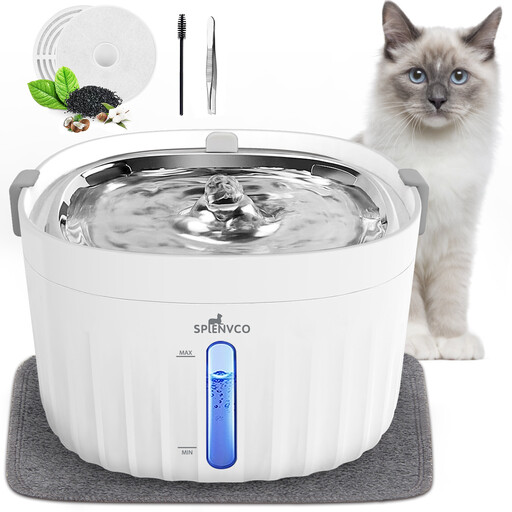
Why it suits this type of buyer : With its 2 L capacity, water-level window and stainless steel tray, this model is easy to use for a cat or small pet.
The visible water level helps reduce the risk of the pump running with an almost empty reservoir, while the detachable design makes cleaning easier.
Advertised triple filtration, a pump rated below 30 dB according to the product listing, and protection against running dry.
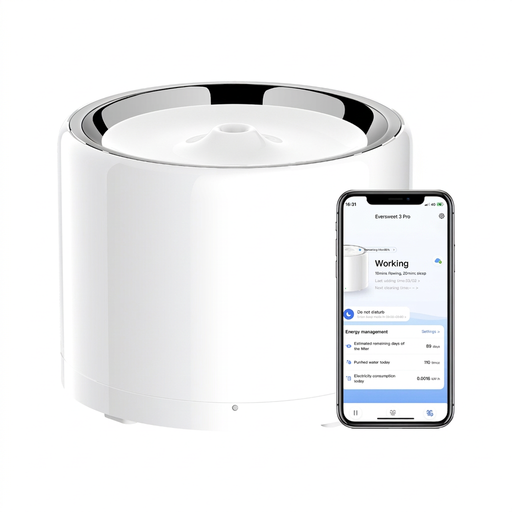
Why it suits this type of buyer : This fountain combines a cordless pump, mobile app, multi-layer filtration and stainless steel tray for anyone looking to bring several features together in one device.
The app lets you monitor the device and filter status, making it easier to remember maintenance tasks.
Advertised 1.8 L capacity, noise levels as low as 26 dB according to the product listing, and control through the PETKIT app.
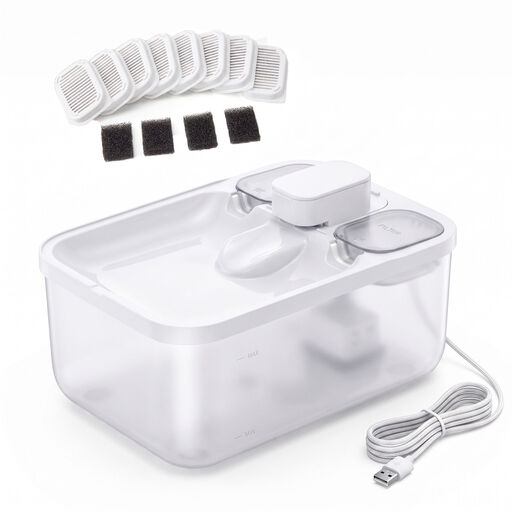
Why it suits this type of buyer : Its 4.5 L reservoir suits homes with several cats, or a cat and a small dog, when frequent refills become inconvenient.
The translucent body lets you check the water level at a glance, while the automatic shut-off helps prevent the pump from running when the water runs low.
4.5 L capacity, advertised four-layer filtration and a pump rated below 30 dB according to the description.
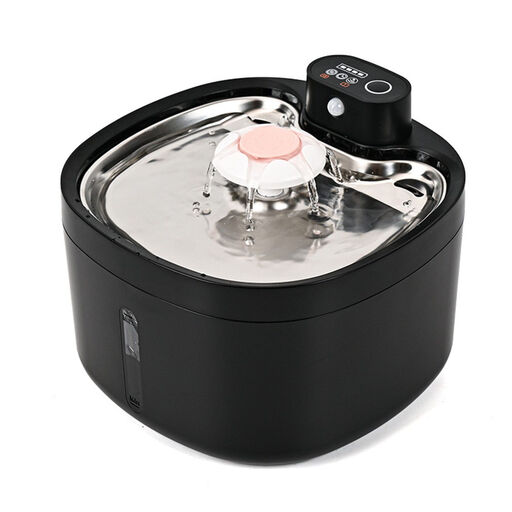
Why it suits this type of buyer : Its battery and three operating modes offer greater flexibility in homes without a nearby socket or when travelling.
Cordless operation makes it easy to set up, but you’ll need to keep an eye on the battery charge and filter condition.
2 L reservoir, advertised five-stage filtration and noise levels between 20 and 30 dB.
We’ve put together a comprehensive selection, updated in real time, of products that meet these exacting selection criteria as well as European safety standards.
Consumption depends on the pump’s power and the selected mode. The specifications for the models featured generally show low power consumption, often between 0.3 and 1.5 W for some appliances. To estimate the cost, multiply the power in kilowatts by the number of hours it runs, then by the rate stated in your electricity contract.
As a general rule, rinse and clean the parts that come into contact with water once a week. The pump may need checking more often if your water is very hard or several pets use the fountain. Replace the filter as instructed, usually every two to four weeks depending on the model.
Yes, some models are designed for both cats and small dogs. However, check the height of the tray, the stability of the base and the reservoir capacity. For several pets, a 4 L or larger dog and cat water fountain can mean fewer refills, but you’ll still need to refresh the water regularly.