
Livraison le jour même ou le lendemain

Qualité garantie

Débloquez vos offres de bienvenue: Livraison GRATUITE | Jusqu'à -80 % | 30 jours d'essai gratuits à JoyPlus
Téléchargez l'application
A cat tree with a scratching post can combine several functions in one piece of equipment: climbing, resting, playing and naturally caring for your cat’s claws. But an appealing photo or impressive height is no guarantee of a wise purchase. For an adult cat, a larger animal or a multi-cat household, certain technical details can make a real difference in everyday use.
A 170 cm cat tree naturally attracts attention, but this height needs to be supported by a sufficiently wide base and a suitably heavy structure. A very tall model with a small footprint may move when your cat jumps from one platform to another.
So check the base dimensions, the total weight of the equipment and whether there are connectors that may need tightening after assembly. To ensure the stability of a large cat tree, always install it on a level floor. Wall mounting may also be an option if the manufacturer provides for it and it is compatible with your home.
A multi-level cat tree is not necessarily suitable for a larger cat. Narrow platforms or shallow beds may be left unused, even if the structure has plenty of levels.
Compare the width of the perches, the diameter of the posts and the stated maximum load. The large PAWZ Road cat trees featured here can support up to 10 kg per cat. However, this figure should be considered alongside your pet’s actual weight, particularly if several cats use the structure.
A sisal cat scratching post meets a natural need, but its rope will inevitably wear out over time. A scratching post that is too thin or cannot be replaced may quickly lose its appeal.
Examine the quality of the wrapping, the diameter of the posts and whether damaged components can be replaced. Removable hammocks and cushions are also useful for limiting the build-up of fur. Sisal and wood can generally be cleaned with a barely damp cloth; it is best not to soak them.
For an XXL cat tree or a 170 cm cat tree, stability depends on several factors:
A 24 or 25 kg model obviously does not have the same solid footing as a small 3.35 kg piece of equipment. However, you should still check the assembly and the type of flooring on which it is installed.
Cats do not scratch solely to sharpen their claws. They also use the opportunity to stretch out fully. A sisal cat scratching post must therefore provide a sufficiently long and durable vertical surface.
The large models selected feature 13 sisal posts measuring 11 cm in diameter. This can suit adult cats that like to grip with their front paws. In a more compact space, a 63 cm vertical post offers a smaller, less obtrusive solution.
A cat tree equipped with a hammock, a hideaway, a perch and an interactive toy helps separate the different activities. Cats often like being able to choose between a high observation point, a quieter hiding place and an area dedicated to play.
In a multi-cat household, several resting areas can also reduce competition for a single bed. This does not replace separate resources — food bowls, litter trays and water points — but it can contribute to a more peaceful environment.
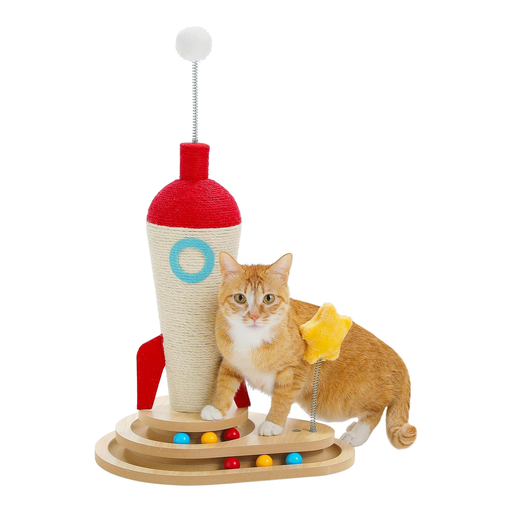
Why this choice suits this profile: Measuring 40 × 30 × 63 cm and weighing 3.35 kg, this model is ideal for anyone looking to get started with a compact solution without installing a large floor-standing structure.
It does not rely solely on a decorative feature: your cat gets a sisal post, a ball track and a teaser. However, the solid wood base must be installed on a stable surface.
A wooden structure, natural sisal, an integrated ball game and no batteries required.
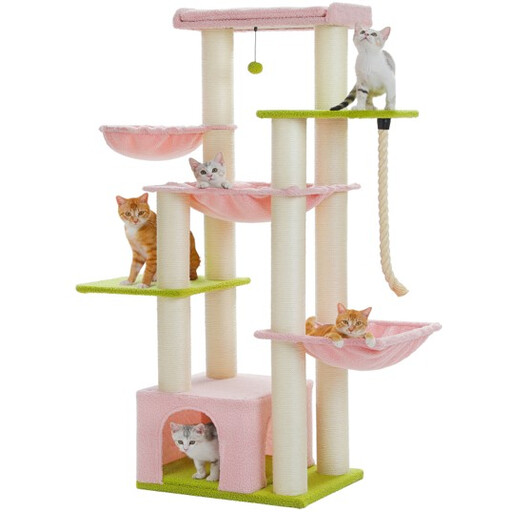
Why this choice suits this profile: Measuring 58 × 45 × 170 cm, this structure features seven levels, three hammocks, three top platforms and a spacious hideaway to organise resting and exploring.
The 13 posts, each measuring 11 cm in diameter, ensure the sisal is more than just decorative covering. The hammock and sleeping-area covers are removable for easier cleaning.
A weight of 24 kg, seven levels, three hammocks and a stated capacity of up to 10 kg per cat.
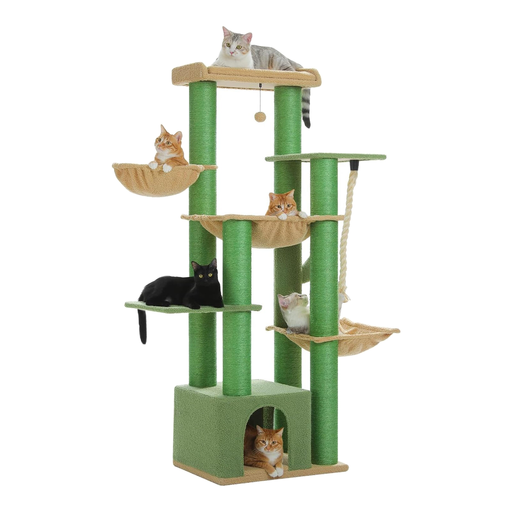
Why this choice suits this profile: With seven levels and numerous dedicated areas, this model is designed for medium to large adult cats, as well as households where several animals use the structure.
The 25 kg structure and 13 sisal posts measuring 11 cm in diameter are built for frequent use. It is still essential to check the connectors regularly and stop using the equipment if any part is damaged.
Three hammocks, three top platforms, a large hideaway and removable, washable covers.
We have put together a complete, real-time updated selection of products that meet these demanding criteria, while also taking European safety regulations into account.
Install the cat tree in a room where your pet already spends time, rather than in an isolated corner. Placing it near a window, a favourite piece of furniture or a living area can make it easier for your cat to take to it. Once assembly is complete:
To encourage your cat to use it, place an interactive toy near the scratching post, but never force your cat to climb. Avoid using harsh cleaning products on the fabric, wood and sisal.
It depends on the available space, your cat’s temperament and its mobility. A 63 cm model is suitable for a compact installation. A 170 cm cat tree or an XXL model offers more climbing opportunities, but requires a stable base and a sufficiently spacious room.
Its lifespan depends on how often it is used, the number of cats and the way they scratch. Inspect the rope regularly. When it becomes very smooth, comes loose or frays badly, replace the post or accessory concerned, provided the part is available separately.
Several hammocks, hideaways and platforms can limit competition for elevated spaces, but no piece of equipment can guarantee that tension will be avoided altogether. Each cat should also have separate resources and somewhere to retreat. You should also observe the maximum load stated by the manufacturer for each animal.