
Livraison le jour même ou le lendemain

Qualité garantie

Débloquez vos offres de bienvenue: Livraison GRATUITE | Jusqu'à -80 % | 30 jours d'essai gratuits à JoyPlus
Téléchargez l'application
Far more than a simple gadget, a cat tree is vital territory for your companion's well-being. It's their perch, observation post, scratching surface, and sanctuary. The problem? The market is flooded with models that are often deceiving. A poor choice is, at best, money down the drain and, at worst, a safety risk for your pet and a source of frustration for everyone.
Before you buy, learn how to avoid the common traps that turn a good deal into a regrettable purchase.
To make the right choice, you need to focus on objective criteria. These are your guarantee for your cat's safety and the longevity of your investment.
A few technical details are all it takes to distinguish true cat furniture from a short-lived gadget. Here are the three elements you should never overlook.
Your cat's safety comes first. A sturdy cat tree is built on two pillars:
The longevity of the cat tree directly depends on the robustness of its components.
A good cat tree is a true vertical playground. Its layout must cater to your pet's various needs:
Because every home and every cat is unique, here are our targeted recommendations to help you find the perfect model.

Why it stands out: At 206 cm tall with multiple platforms, this is a true skyscraper for felines. It's ideal for multi-cat households or for highly active cats with a visceral need to climb. The two condos, basket, and hammock ensure everyone can find their own spot without sparking territorial disputes.
Its wide, reinforced base, combined with the included anti-tip kit, neutralises the risk of instability. Its 13 natural sisal posts are built to withstand repeated assaults from an entire tribe.
A static load capacity of 75 kg (165 lbs). In short: unbeatable sturdiness, capable of handling the simultaneous acrobatics of several cats, even heavyweights.
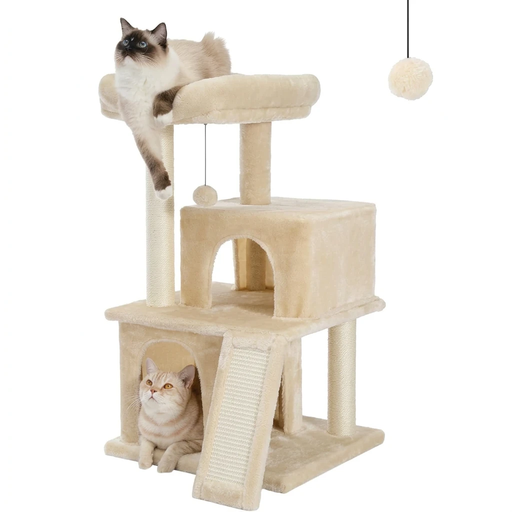
Why it stands out: Its 90 cm height and small footprint (49 x 44 cm) make it the ideal solution for studios and small apartments. It packs all the essentials (scratching, resting, playing) without eating up precious space. Perfect as a first tree or for a small-sized cat.
This model avoids the trap of being oversized. It's designed for cats under 5 kg (11 lbs), ensuring that every platform and condo is genuinely accessible and will be used, unlike giant models that can be intimidating or simply unsuitable.
Its excellent feature-to-footprint ratio. The cover of the top perch is removable and washable, which radically simplifies maintenance. A detail that makes all the difference on entry-level models.
We have selected a full range of products that meet our quality criteria and current safety standards.
The adjustment should be gradual and positive. Place the tree in a living area where your cat likes to spend time. Rub a little catnip on the posts to attract them. Use their favourite toys or treats to encourage them to explore the platforms. Above all, never force them: let them claim their new kingdom at their own pace.
It all depends on its original quality and the enthusiasm of its user! A good model can last for several years. The warning signs: bare sisal posts, a wobbly structure, or tattered plush fabric. The good news is that on some models, worn-out posts can be replaced individually.
For a cat that doesn't go outside, the answer is an unequivocal yes. It fulfils several of their fundamental needs: climbing, scratching, observing their environment from a secure perch, and having a refuge of their own. It's an essential element for their physical and mental well-being, which also has the added benefit of saving your sofa.