
Livraison le jour même ou le lendemain

Qualité garantie

Débloquez vos offres de bienvenue: Livraison GRATUITE | Jusqu'à -80 % | 30 jours d'essai gratuits à JoyPlus
Téléchargez l'application
Finding the perfect cat tree? It can be a real challenge. It needs to satisfy your feline's natural instincts (to climb, scratch, and survey their kingdom) while also blending seamlessly into your home decor. After all, an unsuitable model will be completely ignored, while a low-quality structure can quickly become a safety hazard.
To help you avoid buyer's remorse, our guide breaks down the essential criteria and presents our top picks. The goal: to find that perfect match that will delight your furry friend... and you.
Before you commit, let's review the key factors that will make your purchase a successful investment. Stability, size, and features: this is the winning combination for finding a cat tree that is functional, durable, and stylish.
Stability is the number one criterion. A sturdy cat tree relies on a wide, heavy base to prevent any risk of tipping over, especially if you have a large cat or an energetic lightweight. Models equipped with an anti-tip strap to secure them to the wall offer extra peace of mind.
When it comes to materials, durability is key. A cat tree made of solid wood or high-density particleboard is a guarantee of sturdiness. The posts, in turn, should be wrapped in natural sisal. It's THE ideal fibre to encourage your cat to sharpen their claws somewhere other than your sofa.
The size of the tree should be considered for both your cat and your living space. A kitten or a small cat will be happy with a compact structure. However, a Maine Coon or a multi-cat household will require a large cat tree with multiple platforms to prevent territorial disputes.
Think vertically! A cat tower optimises floor space while giving your pet what they love most: an elevated observation post to survey their world. A simple but crucial tip: measure the intended location before you order. This will save you from turning your living room into an obstacle course.
A good cat tree is a true amusement park for felines. The essentials include:
And no, aesthetics are no longer optional. Gone are the days of unsightly beige shag! Many designer cat trees now integrate perfectly into your home, becoming a genuine piece of furniture.
To guide you, here are three models that caught our eye. Each one meets specific needs in terms of size, style, and budget.
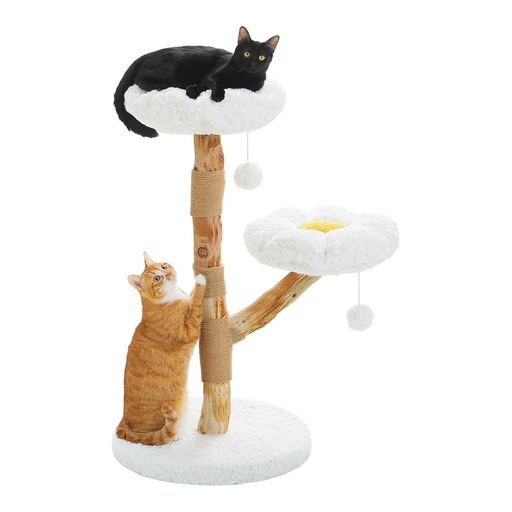
Why We Love It With its original look combining light wood and flower-shaped baskets, it breaks the mould of the traditional cat tree. It's a true decorative object that doesn't forget the essentials: your cat's comfort.
Key Features
Who is it for? Perfect for owners of medium to large cats (up to 7 kg) who want a designer cat tree that blends into a stylish interior. It can comfortably accommodate one or two felines.
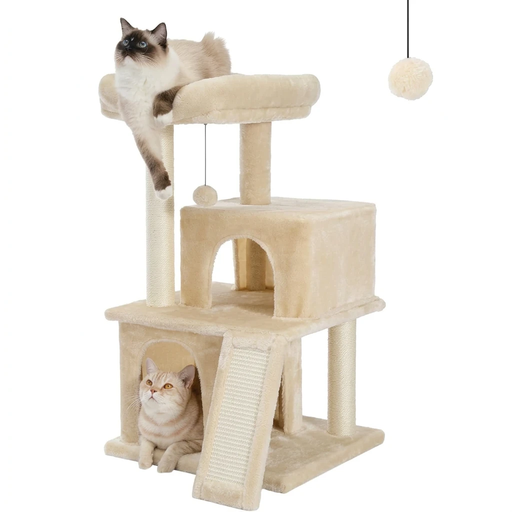
Why We Love It This is the ultimate all-in-one solution for small spaces. It packs maximum activities (scratching, napping, playing) into a minimal footprint.
Key Features
Who is it for? Ideal for kittens and small cats (up to 5 kg). Its compact size makes it the perfect choice for apartments or studios.
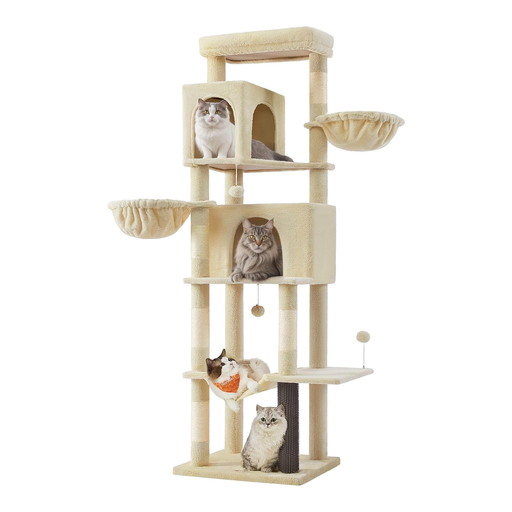
Why We Love It Nearly 2 metres tall! This cat tower is every climbing feline's dream. Designed for large (cat) families, it offers a vertical playground and an abundance of activities.
Key Features
Who is it for? This large cat tree is the solution for households with multiple cats or for very active (and/or large) breeds that need space to burn off energy. An investment that guarantees household peace.
If these models don't tick all your boxes, or if you're simply curious to see other styles, feel free to explore our full collection.
Discover Our Complete Collection of Cat Trees with Scratchers
Ideally, place it in a living area (like the living room) where you spend your time. If possible, position it near a window: it's the best observation post for watching the world outside. Avoid hallways and high-traffic areas, as your cat needs a quiet spot for their naps.
The classic trick of rubbing catnip on the posts works well. You can also hide a few treats or place their favourite toys on the platforms to entice them. Above all, be patient! Let them discover their new territory at their own pace, without forcing them.