
Livraison le jour même ou le lendemain

Qualité garantie

Débloquez vos offres de bienvenue: Livraison GRATUITE | Jusqu'à -80 % | 30 jours d'essai gratuits à JoyPlus
Téléchargez l'application
Cat treats can be used to reward your pet, establish a routine or simply add a little variety. But attractive packaging does not guarantee a suitable format, an appealing recipe or an easy-to-manage quantity. Between claims of “low-calorie” recipes, products promoting a meat flavour and large packs that are difficult to store, some purchases quickly end up forgotten at the back of a cupboard.
Here are the key criteria to consider before choosing cat treats, cat snacks or a cat treat pack.
Most rewards are complementary foods. They therefore do not replace your cat’s main diet, even when they contain vitamins, taurine or protein. The word “complementary” should be clearly shown on the label.
To avoid an unbalanced diet, treats should remain occasional or be deducted from your cat’s daily allowance. Take into account the manufacturer’s recommendations, as well as your cat’s age, weight and activity level.
A product described as “with chicken” or “with salmon” does not necessarily mean that the featured ingredient is present in the largest quantity. Check the ingredients list and look at the stated percentage. Some chicken cat treats or salmon cat treats contain as little as 4% of the advertised ingredient.
Ingredients are listed in descending order by weight. This list helps you distinguish a recipe dominated by cereals from one in which meat or fish plays a more prominent role.
Soft textures and liquid cat treats are convenient, but they generally keep for less time once opened. Some liquid portions must be consumed immediately or refrigerated for no more than 24 hours.
Dry bites are easier to store, particularly in a resealable pouch. Even so, check the recommended period after opening and close the packaging carefully to preserve their texture.
The texture should suit your cat’s habits, as well as the intended use. A liquid treat is easy to divide into portions, while a dry bite is simpler to count.
The claim low-calorie treats should be checked against the nutritional information, where available. A small bite is not necessarily low in calories. Energy density, fat content and the maximum recommended number per day are more reliable indicators.
Recommendations can vary considerably. Some products allow up to 12 bites per day for an adult cat, while liquid sticks are sometimes limited to one or two portions. If rewards become frequent, remember to reduce your cat’s main food allowance accordingly.
Kitten treats should not be chosen in exactly the same way as those intended for an adult cat. Check the minimum age stated on the packaging. One product may be suitable from 2 months, while another may be reserved for adult cats.
For a neutered, sedentary or weight-prone pet, carefully managing quantities is particularly important. If your cat is on a prescribed diet or has a food sensitivity, ask a vet for advice before introducing a new reward.
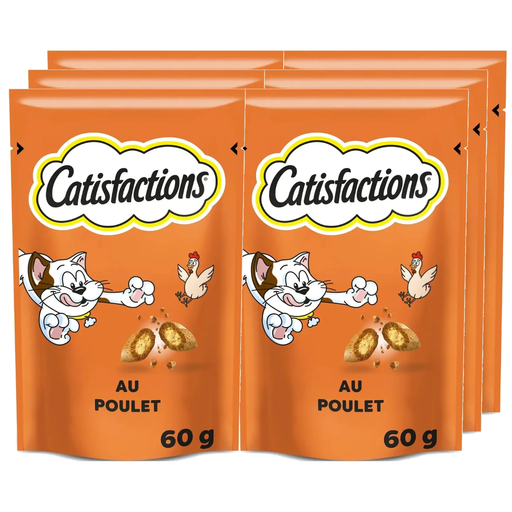
Why this choice suits this profile : The pack of six pouches provides a practical supply for everyday rewards, with crunchy bites and a soft centre.
The product details specify that this is a complementary food, recommend up to 12 bites per day for an adult cat and advise consumption within four weeks of opening.
360 g in total, 28% crude protein and a formula advertised as free from artificial colours and preservatives.
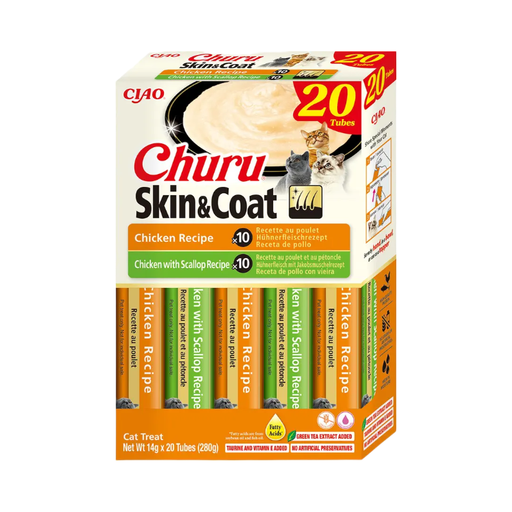
Why this choice suits this profile : The 20 individual 14 g portions will appeal to anyone looking for clean, carefully controlled serving sizes.
Each portion is pre-measured, and the product details recommend 1 to 3 sticks per day without replacing your cat’s main diet.
The ingredients list states 30% chicken and 86% moisture, with fish oil and vitamin E, according to the product details.
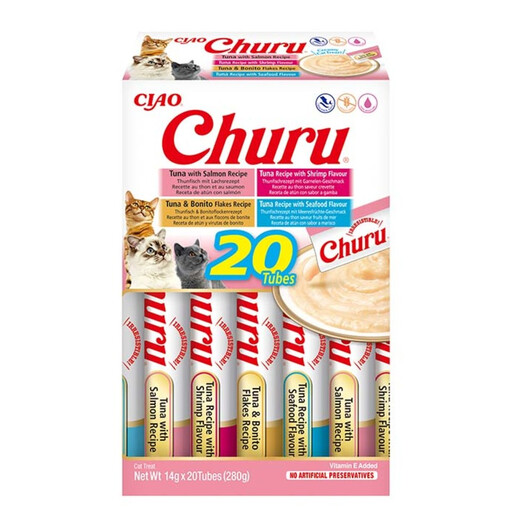
Why this choice suits this profile : The four recipes on offer provide variety for cats that quickly tire of the same flavours.
The analysis states 91% moisture. The instructions also specify that the product should be refrigerated and consumed on the day it is opened.
A 280 g multipack, four seafood-based recipes and a texture that can be given directly or mixed with food.
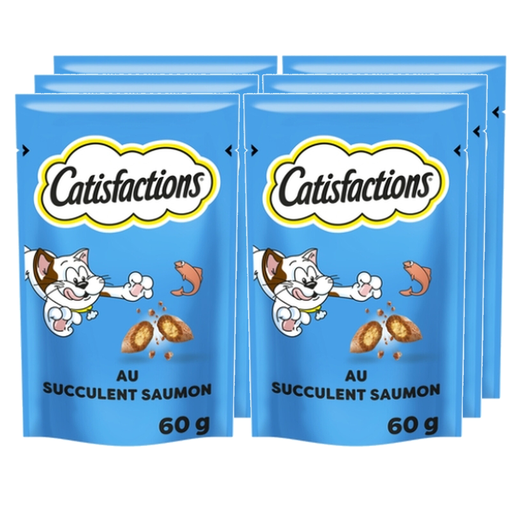
Why this choice suits this profile : The product details state that these treats are suitable for cats and kittens from 2 months old, with quantities adapted to each age group.
The stated minimum age and limits — up to 6 bites for a kitten — prevent you from giving it the same portion as an adult cat.
Less than 2 kcal per bite according to the product details, resealable pouches and 4% salmon stated in the ingredients list.
We have put together a complete, real-time updated selection of products that meet these exacting criteria and European safety regulations.
There is no universal amount: it all depends on the cat. Start by following the manufacturer’s recommendations, then adapt them to your cat’s weight, age and activity level. Rewards should remain a small part of its daily intake. If treats are given regularly, reduce its main food allowance accordingly.
They may appeal to cats that prefer moist textures or drink very little, but they are still complementary foods. Check their ingredients, portion size and storage conditions. An opened liquid portion should generally be consumed quickly.
Keep dry bites in a cool, dry place in a carefully resealed pouch. For liquid products, follow the instructions on the packaging and refrigerate them if necessary. Discard any portion whose smell, texture or appearance has changed.