
Livraison le jour même ou le lendemain

Qualité garantie

Débloquez vos offres de bienvenue: Livraison GRATUITE | Jusqu'à -80 % | 30 jours d'essai gratuits à JoyPlus
Téléchargez l'application
Cat treats are not just about spoiling your pet. They can be offered during playtime, help your cat accept a particular food or serve as an occasional reward. However, the range available in France includes complementary foods, complete wet food, lickable pastes and cat soups. This can make choosing the right option less straightforward than it first appears.
Before filling your basket, there are three pitfalls to watch out for:
The legal classification is a useful starting point. A treat, lickable cat paste or soup will generally be labelled as a “complementary food”. These products should be given occasionally and make up only a limited proportion of your cat’s daily intake.
Vitakraft Poesie mousse, for example, is described as a complete wet food for adult cats. It can therefore form part of your cat’s meals in line with the manufacturer’s instructions, unlike INABA Churu liquid sticks, which are designed as a reward or supplement. This distinction is essential to avoid unintentionally replacing your cat’s usual meals.
To compare a treat with a high water content, check the moisture percentage shown on the packaging. Several liquid products in this selection contain 91% moisture, compared with 78% for Vitakraft mousse and 88.5% for the Vitakraft duck liquid snack.
A high water content affects the texture and may suit cats that enjoy lickable preparations. However, you should still ensure that a bowl of fresh water is available at all times.
The number of calories per serving should also be checked. Some INABA products contain approximately 6 calories per stick. The amount given should be adapted to your cat’s weight, activity level and body condition. For a cat prone to weight gain, low-calorie cat treats can be a practical solution, but they should never replace a suitable, properly monitored diet.
Read the ingredients list in descending order. A tuna, chicken or seafood recipe does not necessarily mean that the relevant protein makes up the entire product. For example, some recipes in the INABA range list a tuna content of between 28.2% and 30%, depending on the variety.
Chicken treats for cats may suit pets attracted to poultry flavours, while tuna cat treats or seafood varieties offer a little more variety. If your cat has a known food sensitivity, also check for secondary protein sources, thickeners and any dairy products.
Finally, identify how you intend to use the treat:
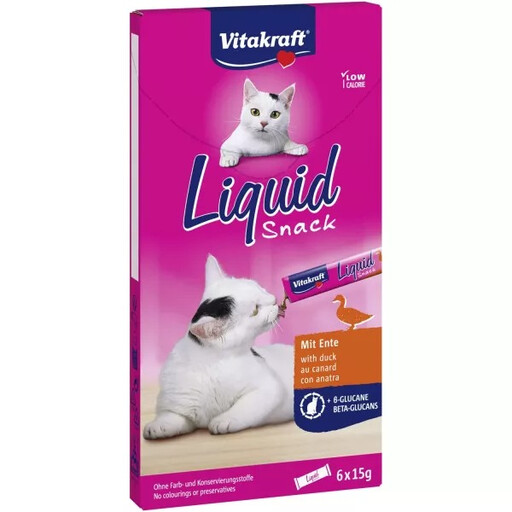
Why this product suits this profile : The six individual portions let you try the liquid format without committing to a large pack straight away. The gel-like texture can be served on its own or used as a topping.
The product is clearly presented as a complementary food for adult cats, rather than a main meal. Its stated moisture content is 88.5%.
Six 15 g pouches, 3.5% fat and no added artificial colourings, flavourings or preservatives, according to the product listing.
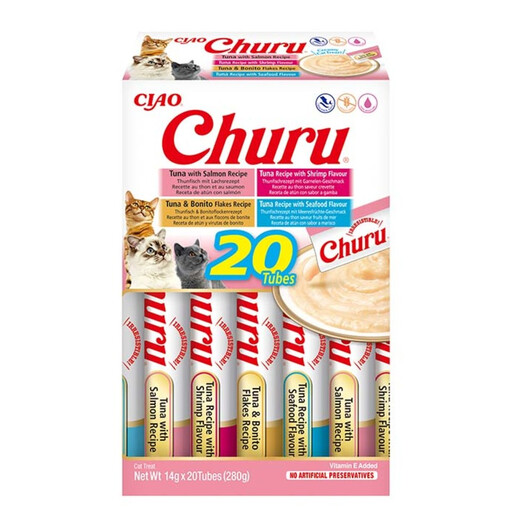
Why this product suits this profile : This multipack contains four tuna and seafood recipes, with a liquid texture that is ideal for interactive treat time.
All four recipes are detailed separately and have a moisture content of 91%. This makes it easier to compare the different flavours.
20 x 14 g sticks, 91% moisture and several combinations: tuna-salmon, tuna-prawn or tuna-bonito.
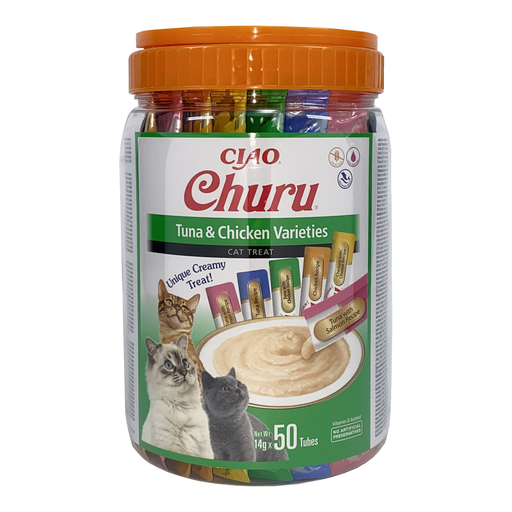
Why this product suits this profile : The pack of 50 portions is ideal for households that regularly give their cat a reward, use treats as a topping or need help administering medication.
The product listing specifies that this is a complementary food, recommends 1 to 2 sticks per day for an adult cat and advises refrigerating the product after opening.
50 x 14 g portions, 91% moisture and approximately 6 calories per portion according to the product listing, with a combination of chicken and tuna proteins.
We have put together a complete, real-time updated list of products that meet these strict selection criteria, as well as European safety regulations.
Give cat treats as a supplement to a suitable diet, without exceeding the quantity stated on the packaging. For adult cats, some products recommend 1 to 2 sticks per day, while others specify a different limit. The instructions for the product you have purchased should always take priority.
Once opened, liquid preparations should generally be used immediately or stored in the refrigerator for up to 24 hours. Do not let your cat chew the packaging. If you are using a treat to administer medication, check that the product can be mixed with it and seek advice from an animal health professional if necessary.
Treats should be given occasionally and account for only a small proportion of your cat’s daily energy intake. Follow the serving recommended by the manufacturer, then slightly reduce the main ration if rewards are given every day.
No. A lickable cat paste, cat soup or liquid stick is generally a complementary food. Complete wet food carries a specific designation and comes with more detailed feeding recommendations.
The storage time depends on the product. Several products featured here recommend using them immediately or within 24 hours, and storing them in the refrigerator after opening. Always check the label, best-before date and stated storage conditions.