
Livraison le jour même ou le lendemain

Qualité garantie

Débloquez vos offres de bienvenue: Livraison GRATUITE | Jusqu'à -80 % | 30 jours d'essai gratuits à JoyPlus
Téléchargez l'application
Cat treats are useful for rewarding your pet, complementing a play session or simply sharing a moment of connection. However, attractive packaging alone is not enough to make the right choice. Between recipes that highlight their meat content, low-calorie claims and formats that quickly lose their freshness, some products are not well suited to everyday use.
The selection below is based on the information available in the product listings: ingredients, shape, recommended age, quantity and usage guidance. The aim is to help you compare cat rewards without confusing a complementary food with a complete meal.
A description such as “with chicken” or “with salmon” may refer to a flavoured recipe rather than a product made predominantly from that meat or fish. To find out what the product actually contains, check the ingredient list and the stated percentage.
For example, Catisfactions Chicken Treats list 4% chicken in their composition. This does not prevent them from being used as a reward, but it does allow you to compare them objectively with a recipe that contains a higher proportion of meat.
Even low-calorie treats are still complementary food. The quantity should be adjusted according to your cat’s weight, activity level and usual diet. If rewards are given regularly, you may need to slightly reduce the amount of dry or wet food to avoid unbalancing the daily intake.
The recommendations on the packaging are a starting point, not a universal rule for every cat. A sedentary, neutered or weight-prone animal may need a smaller quantity.
Crunchy cat treats quickly lose their texture if the bag is left open. Lickable products require a different approach: an opened portion should generally be consumed promptly and, in some cases, stored in the refrigerator.
Before choosing a large format, check the number of portions, whether the bag is resealable and the recommended storage conditions.
The shape alone does not determine a treat’s nutritional quality. It should primarily match your pet’s preferences and the way you intend to offer the rewards.
Look for the wording complementary food for cats. This indicates that the product is not a substitute for complete food. Ingredients are listed in descending order by weight, while the analytical constituents specify, among other things, the levels of protein, fat, fibre, ash and moisture.
A recipe containing grains is not automatically unsuitable. Conversely, a grain-free recipe will not necessarily meet every cat’s needs. If your pet has a food sensitivity or follows a prescribed diet, consult a vet before introducing a new reward.
Kitten snacks should be explicitly identified as suitable for growing animals. Do not choose a product for adult cats simply because its name mentions kittens. The product listing and packaging should specify the minimum age and recommended daily quantity.
The Catisfactions Salmon range indicates use from 2 months, with separate recommendations for kittens and adult cats. By contrast, the 60 g Catisfactions Chicken product is presented as a complementary food intended for adult cats.
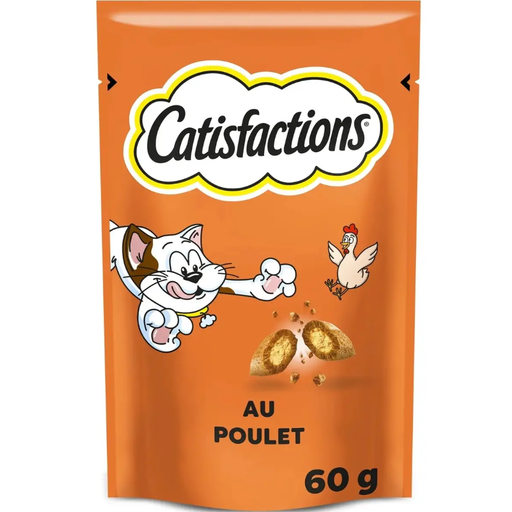
Why this choice suits the profile: the compact format makes it easy to test an adult cat’s preferences without being left with a large stock.
The listing specifies that this is a complementary reward and sets a limit of 12 bites per day for an adult cat.
A crunchy texture with a soft centre, 28% crude protein and no artificial colours or preservatives, according to the listing.
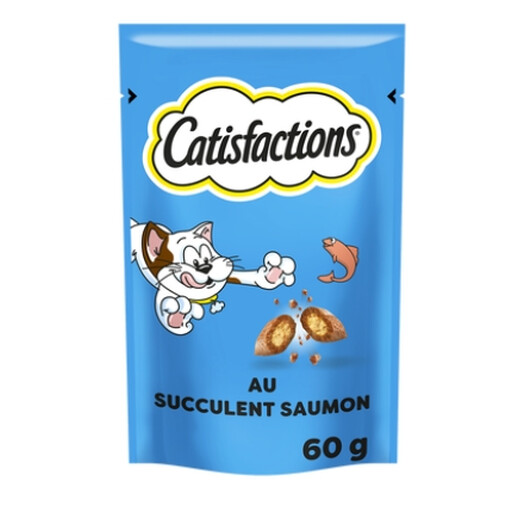
Why this choice suits the profile: according to the product information, this dry salmon-flavoured treat is suitable for adult cats and kittens from 2 months of age.
The ingredients list states 4% salmon : this helps you distinguish between the advertised flavour and the actual proportion of the ingredient.
Fewer than 2 kcal per bite according to the listing, with a resealable bag and separate recommendations for adults and kittens.
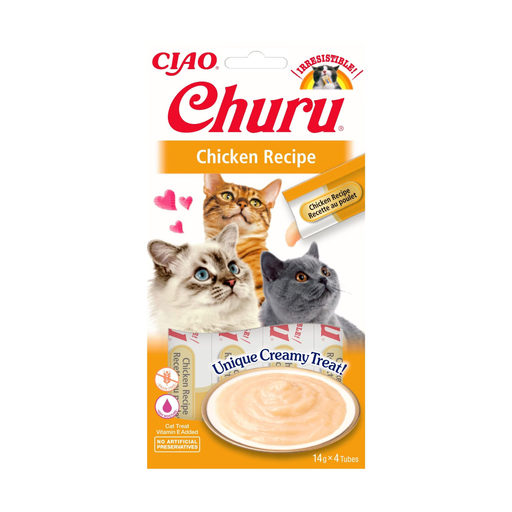
Why this choice suits the profile: according to the product listing, these purée sticks can be given by hand, served on food or mixed with water.
The product is explicitly presented as complementary : it does not replace the main diet and should not exceed 10% of the stated daily intake.
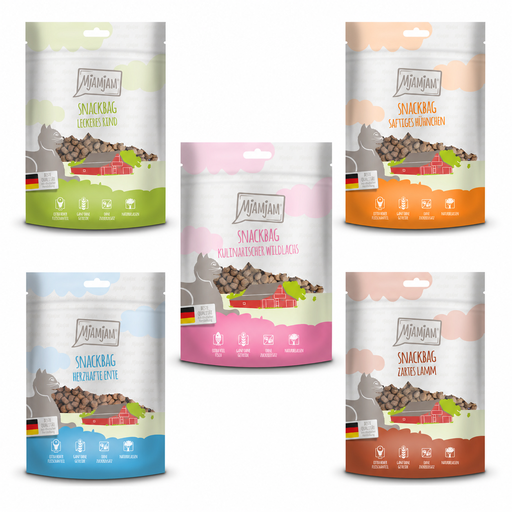
Why this choice suits the profile: the assortment lets you try several recipes, which can be useful with a fussy cat or in a multi-cat household.
The trial box avoids buying a large quantity of a flavour your cat may reject.
The format is presented as an assortment box containing 125 g portions. Check the exact number of sachets on the packaging you receive before use.
Explore an updated selection of products to compare formats, textures and recipes designed for cats.
Start with a small quantity to make sure your cat accepts the product. Offer the bites during a play session or immediately after a desired behaviour, rather than leaving them available all the time. This approach helps preserve their appeal as cat rewards.
Also remember to:
The quantity depends on the product, the animal’s weight, age and main diet. For example, the Catisfactions Chicken listing recommends up to 12 bites per day for an adult cat, while the Salmon product recommends up to 20 for an adult and up to 6 for a kitten. These figures should be adjusted to the overall diet.
No. Their high water content may help vary fluid intake, but a bowl of fresh water should always remain accessible. INABA Churu sticks are a complementary food: they do not replace a complete meal or access to water.
Close bags of dry treats carefully and store them in a cool, dry place. For opened lickable products, follow the instructions on the packaging. In the case of INABA Churu Chicken, the listing recommends refrigeration and prompt consumption after opening.