
Livraison le jour même ou le lendemain

Qualité garantie

Débloquez vos offres de bienvenue: Livraison GRATUITE | Jusqu'à -80 % | 30 jours d'essai gratuits à JoyPlus
Téléchargez l'application
Cat treats are useful for rewarding your pet, keeping them occupied or sharing a moment of bonding. But appealing packaging is no guarantee that a product genuinely meets your cat’s needs. Difficult-to-decipher ingredients, portions that are hard to control or an impractical format: there are plenty of pitfalls for owners.
Before buying cat snacks, three points deserve particular attention.
Treats for adult cats are not always suitable for kittens. Some products are intended exclusively for them, while others, such as Catisfactions Salmon, can be given to cats and kittens from 2 months of age. By contrast, Whiskas Temptations Chicken & Cheese are reserved for adult cats and are not suitable for kittens under 12 months old.
A reward is still a complementary food: it should never replace your cat’s main meals. If you give treats regularly, slightly reduce their usual food ration to help maintain a balanced diet. In all cases, follow the recommendations provided on the packaging.
When comparing meat-based cat treats, start by looking at the order of the ingredients and the percentages stated. A recipe such as MJAMJAM Cat Treats Chicken 125g contains 55% chicken and is grain-free, with no added sugar and a single source of protein. MJAMJAM Cat Treats Duck 125g, meanwhile, contains 35% duck and 22% poultry.
Grain-free cat treats are not automatically lower in calories. Also check the levels of protein, fat, fibre, ash and moisture. For example, according to their product information, MJAMJAM dry bites contain 33% protein and 18% fat.
Flavour claims should also be interpreted with care. Catisfactions Salmon contains 4% salmon, while some Whiskas recipes specify 4% chicken or salmon. This detail helps distinguish between a treat genuinely made with a particular ingredient and one containing little more than a flavouring or combination of flavours.
The format should mainly suit how you intend to use the treats every day:
For wet or liquid products, follow the storage instructions carefully. Vitakraft liquid snack must be refrigerated after opening and consumed within 24 to 48 hours. Dry bites, meanwhile, should be sealed carefully to preserve their texture.
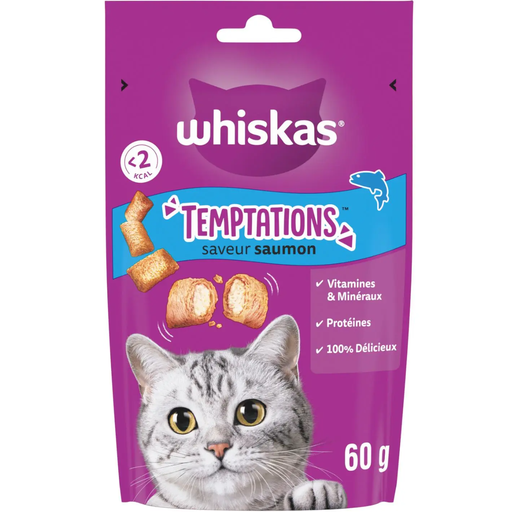
Why this choice suits this profile : At 60 g, this small pack lets you try salmon cat treats without ending up with a large stock. The product information states that each bite contains fewer than 2 kcal, with up to 12 bites per day for an adult cat.
The ingredients and feeding recommendations are clearly stated, making it easier to control quantities. However, bear in mind that the recipe contains cereals.
A compact format, a crunchy texture with a soft centre and no artificial colourings, according to the product information.
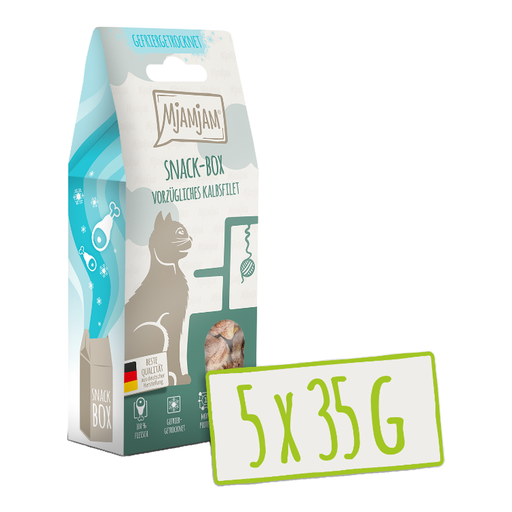
Why this choice suits this profile : This box of five sachets is designed for owners looking for a short ingredients list and easy-to-manage portions. The product information states that it contains 100% veal fillet, with no cereals, gluten or added sugar.
The percentage of meat is clearly stated. However, take care: the title mentions beef, while the description refers to veal. Check the sachet labelling before buying.
A stated crude protein content of 66.8% and a format that can be rehydrated in water for 5 to 10 minutes.
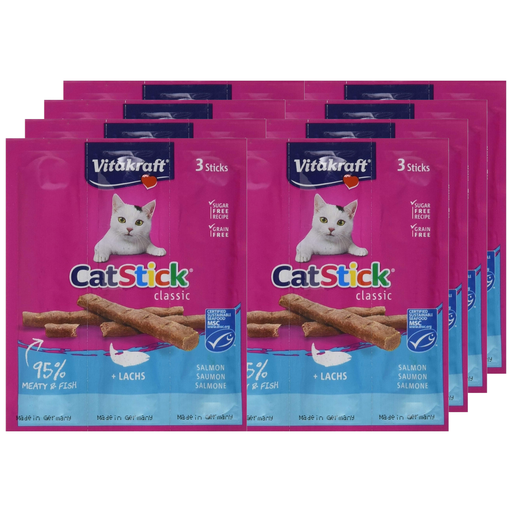
Why this choice suits this profile : The 24 individually wrapped sticks are practical for frequent treats, travelling or play sessions. Thanks to their pre-cut sections, they can be easily divided.
Individual packaging limits exposure to air after opening. However, this product is still a complementary food intended for adult cats only.
The product information states that more than 80% of the ingredients are of marine origin, including 12% salmon, with no added sugar or colourings.
We have brought together a complete, real-time selection of products that meet these demanding criteria and European safety regulations.
The amount depends on your cat’s weight, age, activity level and the recipe. Some bites contain fewer than 2 kcal each, but you should still follow the manufacturer’s recommendations. Treats should remain a small part of your cat’s daily intake and must never replace a complete diet.
Not necessarily. They may suit a particular preference about ingredients or a specific sensitivity identified with help from an animal health professional. Always compare the ingredients list, fat content and recommended portion rather than relying solely on the claim on the packet.
A liquid snack can be given on its own or mixed with dry food. A stick or crunchy bite is more suitable as a reward given directly by hand. Introduce any new treat gradually and monitor both your cat’s appetite and digestive tolerance.