
Livraison le jour même ou le lendemain

Qualité garantie

Débloquez vos offres de bienvenue: Livraison GRATUITE | Jusqu'à -80 % | 30 jours d'essai gratuits à JoyPlus
Téléchargez l'application
Choosing cat treats isn’t just about the flavour on the packet. Texture, age, ingredients, calorie content and storage conditions all play a part in everyday use. A reward designed for an adult cat won’t necessarily suit a kitten, and a moist snack doesn’t keep the same way as a dry bite.
Before you place an order, here are the main pitfalls to avoid and the criteria to check when selecting a product that truly fits your feline’s habits.
The vast majority of cat rewards are complementary foods. They are not a substitute for the main diet. Even if a product contains vitamins, taurine or minerals, you should stick to the recommended amounts and, if necessary, slightly reduce the usual portion.
A claim like “chicken” or “salmon” doesn’t necessarily mean that ingredient forms the base of the recipe. Check the ingredients list to see the actual declared percentage. For example, some recipes contain 4% chicken or salmon, whereas Sheba fillets list 37% chicken fillet in their composition.
A large pack of cat treats can lower the price per portion, but it becomes less worthwhile if your cat eats only a few. Dry bites can usually be resealed after opening and must be used within the time stated on the packaging. Liquid cat treats and products in sauce often need to be kept in the fridge after opening and consumed within 24 to 48 hours.
For treats intended for cats and kittens, always check the minimum age stated. Catisfactions salmon treats are suitable for cats and kittens from 2 months old, with a recommended amount that varies by age. Conversely, the Sheba fillets shown here are for adult cats only and are not suitable for kittens.
For an older cat, one that is sensitive to certain textures or not keen on dry food, soft cat bites and moist formats can be easier to give. If your cat is on a special diet, ask your vet for advice before adding a complementary food to their usual ration.
Texture also affects cleanliness and storage. Individual portions reduce leftovers, while a family-sized pouch needs careful resealing after every use.
Low-calorie treats can make regular rewards easier, but it’s the total amount that counts. Some products contain less than 2 kcal per bite, while INABA Churu liquid sticks provide 6 kcal per 14 g portion. These values need to be weighed against your cat’s daily ration and activity level.
The phrase “low in calories” doesn’t give you free rein. Follow the manufacturer’s recommendations, adjust the amount to your cat’s weight and activity, and always make sure fresh water is available.
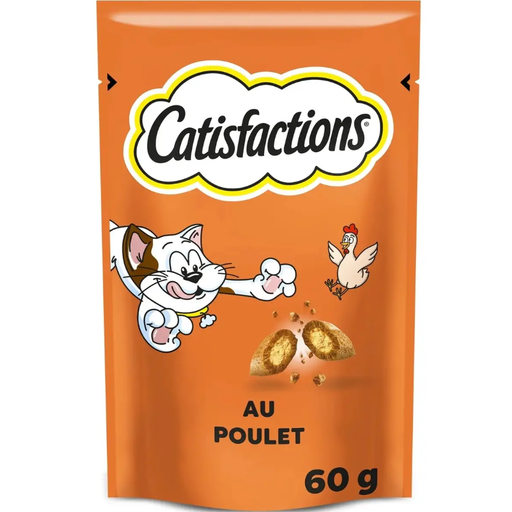
Why this suits this profile: The 60 g pouch lets you try the chicken treats without committing to a large stock. Their crunchy texture with a soft centre works well for both training sessions and everyday little rewards.
The small size reduces the risk of leaving a pouch open for too long. It is a complementary food for adult cats, not a complete meal.
Declared chicken at 4%, 28% crude protein and less than 2 kcal per bite according to the product sheet.
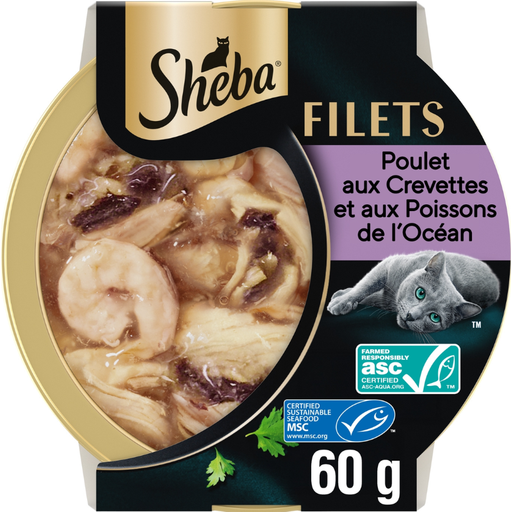
Why this suits this profile: The tender fillets in sauce offer a change from dry bites, with a recipe combining chicken, tuna and shrimp in a 60 g format.
The ingredients list details the featured components: 24% chicken fillet, 4% MSC-certified tuna and 4% ASC-certified shrimp, according to the product sheet.
A moist texture, 84% declared moisture content and storage in the fridge for up to two days after opening.
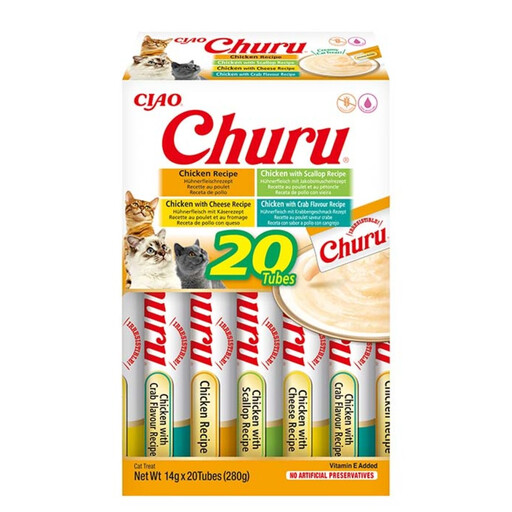
Why this suits this profile: The 20 individual 14 g sticks make it easy to portion out, add to kibble or give straight from your hand.
Individual packaging limits leftovers. Once opened, the stick must be kept in the fridge and used within 24 hours, rather than stored for several days.
91% declared moisture content, 6 kcal per portion and several ways to serve: on its own, on food or with medication if this practice is suitable.
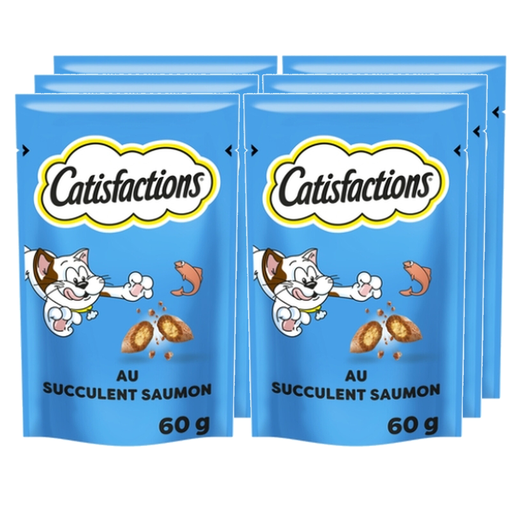
Why this suits this profile: The pack of six 60 g pouches is ideal for regular feeding and lets you keep several portions sealed until needed.
The recommendations distinguish between adult cats, up to 20 bites per day, and kittens from 2 months old, for whom the limit is 6 bites daily.
Declared salmon at 4%, resealable pouches and less than 2 kcal per bite according to the product sheet.
We’ve put together a full selection, updated in real time, of products that meet these exacting criteria as well as European safety regulations.
The amount depends on weight, age, activity and the recipe. Some bites recommend up to 12 units per day for an adult cat, while other products allow up to 20 units. The most important thing is to factor the calories from treats into the daily ration.
They can be suitable for different ages depending on the label, but they remain complementary foods. Their high moisture content does not make them a complete meal. After opening, check the storage time, which is often limited to 24 or 48 hours in the fridge.
Not always. Some products are suitable from 2 months old, while others are for adult cats only. Check the age category, the recommended dose and the ingredients before choosing treats for cats and kittens.