
Livraison le jour même ou le lendemain

Qualité garantie

Débloquez vos offres de bienvenue: Livraison GRATUITE | Jusqu'à -80 % | 30 jours d'essai gratuits à JoyPlus
Téléchargez l'application
Your cat comes running the moment you open a cupboard, but not all cat treats are created equal. Texture, quantity, recommended age, ingredients and storage can make a real difference to your daily routine. A treat should remain an occasional extra, compatible with your cat’s main diet and lifestyle.
A “with chicken” or “with salmon” claim doesn’t necessarily mean the recipe contains that ingredient as its main component. Always check the ingredients list and the quantitative ingredient declaration when available. Some products contain as little as 4% chicken or salmon, with cereals taking the top spot on the list.
Snacks, bites and liquid cat treats are not a replacement for a complete food. If you hand out too many rewards, you can unbalance your cat’s daily intake – especially if they’re not very active, are neutered or prone to weight gain. Adjust the amount of main food according to the instructions on the packaging.
A big assortment of cat treats might seem convenient. But once the packet is opened, the texture and aroma can deteriorate. Crunchy products generally need to be resealed carefully. Wet or liquid portions often need to be kept in the fridge after opening and used up quickly.
Crunchy cat treats suit cats that enjoy little bites to chew. Some products combine a crispy outer shell with a soft centre. Soft formats, such as liver bites, are easier to break up or use to hide a tablet – though this isn’t a medical recommendation.
Liquid cat treats can be served straight from the tube or mixed into kibble. They’re usually high in moisture, but they’re still supplementary foods. For a cat that turns its nose up at dry textures, this format can simply add a bit of variety.
Look for labels such as “adult cat”, “all life stages” or “kitten”. A treat designed for adults isn’t automatically suitable for a young animal. Some kitten treats are suitable from 2 months of age, with a different daily amount to that recommended for an adult.
Also consider any known sensitivities your cat has: cereals, dairy, fish, added sugars or various animal ingredients. A short ingredients list doesn’t guarantee universal compatibility, but it does make choosing easier when you need to avoid a specific component.
Check the daily feeding recommendation and, where given, the energy value per treat. Low-calorie cat treats can be handy for training or repeated rewards – some products claim fewer than 2 kcal per piece. That information doesn’t let you off the hook for monitoring the total number of treats you give.
Also look at the net weight and number of packets. A multipack of individual portions can keep freshness better than one large bag. Always follow the storage instructions after opening.
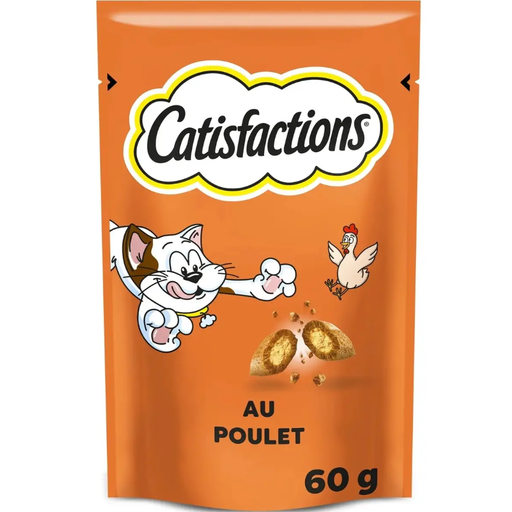
Why this choice suits this profile: The small packet lets you try chicken treats without ending up with a huge stash. Their crunchy texture and soft centre work well for occasional rewards.
The product page states a maximum of 12 treats per day for an adult cat and clearly notes it’s a complementary food.
60g format, 28% crude protein as stated, and a resealable pouch after opening.
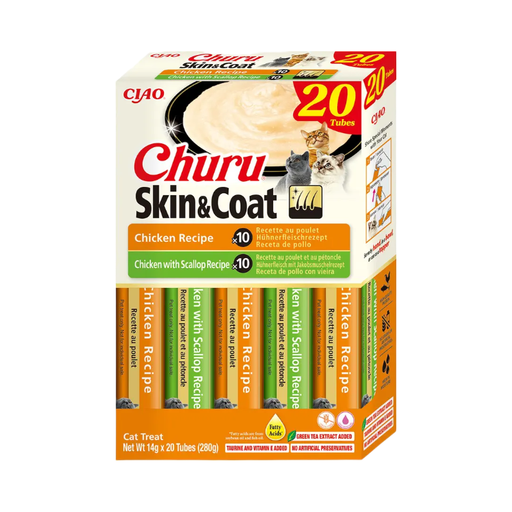
Why this choice suits this profile: The 20 individual purée portions are perfect for bonding moments, served from the tube or squeezed onto their usual food.
The ingredients list shows 30% chicken and 86% moisture. The 14g portions make it easier to control how much you serve.
Grain-free purée according to the product page, 20 sticks, 8% crude protein, and needs refrigeration after opening.
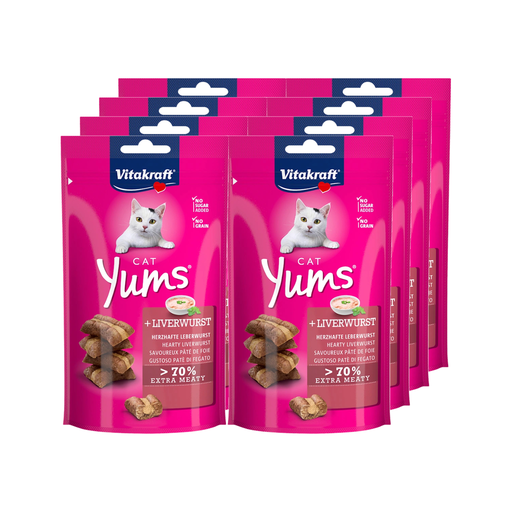
Why this choice suits this profile: The soft liver bites are ideal for frequent rewards and can be broken into smaller pieces depending on your cat’s size.
The eight 40g sachets stop you from leaving a large pack open for too long. The product page also clearly states it’s a complementary food.
Over 70% meat and animal derivatives as stated, with no cereals or added sugar according to the product page.
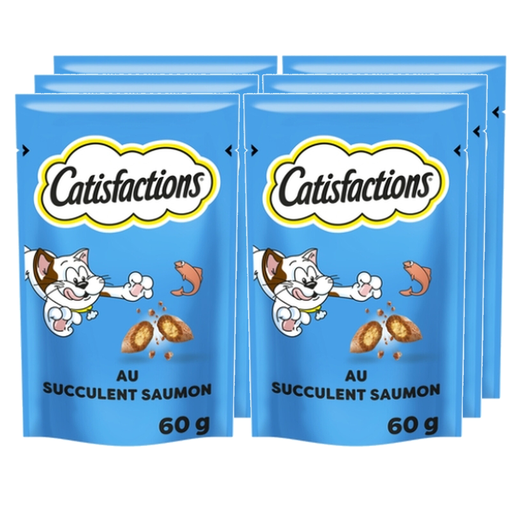
Why this choice suits this profile: This option lets you offer the same flavour to an adult cat and a kitten from 2 months old, with amounts tailored to each.
The product page distinguishes between up to 20 treats for an adult and up to 6 for a kitten, rather than applying a single quantity.
Six resealable 60g sachets, fewer than 2 kcal per treat according to the product page, and salmon listed at 4% in the ingredients.
We’ve put together a comprehensive, real-time updated list of products that fully meet these strict selection criteria and European safety regulations.
There’s no universal amount. It all depends on your cat’s weight, age, activity level and main diet. Start by following the recommendation on the product and reduce the usual meal portion if you’re giving treats every day.
Some are suitable for kittens from the age stated on the packaging – for example, 2 months for certain salmon products. Others are for adult cats only, particularly some sauce-based products. Check the age category before buying and choose a size that’s easy for them to eat.
Crunchy bites are good for quick rewards and generally keep better. Liquid or purée treats can be served on their own or added to kibble, but often need to be kept in the fridge after opening. The choice really comes down to your cat’s preferences and your own routine.