
Livraison le jour même ou le lendemain

Qualité garantie

Débloquez vos offres de bienvenue: Livraison GRATUITE | Jusqu'à -80 % | 30 jours d'essai gratuits à JoyPlus
Téléchargez l'application
Cat treats can reward good behaviour, accompany a play session, or simply create a moment of bonding. But with treats marketed as “natural”, snacks labelled “low calorie” and recipes enriched with vitamins, it’s not always easy to separate useful information from marketing promises.
Before you place an order, three common pitfalls keep cropping up:
The order of ingredients is a useful first guide: they are usually listed in descending order by weight. A salmon treat could therefore be made mostly of cereals, fats or vegetable derivatives, with the salmon appearing much further down the list.
Also look for the quantitative ingredient declaration when the recipe highlights chicken, tuna or salmon. Among the products featured here, some references state, for example, 4% chicken or 4% salmon. This information lets you compare recipes more honestly, without confusing the flavour name with the actual product composition.
Tuna treats and fish-based recipes can be a good way to add variety, but they are still rewards. If your cat is on a special diet, ask your vet before adding any complementary food to their meals.
Choosing between crunchy treats, soft bites and liquid sticks depends largely on how you plan to use them:
The moisture percentage shown on the packaging helps you understand the differences between formats. Some Inaba sticks have around 90.5% to 91% moisture, compared with roughly 8.5% to 10% for dry Catisfactions bites. These figures obviously aren’t enough to judge a treat’s quality – they mainly help you choose a texture and storage method that suits you.
A treat should remain an occasional reward or be given in moderation. The manufacturer’s recommendations vary depending on your cat’s age, weight, activity level and the product itself. The Catisfactions chicken and salmon recipes, for example, state a daily limit, with a specific amount for kittens in the salmon recipe.
Low-calorie treats can help you control portions more easily, but this claim deserves a closer look. Some bites are labelled under 2 kcal per piece, while certain liquid sticks indicate around 6 kcal per portion. If your cat receives several treats during the day, remember to reduce their main meal slightly when necessary.
The products below meet different needs: a small size for trying something new, a moist recipe, a large pack, or a treat suitable for certain kittens. Always check the label you receive with the product for batch, ingredient and storage information.
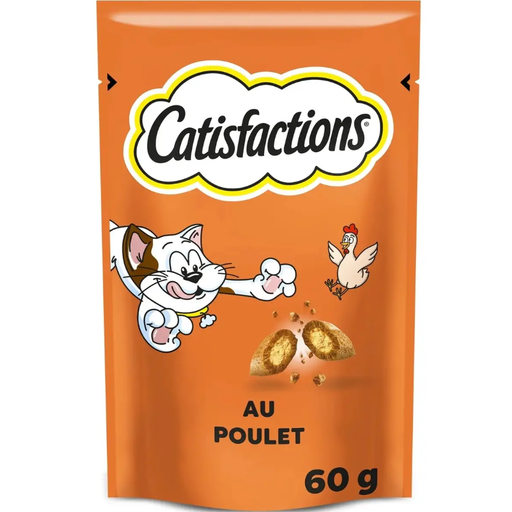
Why this choice suits this profile: At 60g, this small bag lets you try a chicken treat without committing to a family-sized pack straight away. The bites are crunchy on the outside and soft in the centre.
The small size reduces the risk of a large bag losing its texture before it’s finished. The ingredients list shows 4% chicken.
Dual-texture bites, under 2 kcal per treat and a resealable bag.
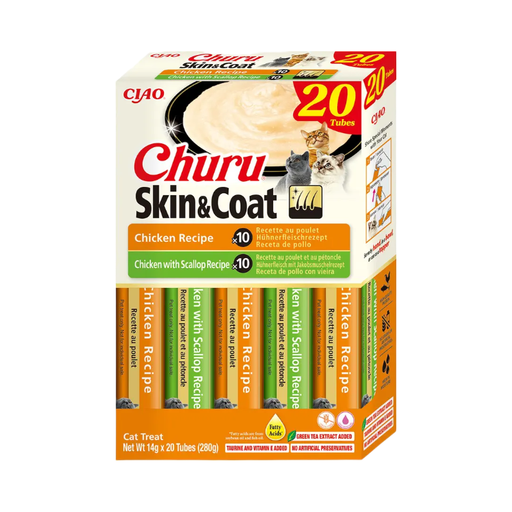
Why this choice suits this profile: This multipack offers a purée texture, two chicken recipes and 20 individual 14g sticks – perfect for bonding moments with your cat.
The contents of each stick make portion control easy and stop you keeping an opened pack for too long. The manufacturer recommends consuming the product within 24 hours of opening.
The ingredients list shows 30% chicken and 86% moisture. These sticks can be given as they are or placed on top of kibble.
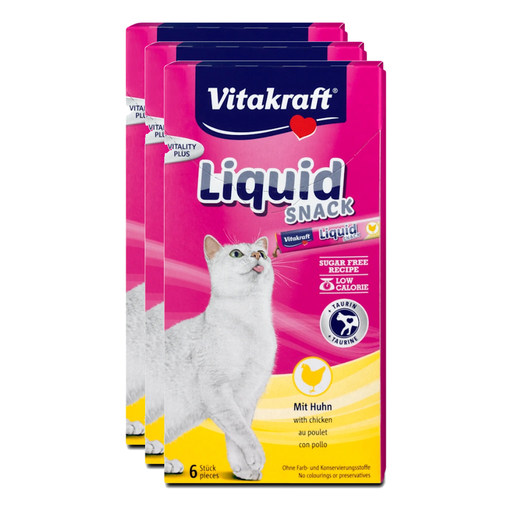
Why this choice suits this profile: With 270g split into individual portions, this format suits households that give liquid treats regularly, especially to liven up meals.
The separate portions stop you leaving an open pack for several days. Once opened, the product must be refrigerated and consumed within 24 to 48 hours.
270g total, a liquid texture and 85% stated moisture, with the option to mix the product into kibble.
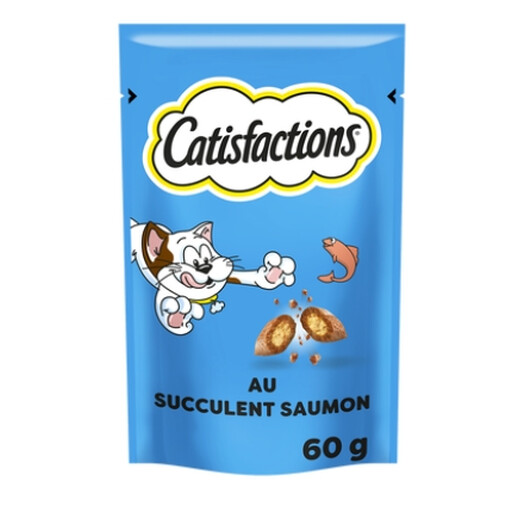
Why this choice suits this profile: This recipe is intended for cats and kittens from 2 months old, with a specific daily recommendation for younger animals.
The minimum age and portion sizes are stated in the product information: up to 6 bites per day for a kitten, depending on their individual circumstances.
A salmon flavour, a crunchy bite with a soft centre and under 2 kcal per treat, according to the product listing.
We’ve put together a comprehensive, real-time updated list of products that meet these demanding selection criteria and comply with European safety regulations.
To keep your treats in good condition and avoid waste:
It all depends on your cat’s weight, age, activity level and the energy value of the product. Follow the recommendations on the packaging and count treats as part of your cat’s daily food intake. They should never replace a complete diet.
They generally contain much more moisture than dry bites. So they can provide a little water as part of a varied diet, but they don’t replace a bowl of fresh water or a vet’s advice if there’s a health concern.
Dry bites often keep for several weeks in their properly resealed packaging, depending on the manufacturer’s instructions. Sticks and liquid snacks usually need to be placed in the fridge after opening and consumed within 24 to 48 hours. The product label is the best guide to follow.