
Livraison le jour même ou le lendemain

Qualité garantie

Débloquez vos offres de bienvenue: Livraison GRATUITE | Jusqu'à -80 % | 30 jours d'essai gratuits à JoyPlus
Téléchargez l'application
Cat treats are a great way to reward your companion, share a special moment together or simply add variety between meals. However, packaging does not always make the choice easy: a picture of chicken does not guarantee that the recipe contains a large amount of it, while a multipack may ultimately cost more if your cat quickly gets bored of the treats.
To avoid being guided by marketing alone, there are three pitfalls to avoid.
Claims such as ‘with chicken’ or ‘with salmon’ should always be considered alongside the ingredients list. Some recipes, for example, contain 4% chicken or salmon. This means the treat is flavoured with that ingredient or contains it in a limited quantity, rather than being made mainly from meat or fish.
Cat snacks do not replace a complete diet. Even when a recipe is presented as low-calorie, it should be given as part of your cat’s daily allowance. Depending on the product, your pet’s age, weight and activity level, the manufacturer may recommend a specific limit, such as 12 or 20 pieces per day.
Crunchy cat treats quickly lose their texture if the pouch is left open. Liquid or sauce-based varieties require even more care: they should generally be refrigerated after opening and consumed within 24 to 48 hours. For some moist fillets, the recommended storage period is limited to two days.
Look for the wording ‘complementary food for cats’, then check the ingredients list, which is shown in descending order by weight. The quantitative declaration of ingredients, often referred to by the acronym QUID, helps you better understand recipes described as ‘with chicken’, ‘with salmon’ or ‘with liver’.
The presence of cereals as the first ingredient does not automatically make a treat unsuitable. It simply indicates a different profile from a moist bite made mainly from fillets. To compare products properly, consider the texture, moisture content and recommended daily amount.
Kitten treats are not necessarily chosen in the same way as those intended for adult cats. Some products are suitable from 2 months, with a reduced daily portion for younger kittens. Others, such as the Sheba fillets mentioned here, are specifically reserved for adult cats.
Always read the feeding recommendations on the packaging. To avoid exceeding your cat’s daily allowance, you may need to slightly reduce the portion of its main meal. Fresh water should be available at all times.
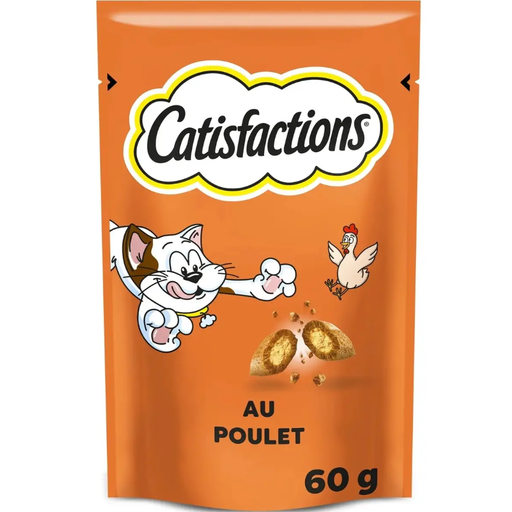
Why this choice suits this profile : The small pack is a practical way to try a crunchy treat with a soft centre without ending up with a large stock of treats that your cat may turn its nose up at.
With a net weight of 60 g, there is less risk of leaving an opened pouch lying around for weeks. The product information also states that the recipe contains no artificial colours or preservatives.
The product information recommends up to 12 pieces per day for an adult cat, with 28% crude protein and 12% fat.
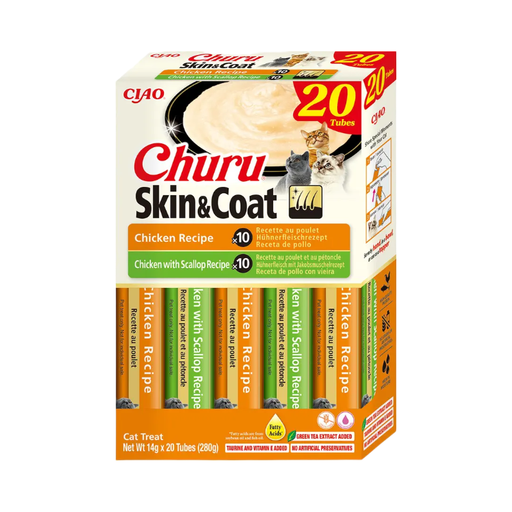
Why this choice suits this profile : Individually portioned and with a purée-like texture, these sticks are clean and easy to serve, offering a change from traditional kibble.
The ingredients list states 30% chicken and 86% moisture. This information clearly distinguishes the recipe from a dry treat that is simply flavoured.
The pack contains 20 sticks weighing 14 g each, with 8% crude protein. The recommended amount is 1 to 3 sticks per day, depending on the cat.
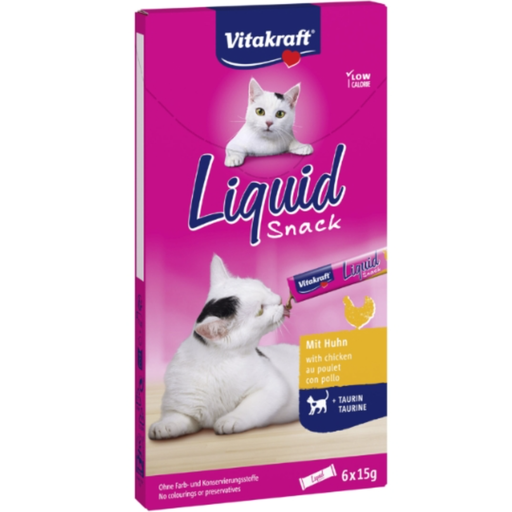
Why this choice suits this profile : The individual portions can be used as a reward on their own or mixed with dry food, without having to open a large pouch.
The stated moisture content is 85%. After opening, the product information recommends refrigerating the product and consuming it within 24 to 48 hours.
A liquid texture, convenient portions, 7% crude protein and 4% chicken in the stated ingredients.
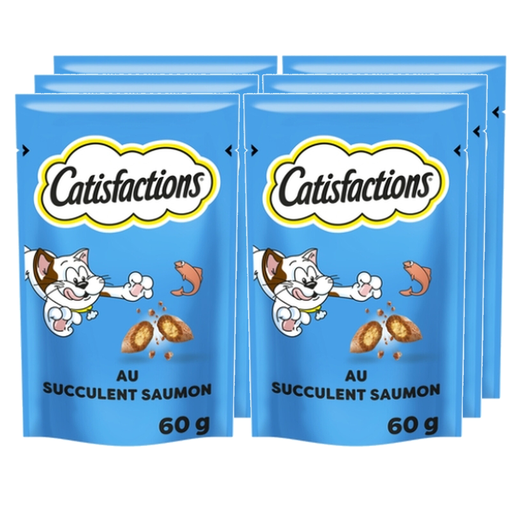
Why this choice suits this profile : The six 60 g pouches make it easy to rotate portions and are ideal for households that regularly give rewards to several cats.
The product information sets a limit of 20 pieces for an adult cat and 6 for a kitten from 2 months old. The multi-pouch packaging also helps preserve the treats’ crunch.
A crunchy outer texture and tender centre, with fewer than 2 kcal per treat according to the product information.
We have put together a complete selection, updated in real time, of products that meet these exacting criteria while complying with European safety regulations.
For training or play, dry treats are easy to carry, give out and count. Chicken cat treats and salmon cat treats are a great way to discover your pet’s preferences, but check the ingredients before assuming that a particular flavour means a high meat or fish content.
Liquid formats are generally popular with cats that enjoy purée or sauce. Some can be served over kibble as a topping, but always follow the recommended amount: these products are not a complete meal.
There is no universal amount. Start by following the manufacturer’s recommendations, then adjust the portion according to your cat’s weight, activity level and main food allowance. Treats are complementary food, so their nutritional contribution should be included in your cat’s overall daily diet.
Some products are suitable for both kittens and adult cats, while others are intended for just one category. Always check the age stated on the packaging. A treat suitable from 2 months can be given to a kitten in line with the recommended portion, but a product specifically intended for adults should not automatically be chosen for a young cat.
Dry treats should be stored in a cool, dry place in a carefully resealed pouch. Moist, sauce-based or liquid products should generally be refrigerated after opening and consumed promptly. Always refer to the storage period shown on the packaging of the product you have bought.