
Livraison le jour même ou le lendemain

Qualité garantie

Débloquez vos offres de bienvenue: Livraison GRATUITE | Jusqu'à -80 % | 30 jours d'essai gratuits à JoyPlus
Téléchargez l'application
Your cat begs for a little treat whenever you open a cupboard, but not all cat treats are created equal. Between flavour claims, multipacks and recipes presented as especially rich, it is easy to buy a product that is not suited to your pet’s age, lifestyle or tastes.
The best approach is to check the composition, food status and feeding recommendations. Here are the criteria to review before choosing cat treats, cat snacks or an everyday reward.
A treat is generally a complementary food for cats. It accompanies main meals but does not replace them. By contrast, a mousse or pâté labelled “complete food” is formulated to meet a cat’s nutritional needs when served according to the manufacturer’s recommendations.
This distinction is particularly important in multipacks that combine snacks and wet food. A box of pâté may be suitable for meals, but it should not automatically be considered a treat.
“Chicken” or “salmon” does not necessarily mean that the recipe contains a large amount of that ingredient. For example, the composition of Catisfactions Chicken and Salmon indicates 4% chicken or salmon, depending on the product. The exact proportion should therefore be checked in the ingredients list and on the packaging.
The same applies to chicken treats for cats and salmon treats for cats: the advertised flavour describes the taste profile, not necessarily the main ingredient in the recipe.
A multipack of cat treats may reduce the price per gram, but only if you can use it within the recommended timeframe. Bags of crunchy treats should be resealed after opening, and some products recommend using them within four weeks. Liquid cat treats should generally be refrigerated after opening and used within 24 to 48 hours, depending on the manufacturer’s instructions.
Start by checking whether the product is suitable for an adult cat, a kitten or cats at all life stages. The Catisfactions Salmon product is indicated for cats and kittens from 2 months old, while the chicken version shown here is intended for adult cats.
The daily amount depends on your pet’s weight, activity level and metabolism. To avoid overfeeding, reduce the portion of the main meal if necessary. A statement such as “less than 2 kcal per treat” can help you gauge the amount, but it does not replace following the feeding guide.
The texture should suit your cat’s habits and the intended use: an occasional reward, enrichment, dietary variety or serving in small amounts.
Read the ingredients list in descending order, then check the analytical constituents: protein, fat, fibre, ash and moisture. This information allows you to compare two recipes objectively, without attributing any particular health benefits to them.
Also check for the possible presence of cereals, added sugars, flavourings, colourings or technological additives. Their presence is not, in itself, enough to rule out a product, but it can help you choose a recipe that suits your pet’s tastes or dietary requirements. In the event of an allergy, prescribed diet or health problem, ask a vet for advice before changing your pet’s diet.
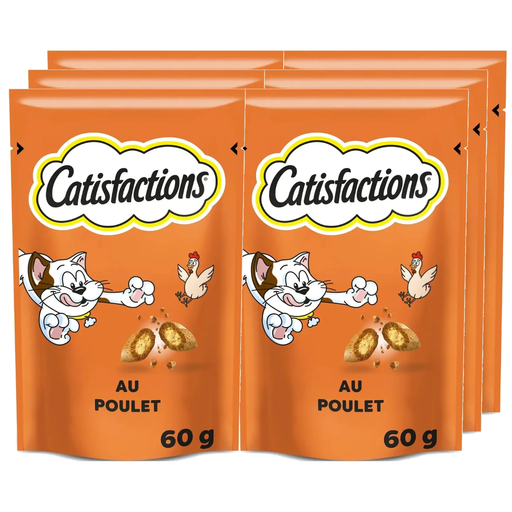
Why this choice suits this profile: The six-pouch multipack, totalling 360 g, is suitable for regular use, with a chicken flavour and a crunchy outside and soft centre.
The resealable pouches make storage easier, while the serving amount can be adjusted to your cat’s weight and activity level.
360 g divided into six pouches, 28 % crude protein and a recipe advertised as free from artificial colourings and preservatives.
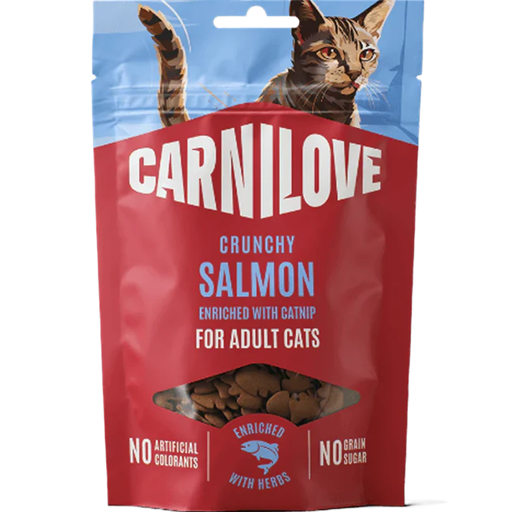
Why this choice suits this profile: This small salmon pack lets you try a targeted treat without immediately buying a large assortment.
The 50 g pouch reduces the risk of storing the product for too long if your cat receives only a few snacks.
A salmon flavour and compact format, making it easy to compare your cat’s preferences gradually.
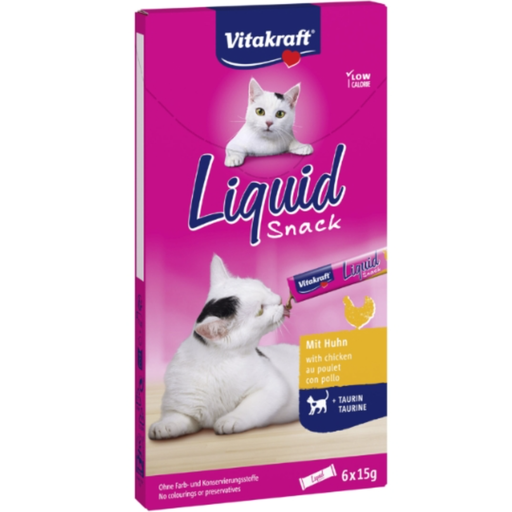
Why this choice suits this profile: The individual portions let you vary rewards or add a small amount to dry food without opening a large bag of dry treats.
The liquid format makes it less likely to be confused with a treat biscuit and highlights that it is a supplement that needs to be portioned.
90 g, convenient portions, 85 % analytical moisture and can be served alone or mixed with dry food.
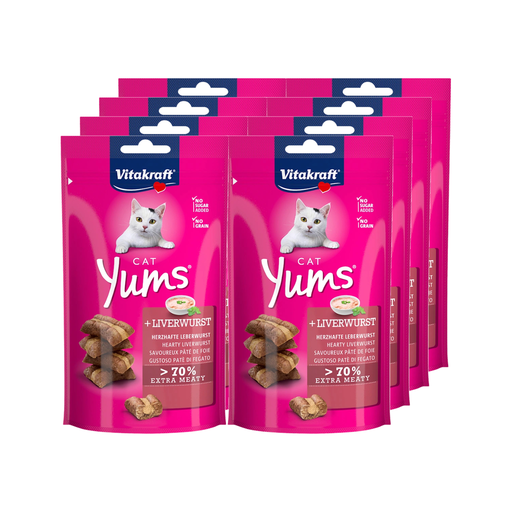
Why this choice suits this profile: The soft texture and pack of eight pouches are ideal for households that regularly give small rewards.
The 40 g portions and resealable pouch make it easier to manage freshness and the amount served.
Advertised as containing over 70 % meat and animal derivatives, with no cereals or added sugar according to the product information.
We have put together a complete, regularly updated list of products that meet these strict selection criteria, as well as European safety regulations.
There is no universal amount. Follow the serving guide on the packaging, then adjust it according to your cat’s weight, age and activity level. Treats should remain a supplement: you may need to reduce the main food allowance to avoid overfeeding.
Some products are designed for kittens from a specific age, such as Catisfactions Salmon from 2 months old. Others are intended for adult cats only. Read the “target animal” information carefully before buying and make sure you choose an amount suited to your kitten’s smaller size.
Reseal bags of dry treats carefully and store them in a cool, dry place. For a liquid treat, place the opened product in the fridge and follow the timeframe stated on the packaging, generally 24 to 48 hours. If the smell, texture or appearance seems unusual, it is best not to give the product to your cat.