
Livraison le jour même ou le lendemain

Qualité garantie

Débloquez vos offres de bienvenue: Livraison GRATUITE | Jusqu'à -80 % | 30 jours d'essai gratuits à JoyPlus
Téléchargez l'application
A cat tree can bring several functions together in one piece of furniture: climbing, watching the world go by, sleeping, playing and scratching. The key is choosing the right model. If it’s too bulky, unstable or poorly equipped, it could end up tucked away in a corner and never get used. In a flat, a few extra centimetres can make it harder to get around, while a base that’s too light may wobble when your cat jumps from one level to another.
Before you place your order, look beyond promises of comfort and sturdiness. Three things deserve particular attention: how stable it really is, how much space you have and whether the accessories are useful.
A very tall cat tree isn’t necessarily the best choice for an energetic cat. A narrow base, panels that are too thin or no anti-tip system can make the whole structure unstable. For a cat climbing tower, check the width of the base, the diameter of the posts and whether it can be fixed to the wall.
Models designed for more than one cat also need to cope with several cats moving around at once. A stated weight capacity isn’t enough to judge how sturdy a piece of furniture is: you need to compare it with your cats’ combined weight and the way they play.
A hammock, hideaway, tunnel, platforms and hanging toys are only useful if they suit your cat’s habits. An older cat will often prefer closely spaced levels and a gradual climb, while a kitten will get more out of play areas. In a small flat, a cat tree with a hammock or a bulky hideaway can take up a lot of space without your companion ever using it.
Check the presence and quality of the scratching post, too. A post that’s too short or covered in a flimsy material may not let your cat stretch out fully.
Fabrics collect hair and dust easily. Look for removable cushions, surfaces you can reach with a vacuum cleaner and parts that can be replaced. On some models, corrugated cardboard or sisal mats wear out long before the main structure. A cat scratching post with a replaceable insert can help extend the life of the furniture.
Measure the available space carefully, allowing for doors and windows to open and keeping walkways clear. For an indoor cat tree, leave some clearance below the ceiling too, especially if the model has a top platform.
A stable structure usually has a sufficiently wide base, rigid panels and properly assembled posts. Sisal, jute and corrugated cardboard are commonly used for scratching areas. How well they hold up depends on the material’s thickness, how tightly the covering is fitted and how often it’s used.
A stable cat tree may also need to be fixed to the wall. Follow the manufacturer’s instructions and choose wall plugs that are suitable for your type of wall. This is particularly important for a very tall model.
Check the seams, corners, cords and hanging toys regularly. Remove anything that’s come loose or is badly worn. Washable cushions, easy-clean panels and removable covers make upkeep much simpler.
Follow the stated weight limits, dimensions and usage instructions. These can’t guard against every unpredictable behaviour, so keep an eye on your cat the first few times they use the tree and check the screws regularly.
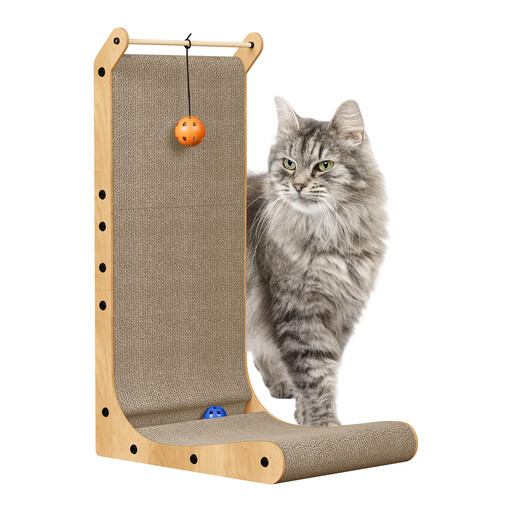
Why it suits this type of household : At 68 cm, its L-shaped design combines a vertical scratching area with a horizontal surface. A great fit for smaller homes or as a first set-up.
There’s no need to buy a large structure just to give your cat somewhere to scratch and rest. The wooden frame and cardboard insert are easy to reach when it’s time to clean.
Compact design, two hanging balls and three-layer corrugated cardboard, according to the product details.
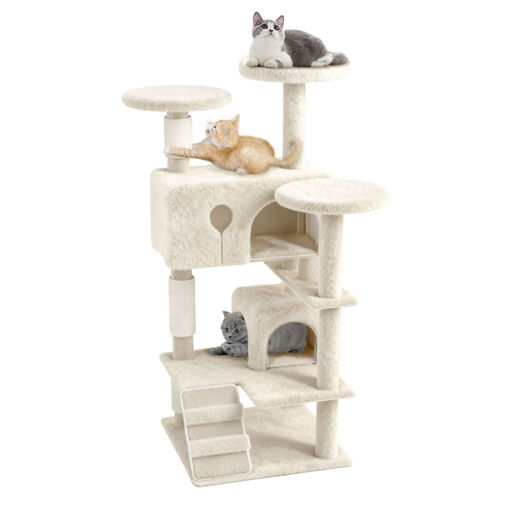
Why it suits this type of household : Standing 130 cm tall, this model has a padded platform, hammock and hideaway. It’s a versatile piece of furniture for homes where you want several functions in one.
The reinforced base, inner board and 7 cm posts address the main points to check before buying a multi-level structure.
49 × 49 cm base, hammock, hideaway, platforms and sisal-covered posts.
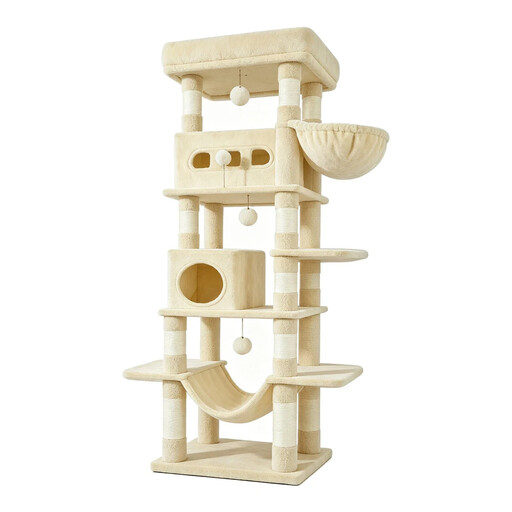
Why it suits this type of household : This XXL cat tree is designed for homes with several cats. Its six levels, two hideaways, hammock and separate resting areas help spread out how it’s used.
The eight sisal posts are spread across the different levels, so scratching isn’t concentrated in one spot. Removable cushions also make cleaning easier.
172.5 cm tall, with a 50 × 30 cm platform and several resting areas designed for shared use.
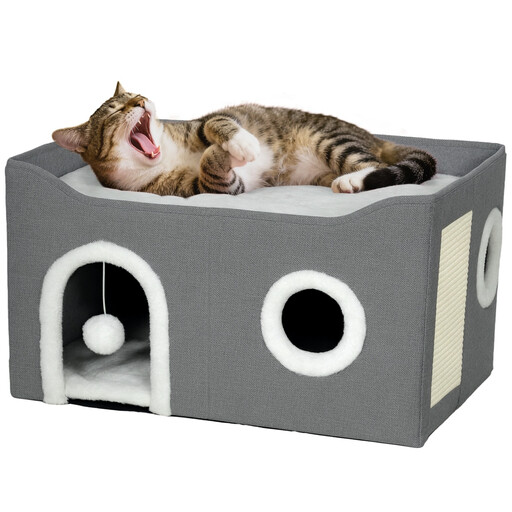
Why it suits this type of household : Measuring 60 × 40 × 34 cm and designed to fold away, this house suits homes where furniture needs to be moved or stored.
It doesn’t claim to replace a large tower when what you need most is a compact hideaway. The product details do, however, state that the structure should be fixed to the wall to reduce the risk of it tipping over.
Three entrances, raised bed, reversible cushion and built-in scratching panel.
We’ve put together a comprehensive, regularly updated selection of products that meet these high standards, as well as European safety requirements.
Place it in a bright, spacious living area, for example near a secure window or in the lounge. Avoid busy thoroughfares where constant foot traffic could make the structure wobble. Wall-mounting is strongly recommended for taller models.
Its lifespan depends on your cats’ weight, how often they scratch and the quality of the joints. Check the screws, posts and coverings regularly. A model with washable cushions and replaceable scratching parts will generally be easier to maintain than a piece of furniture made entirely as one unit.
Look for several platforms, at least two resting areas and a wide base. A cat tree for multiple cats should offer different routes to prevent one cat from blocking access to the upper levels. Also check the stated maximum load and whether the structure can be secured to the wall.