
Livraison le jour même ou le lendemain

Qualité garantie

Débloquez vos offres de bienvenue: Livraison GRATUITE | Jusqu'à -80 % | 30 jours d'essai gratuits à JoyPlus
Téléchargez l'application
A cat tree can bring several features together in one piece of furniture: somewhere to climb, watch the world go by, hide, sleep and scratch. But choose the wrong one and it could end up unused, prove unstable or take up far too much space. The room you have available, your cat’s weight and their habits matter much more than the product’s overall appearance.
A tall cat tree appeals to cats who like to keep an eye on their surroundings. But a tall structure needs a wide enough base, sturdy posts and, where necessary, an anti-tip system. A tower over 1.70 m tall can quickly become a nuisance in a narrow passage if it isn’t properly secured.
A multi-level cat tree isn’t automatically suitable for a home with several cats. What matters most is how the spaces are arranged: a single cubby or one top platform can lead to competition between pets. If you have several cats, it’s better to choose separate areas, such as cubbies, baskets, hammocks or platforms.
A cat tree with a scratching post should have scratching areas along your cat’s usual routes, rather than just a small decorative post. Sisal, the height of the post and the room to stretch upwards are far more useful features than the colour of the covering. If your cat turns their nose up at cat trees, a standalone scratching post could complement the set-up.
Measure the available space, taking into account the room needed to move around the furniture. In a flat, a compact cat tree with a footprint of around 35.5 × 37 cm may suit a small cat, as long as you stay within the stated weight limit. Vertical models make better use of the room’s height, but check the distance from the ceiling, windows and nearby furniture.
Height isn’t everything: look at the width of the platforms, the gaps between levels and how easy they are to reach. A kitten or older cat will usually need steps that are closer together, while a very active cat may prefer levels set further apart.
Check the maximum load stated by the manufacturer and compare it with the combined weight of the cats who might use the tree at the same time. For a cat tree intended for several pets, look for a reinforced base, securely screwed-in posts and an anchoring system, if one is supplied.
Place the tree on a completely level floor. After assembly, inspect taller models: every screw should be tight, the platforms shouldn’t move and the anti-tip system should be secured as directed in the instructions. Never place pet furniture where it could block an exit or a heater.
Sisal is well suited to scratching areas, while removable cushions and easy-to-reach surfaces make it simpler to remove pet hair. Check whether the fabric components are washable and whether hanging toys can be replaced.
A catnip, catmint or silver vine cat toy can make the space more appealing, although cats react differently. Check filled toys regularly. Remove them if they’re torn, the filling becomes accessible or a small part comes loose. Supervise your cat during their first few play sessions.
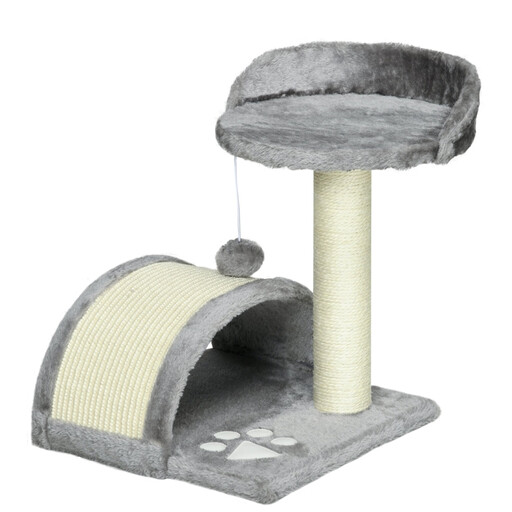
Why it suits this kind of owner : Measuring 35.5 × 37 × 46 cm, it’s a good fit for smaller rooms and cats weighing up to 4 kg, according to the product listing. It combines a platform, a post and a sisal bridge in a space-saving design.
The listing clearly states the footprint and weight limit, helping you avoid buying a tree that’s too large for a studio flat.
A platform with a raised edge, a sisal bridge, a hanging ball and a soft fabric covering.
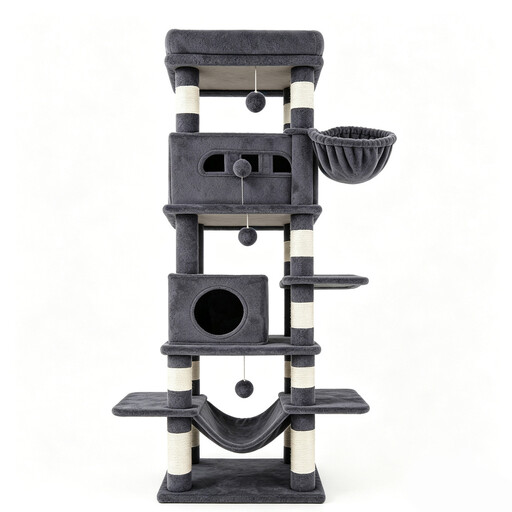
Why it suits this kind of owner : At 212.5 cm tall, this structure is designed for homes looking to make the most of their vertical space, with several areas for resting and scratching.
The listing mentions a reinforced base, anti-tip features and eight sisal-covered posts — all worth checking before installation.
Six levels, a double cubby, a hammock, a basket and a 60 × 40 cm platform with a removable cushion.
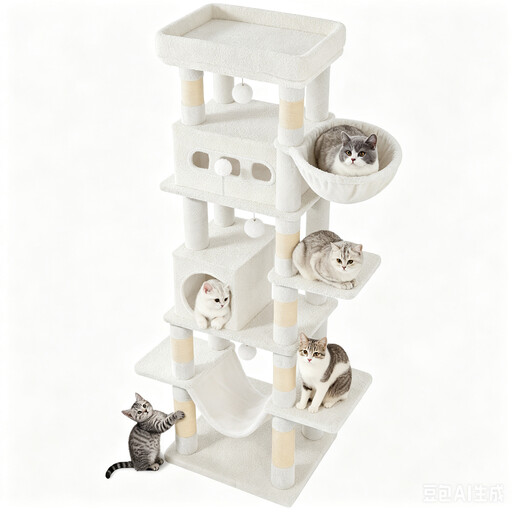
Why it suits this kind of owner : With six levels and separate areas, it’s well suited to homes with several cats, particularly when each one needs somewhere to rest on their own.
The listing details a double reinforced base, an anti-tip feature and scratching areas spread across several levels.
Two cubbies, a hammock, a 30 cm basket, two removable cushions and eight sisal posts.
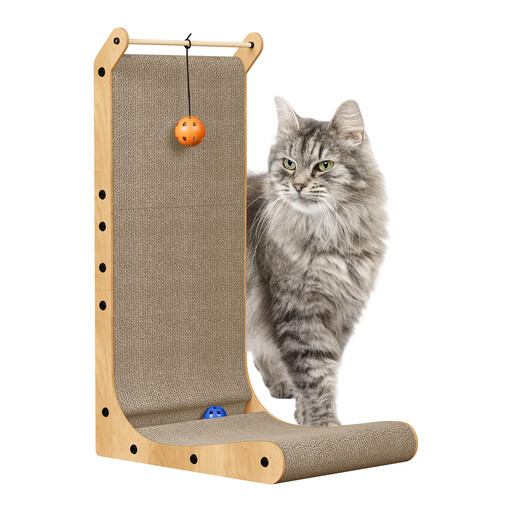
Why it suits this kind of owner : At 68 cm tall, this piece combines a vertical scratching surface, a horizontal surface and hanging toys — ideal when there isn’t room for a large tower.
Its L-shaped design means you don’t have to choose a bulky cat tree just to provide a vertical scratching surface and somewhere to sleep.
Three-layer corrugated cardboard, a wooden frame, two hanging balls and a replaceable insert.
We’ve put together a comprehensive, regularly updated list of products that meet these strict selection criteria and European safety regulations.
Check the cat tree every week at first, then at regular intervals. Tighten the screws if a platform moves, and replace any damaged ropes, balls or cushions. Sisal areas wear naturally over time. How long they last depends on the number of cats, how vigorously they scratch and how often they use the tree.
Use a lint roller or vacuum cleaner to remove hair from the fabric. For removable parts, follow the manufacturer’s instructions and avoid soaking chipboard panels. A catnip or silver vine toy should be kept clean and dry, and supervised during play.
In a small home, a model between 46 and 100 cm tall takes up less visual and floor space. A structure between 130 and 175 cm suits cats who like to climb, provided its base is stable. For anything over 2 m, check your ceiling height and plan for suitable fixings.
Lifespan varies depending on the materials, your pets’ weight and how often they jump on it. Sisal posts and toys are the first things to keep an eye on. A properly assembled structure can last longer if worn parts are replaced and the screws are checked regularly.
Not necessarily, but providing several resting areas can help reduce conflict. In a home with several cats, choose a cat tree with a cubby, a hammock and separate platforms, then consider adding a scratching post or bed in another room.