
Livraison le jour même ou le lendemain

Qualité garantie

Débloquez vos offres de bienvenue: Livraison GRATUITE | Jusqu'à -80 % | 30 jours d'essai gratuits à JoyPlus
Téléchargez l'application
A modular small animal playpen lets you create a suitable space for a rabbit, guinea pig, hamster or other rodent, at home or in the garden. But an attractive photo or a large number of panels doesn’t necessarily mean you’ve found the right one. Stability, height and ease of cleaning can make a real difference to day-to-day use.
Before comparing a rabbit playpen, a guinea pig pen or a rodent cage, take the time to check the features that can help you avoid unwelcome surprises.
A model with lots of components may still offer limited floor space if the panels are assembled upwards or in an impractical shape. Check the overall dimensions, as well as how much usable space will remain once you’ve added a shelter, feeding bowl, litter tray and room to move around.
For everyday use, a rectangular layout is often easier to arrange. A square or corner layout may be a better fit for a balcony or a narrow room.
The label ‘for small animals’ doesn’t mean a playpen is suitable for every species. An agile rabbit may jump over sides that are too low, while a hamster may squeeze through gaps between poorly fitted panels.
Check the panel height, the spacing between the bars and whether you can add a roof or cover. A door makes handling easier, but its fastening needs to be secure enough to prevent accidental escapes.
Without a waterproof base or a suitable mat, urine, litter and hay can quickly reach the floor. Porous materials and fabrics that are difficult to remove can make cleaning particularly awkward.
An easy-to-clean playpen should have smooth surfaces, a removable base or a washable mat. For outdoor use, also check that the metal components are protected against moisture and that the structure can be secured to the ground.
Start by measuring the space you have in mind, leaving enough room around the playpen to open the door and clean it easily. Modular models let you change the shape, but every panel and connector needs to be fitted securely.
For a rabbit or guinea pig, choose a floor area that’s long enough to let them move around regularly. For a hamster, the spacing between the panels is especially important: small gaps can make it easier to escape or lead to your pet getting stuck.
The dimensions shown on product pages are useful for comparing models, but they don’t replace observing your pet’s behaviour.
A plastic playpen for small animals can usually be wiped clean with a damp cloth and stands up well to splashes. It may suit indoor use, particularly on delicate flooring. However, some animals may chew the panels or connectors.
A metal rabbit playpen has an open structure and gives you a clear view of your pet. It’s better suited to supervised outdoor use, provided you check the finish, bars and fixing points. ABS plastic connectors make assembly easier, while extra fasteners help improve stability.
Fabric or Oxford cloth mats protect the floor, but check the washing instructions carefully. Some models need to be cleaned by hand and left to air-dry.
A door makes it easier to feed your pet, change the litter or move them. A roof helps prevent escapes and can be useful for a rabbit pen designed for indoor and outdoor use, especially in a garden where birds or other animals may come close.
To keep the whole structure secure, look for sturdy connectors, non-slip feet, fasteners or pegs that suit the place where you plan to set it up. On a patio, check that the structure won’t slide. On grass, securing it to the ground can help prevent it shifting or your pet trying to dig its way out.
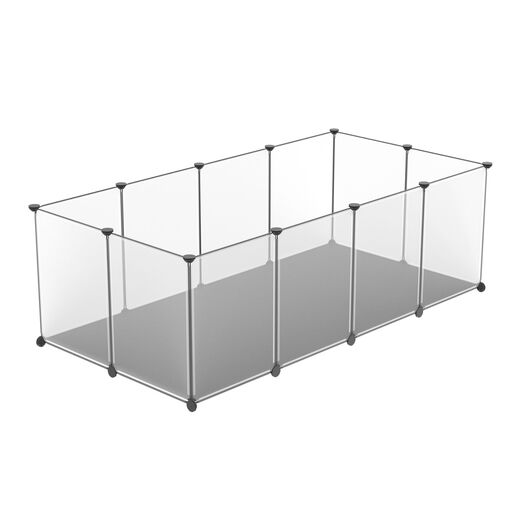
Why it suits this type of owner : With 12 PP panels, ABS connectors and tool-free assembly, it’s an accessible option for a first indoor set-up for a rabbit, guinea pig or hamster.
The removable panels and included mat make cleaning easier and let you adapt the playpen’s shape to suit your room.
Two removable floor panels, a fitted mat and a rubber mallet included.
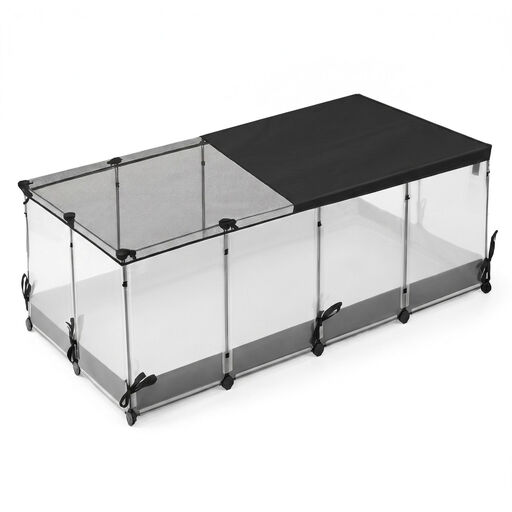
Why it suits this type of owner : Its removable roof, translucent panels and waterproof base fit neatly into a home where looks and easy cleaning matter.
The removable waterproof base, with 8 cm raised sides, helps keep mess off the floor and makes it easier to remove the litter.
Measures 120 x 60 x 40 cm, with a removable roof and surfaces that can be wiped clean with a damp cloth.
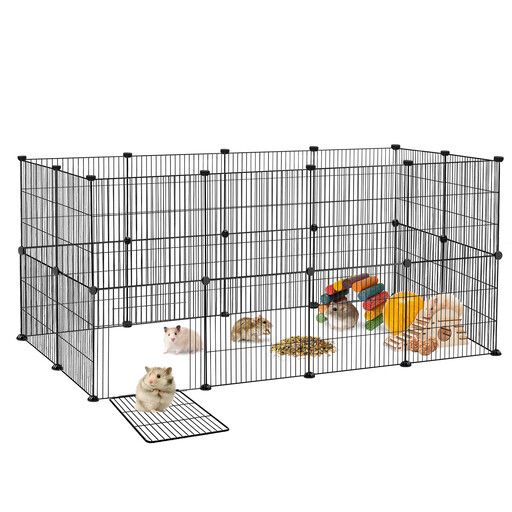
Why it suits this type of owner : The option to use 12 or 24 panels lets you adjust the height and layout, making it suitable for an active rabbit or supervised indoor and outdoor use.
At 72 cm high in the recommended configuration, it reduces the risk of your pet jumping over a low side, provided you keep them under supervision.
Painted metal grid, integrated door, ABS connectors, non-slip feet and fasteners included.
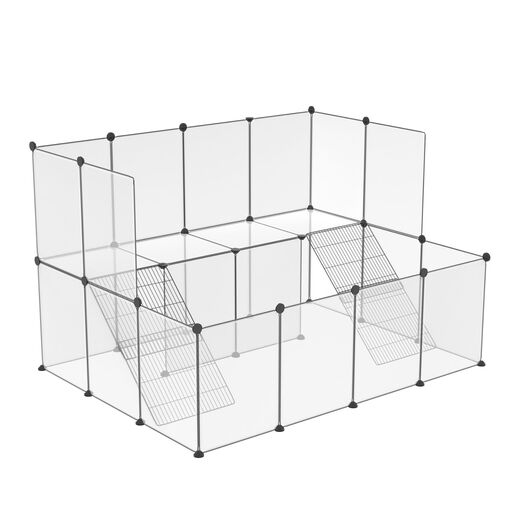
Why it suits this type of owner : With plenty of panels, you can create a bespoke play area in a room, conservatory or temporary outdoor space.
The PP surfaces can be cleaned with water or a damp cloth, making this a practical choice if you assemble it often or move it between locations.
28 panels, measures 143 x 108 x 93 cm, and includes a metal panel that doubles as a step.
We’ve put together a comprehensive, regularly updated list of products that meet these strict selection criteria and comply with European safety regulations.
Position the playpen away from radiators, draughts and electrical cables. Outdoors, choose a shaded spot and never leave your pet unsupervised. A mesh roof can help prevent escapes while allowing air to circulate, but a fabric described as breathable isn’t necessarily waterproof.
Once assembled, check every connector, make sure there are no sharp edges and confirm that the door locks properly. Clean any soiled areas promptly and inspect the panels regularly if your pet tends to chew plastic or wood. These checks help extend the life of the equipment and reduce the risks associated with a structure coming loose.
The right height depends on your pet’s behaviour and jumping ability. A low side may be suitable for supervised use, but a taller model or one with a roof helps reduce the risk of an unexpected escape. Remember to measure the height of any accessories you place inside, too.
Yes, some models are designed for both indoor and outdoor use. However, you’ll need to check that the materials can withstand moisture, secure the structure properly and provide protection from the sun, rain and other animals. Prolonged exposure to the elements can shorten the life of some components.
Choose a removable base, smooth panels and a washable mat. Remove visible waste every day, then clean the surfaces with a pet-safe product, following the manufacturer’s instructions. Avoid harsh products that could leave residue on the panels or irritate your pet’s paws.