
Livraison le jour même ou le lendemain

Qualité garantie

Débloquez vos offres de bienvenue: Livraison GRATUITE | Jusqu'à -80 % | 30 jours d'essai gratuits à JoyPlus
Téléchargez l'application
Urine marks on the sofa, scratches on new furniture, or flowerbeds dug up by neighbourhood cats… a familiar nightmare for many homeowners. And while living with our feline friends is usually a joy, some of their instincts can put our nerves (and our belongings) to the test.
Finding an effective solution to protect your space without harming animals can be a real headache. This guide is here to shed light on the different types of cat repellents and help you choose the safest and most suitable option for your situation.
To ensure you make the right choice, here are the essential criteria to consider to find the product that will perfectly meet your needs.
The first question to ask is simple: where is the problem located? The solutions for a sofa are obviously not the same as for a vegetable garden.
The product's format directly impacts its application method and effectiveness.
The safety of your family and your pets (both yours and your neighbours') is paramount. Most modern repellents, like the Beaphar range, rely on scents based on essential oils that cats and dogs dislike but which are harmless to them when used according to the instructions.
The essential step: carefully read the label to check the composition, usage precautions (e.g., do not use near very young animals), and safety guidelines. A good product should deter, not harm.
To guide you, we have selected three products that meet distinct needs, for both indoor and outdoor use.
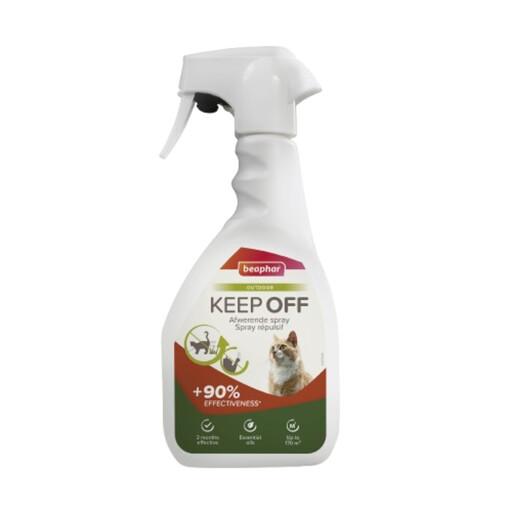
Why it stands out: Specially designed for the outdoors, this spray creates a highly deterrent scent barrier for cats thanks to its formula based on lavender and peppermint essential oils. It is ideal for treating garden furniture, fences, porches, and patios.
Benefits:
Who is it for? For anyone who wants to protect their outdoor living spaces (patio, balcony, garden furniture) from territorial marking and impromptu visits from neighbourhood cats.
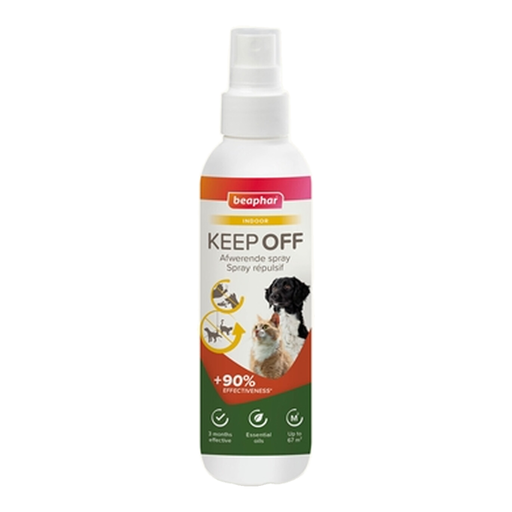
Why it stands out: Designed for indoor use, this spray is an excellent training tool to discourage undesirable behaviours like scratching or urine marking. Its dog and cat repellent formula makes it particularly versatile for multi-pet households.
Benefits:
Who is it for? For cat (or dog) owners looking for a solution to protect their furniture (sofas, armchairs, carpets) from scratches and urine marking, while also training their pet to respect the boundaries of the home.
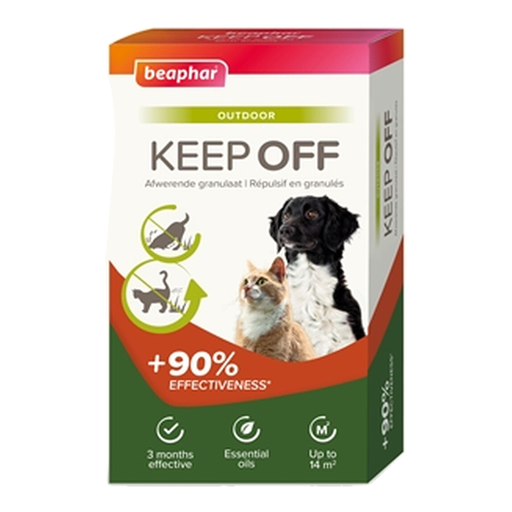
Why it stands out: These repellent granules are the perfect solution for localised outdoor treatment. Very easy to spread, they allow you to protect specific areas such as the surroundings of an aviary, flowerbeds, planters, or the vegetable garden.
Benefits:
Who is it for? For amateur gardeners and anyone with a vegetable patch or flowerbeds who wants to keep cats out of the garden in a targeted way, without spraying liquid on their plants.
Sometimes, undesirable behaviours like repeated marking or scratching are a sign of stress or boredom in an animal. A repellent is an effective deterrent, but its effect will be greatly enhanced if you combine it with solutions that improve your companion's well-being.
To explore complementary options like calming diffusers or interactive toys, take a look at our dedicated category for pet accessories.
Discover our selection of pet accessories
The duration of effectiveness varies greatly depending on the product and the conditions of use. An indoor spray can remain active for several weeks, or even months, if the surface is not cleaned. Outdoors, the effectiveness of a spray or granules will logically be reduced by heavy rain or frequent watering. The Beaphar products in our selection promise protection for up to three months, but a new application may be necessary after severe weather.
The vast majority of commercial repellents are designed to be deterrent without being toxic. However, the golden rule is to always read and scrupulously follow the manufacturer's instructions. For example, it is often recommended not to apply the products near very young animals (puppies or kittens) and to avoid spraying directly on the most fragile plants. For delicate surfaces like upholstery, a preliminary test on an inconspicuous area is essential.
Using an anti-scratch spray on the targeted areas is a very effective first step. But for it to work in the long term, it is just as important to offer an acceptable alternative to your cat. Place one or more scratching posts (vertical, horizontal, cardboard, sisal...) in strategic locations, especially near places where it has already scratched. By combining deterrence (the repellent) and redirection (the scratching post), you multiply your chances of success.