Joybuy Insights

Cat Litter Guide: How to Choose the Right Litter for Your Cat

Choosing cat litter seems simple, but it can be a real headache. The aisle is saturated with marketing promises that make the decision nearly impossible. Between claims of "total odour control" and vague eco-friendly arguments, it's easy to make a mistake you'll regret. As a product expert and section editor, my job is to cut through the noise for you. I'll give you the key insights to choose THE litter that's perfectly suited to your cat, your home, and your lifestyle.

The 3 Marketing Traps to Avoid Before You Buy

Before we even start comparing products, let's learn to see through the most common claims, which are often far from the reality of the litter box.

  1. The "Zero Odour" Myth: Let's be clear: no litter eliminates 100% of odours, 24/7. An effective odour-control litter works by absorbing liquids at high speed and neutralising ammonia. Be wary of products that simply mask smells with overpowering scents; not only can they irritate your cat, but the resulting combination is often worse than the original odour.
  2. The "Dust-Free" Promise: A 100% dust-free litter is virtually non-existent. It's more accurate to talk about "low-dust" litter. A dust-free litter (or close to it) is vital for your cat's respiratory health and for keeping your home clean. Low-quality litters release fine particles that coat your furniture and are ultimately inhaled by everyone in the household.
  3. The "Flushable" Claim: While seemingly convenient, this option is far from risk-free. Not all plumbing systems and septic tanks are designed to handle this type of waste, even if it's soluble. Over time, you risk clogs and a hefty plumber's bill. Always check your local regulations and the manufacturer's recommendations before making this a habit.

The Essential Criteria for Making the Right Choice

To find the perfect match, you need to look beyond the packaging and analyse a few decisive criteria.

1. Clumping or Non-Clumping Litter?

This is the first question to ask, as it completely defines your cleaning routine.

  • Clumping Litter: On contact with urine, it forms solid, compact clumps that are very easy to scoop out daily. This means you only discard the soiled portion, keeping the rest of the box clean for longer. It's often the preferred solution for its convenience and cost-effectiveness in the long run.
  • Non-Clumping Litter: The granules absorb urine without forming clumps. You need to remove solid waste daily and stir the litter to distribute moisture. The entire box must be emptied and cleaned much more frequently, typically once a week.

2. Which Material Should You Choose?

The choice of material directly impacts absorbency, bag weight, environmental footprint, and, of course, your cat's paw comfort.

  • Mineral Litter: Made from clay (like bentonite) or silica, it's known for its very high absorption power. Mineral litter is often clumping and highly effective against odours. On the downside, it can be heavy, dusty, and its extraction has a significant environmental impact.
  • Plant-Based Litter: Made from wood fibres, corn, recycled paper, or soy residue (tofu litter), this is the lighter and often biodegradable alternative. Some can be composted or flushed (with extreme caution). They are generally very soft on paws and low in dust.
  • Mixed Litters: These combine several materials to leverage their strengths, such as the clumping efficiency of bentonite with the lightness and solubility of tofu.

3. Features That Make a Difference

Some litters go the extra mile with specific features that can be game-changers.

  • Enhanced Odour Control: The addition of activated charcoal or baking soda helps neutralise odours far more effectively than simple absorption.
  • Health Monitoring: A health-monitoring cat litter includes indicators that change colour upon contact with blood or in case of pH abnormalities in the urine. This is an excellent way to alert you to potential urinary issues.

Recommended Cat Litter Picks

Here are a few options that meet specific needs, based on the criteria we've just covered.
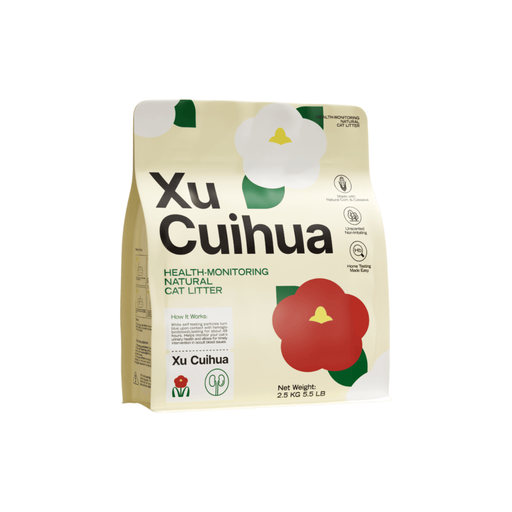
IDEAL FOR: THE PROACTIVE OWNER
XUCUIHUA Plant-Based Litter (Occult Blood Detection) 2.5kg

XUCUIHUA Plant-Based Litter (Occult Blood Detection) 2.5kg

Why we chose it: Perfect for owners who are attentive to their companion's health, especially if the cat is older or prone to urinary issues. It provides discreet health monitoring right at home.

How It Beats the Trap

This goes beyond simple cleanliness to offer a genuinely useful feature. The blood indicators provide objective data, which is far more valuable than a vague promise of "odour control."

Key Feature & Strengths

Early Detection: Its reactive particles change colour on contact with traces of blood in the urine, acting as a true warning signal.
Plant-Based: Low in dust and biodegradable.
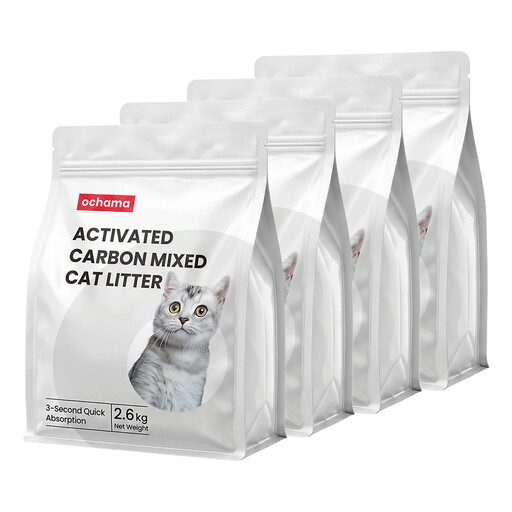
IDEAL FOR: MULTI-CAT HOUSEHOLDS (AND SENSITIVE NOSES)
ochama Activated Carbon Mixed Deodorising Litter

ochama Activated Carbon Mixed Deodorising Litter, 2.6kg x 4

Why we chose it: Essential when several cats share the same home and the war on odours and ease of maintenance are non-negotiable. Its mixed formula is designed for maximum effectiveness.

How It Beats the Trap

Instead of an empty promise, its composition is transparent and smart: it combines bentonite, tofu, and activated charcoal. This multi-action strategy is far more credible and formidable than a simple synthetic fragrance.

Key Feature & Strengths

Dual Odour Neutralisation: The activated charcoal adsorbs odours while the bentonite traps moisture.
Rapid Clumping: Forms ultra-solid clumps in seconds, which simplifies cleaning and prevents litter from sticking to the bottom of the box.
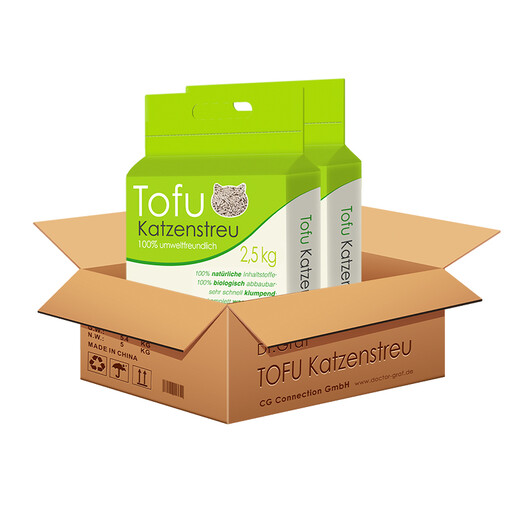
IDEAL FOR: THE ECO-CONSCIOUS URBANITE
DR. GRAF Tofu Cat Litter, 100% Natural 2x2.5kg

DR. GRAF Tofu Cat Litter, 100% Natural 2x2.5kg

Why we chose it: The dream solution for apartment living: natural, lightweight, and easy to dispose of. Its 100% plant-based composition ticks all the eco-conscious boxes.

How It Beats the Trap

It avoids the "flushable" trap with honesty, specifying "in small quantities" and reminding users to check local regulations. It offers convenience, yes, but without hiding the necessary precautions.

Key Feature & Strengths

100% Natural and Biodegradable: Made from pea fibres, soy, and corn starch.
Low-Dust and Soluble: Protects the respiratory system and offers a convenient disposal option (with the necessary precautions).

Looking for Other Options?

Explore our complete selection of products that meet our demanding selection criteria and current standards.

Frequently Asked Questions About Cat Litter

1. How much litter should I put in the box?

Generally, a depth of 5 to 8 cm is recommended. A sufficient layer allows your cat to dig and bury its waste comfortably. For clumping litter, this also prevents urine from pooling at the bottom of the box, which can form sticky, hard-to-remove patches.

2. How often should you completely change the litter?

It all depends on the type of litter, as well as the number of cats in your home.

  • For clumping litter: If you remove the soiled clumps and solid waste daily, a complete box cleaning every 2 to 4 weeks is plenty.
  • For non-clumping litter: A complete change is necessary at least once a week, as the urine will eventually saturate all the granules.

3. My cat is rejecting its new litter. What should I do?

Cats are creatures of habit, and an abrupt change can confuse them. For a smooth transition, proceed in stages: over one to two weeks, mix the new litter with the old, gradually increasing the proportion of the new one. Also, make sure the new texture doesn't seem uncomfortable for your cat's paws.