
Livraison le jour même ou le lendemain

Qualité garantie

Débloquez vos offres de bienvenue: Livraison GRATUITE | Jusqu'à -80 % | 30 jours d'essai gratuits à JoyPlus
Téléchargez l'application
Between the "anti-odour" promises, biodegradable formulas and smart litter trays, choosing a cat litter can quickly become a headache. The right product depends above all on the number of cats, their tolerance to texture, how often you clean and the space you have at home.
A scented litter may mask odours for a while, but it doesn't improve absorption. Some cats may even turn their noses up at a strong fragrance. Instead, look at the absorption capacity, clumping performance and recommendations for daily removal of soiled litter.
Tofu, tapioca and wheat-based litters are often marketed as biodegradable or compostable. That doesn't mean they can always be flushed down the drain. Clumps can cause blockages, and local regulations vary. Unless there's a clear indication that it's compatible with your plumbing, dispose of it with your household waste, following local guidelines.
An automatic litter tray cuts down on daily handling, but it runs on electricity, sometimes requires an app, and needs regular maintenance. You'll also need to budget for compatible waste bags for automatic litter trays. The purchase price is therefore only part of the real cost.
A clumping litter forms a solid mass around urine. You can then remove the wet area without emptying the whole tray, which works well for households that want to target their cleaning. A non-clumping mineral litter, such as CATSAN Hygiene Plus, absorbs liquid directly into the granules: solid waste must be removed daily and the whole lot replaced when the material becomes saturated.
The instructions on selected products often recommend a depth of 5 to 7 cm. A layer that's too thin encourages sticking to the bottom of the tray, while an excessive depth increases scattering and waste.
Before choosing a self-cleaning litter tray, check the minimum and maximum weight it accepts, the entry height, the waste drawer capacity and the type of litter allowed. The PETKIT PuraMax 2 accepts common clumping litters, including those based on bentonite, tofu or blends. It works with a 2.4 GHz Wi-Fi network, but not with 5 GHz.
If you live with multiple cats, also consider the waste compartment capacity and whether it can identify each animal. The more the tray is used, the more cleaning cycles will be needed.
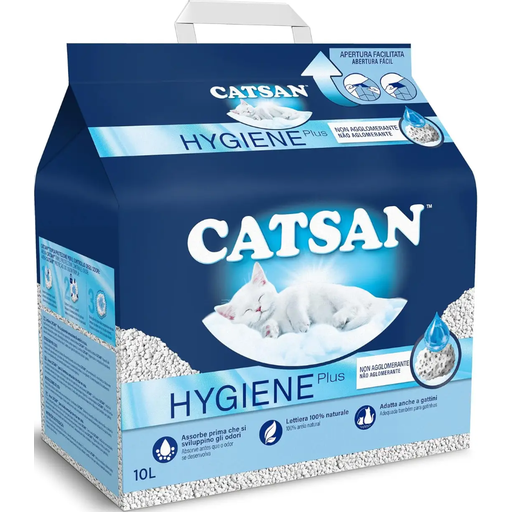
Why this choice suits this profile: Its 10-litre size and unscented mineral formula are ideal for a first set-up with a standard tray.
It doesn't rely on fragrance to make maintenance easier: solid waste is removed daily and the granules are replaced once saturated.
Mineral granules made from lime and quartz sand, unscented, in a 10-litre format.
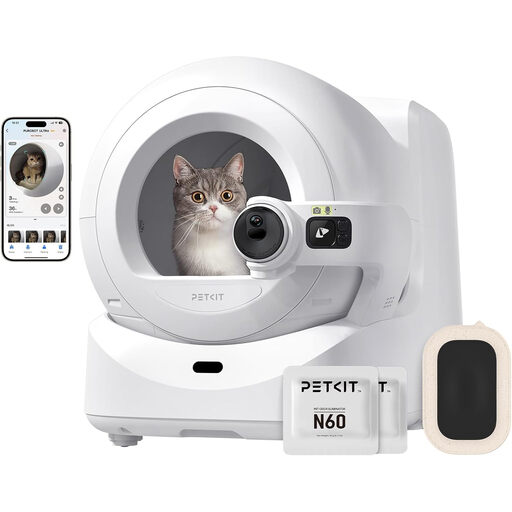
Why this choice suits this profile: Households that want to automate cleaning get a connected device, equipped with a pan-tilt camera and a 10-litre waste bin.
The product page specifies the dimensions, capacity, 2.4 GHz/5 GHz Wi-Fi connectivity and the maintenance tasks required.
A 180° camera, claimed multi-cat recognition, automatic cleaning and a sealed 10-litre compartment.
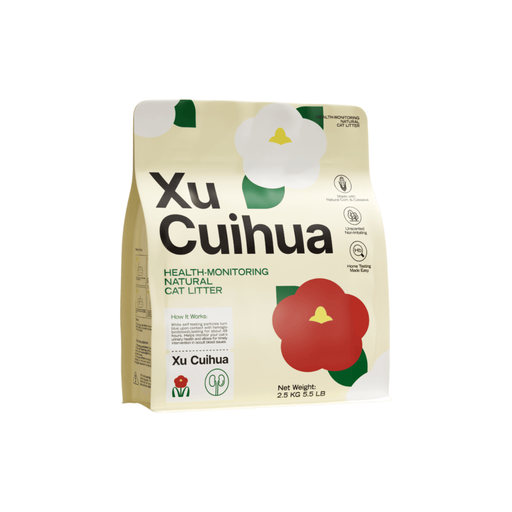
Why this choice suits this profile: This plant-based litter is aimed at owners who want to spot certain visual changes during daily cleaning.
The detection is presented only as a screening aid: a colour change is no substitute for a veterinary analysis.
Plant fibres, fast clumping and claimed indicator granules; an unscented formula and low dust emission according to the product page.
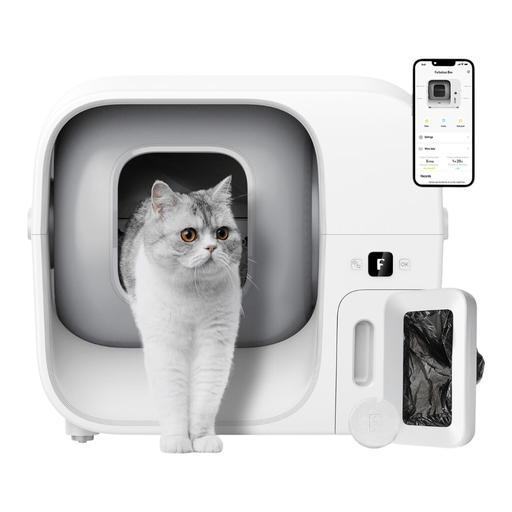
Why this choice suits this profile: Its 60-litre capacity and automatic bagging system are designed for heavy use and multi-cat households.
The proximity, weight and infrared sensors, as well as the use of dedicated bags, are clearly stated before purchase.
Bags that seal automatically, a tracking app and claimed operation at 37 dB during packaging.
We've put together a comprehensive, real-time updated selection of products that meet these demanding criteria as well as European safety regulations.
With an automatic tray, disable the cleaning cycles for the first few days while your cat gets used to it. Check the sensors, moving parts and waste drawer regularly. CATLINK bags, for example, must be chosen according to the compatible model: those designed for the SCOOPER-SE and SCOOPER-SE Lite may not fit another device.
A layer of 5 to 7 cm is a good guide for clumping litters. Some mineral litters recommend up to 10 cm to improve absorption. Always check the label and adjust the depth to your cat's habits.
It all depends on the cat's weight, the number of animals, the tray size and how often you remove waste. A multi-cat household will use more and need to replace the litter more often. Clumping formulas generally allow you to replace only the soiled areas, whereas a non-clumping litter must be completely changed when the granules are saturated.
No. A colour change is only a signal to watch for, with the risk of false positives and false negatives mentioned on the product page. If you notice any unusual change or concerning behaviour, seek veterinary advice promptly.