
Livraison le jour même ou le lendemain

Qualité garantie

Débloquez vos offres de bienvenue: Livraison GRATUITE | Jusqu'à -80 % | 30 jours d'essai gratuits à JoyPlus
Téléchargez l'application
Choosing cat litter seems simple… until odours start to linger, granules end up all over your home or the bag runs out far sooner than expected. The claims on the packaging aren’t always enough to help you compare products. The litter’s composition, how easy it is to clean and the pack size all directly affect your cat’s comfort, as well as your household budget.
Absorbent litter holds moisture, but doesn’t necessarily form clumps. Clumping litter, usually made from clay or plant fibres, gathers liquids into clumps that you can scoop out. This helps keep the rest of the tray clean for longer.
By contrast, non-clumping mineral litter or silica litter often requires you to remove faeces every day and check the overall condition of the litter regularly. The right choice therefore depends more on your routine than on the length of use claimed on the bag.
Odour-control cat litter may contain activated charcoal, fragrance or a particularly absorbent material. However, no product means you can skip regular waste removal, good ventilation or choosing a tray that’s large enough. Activated charcoal is used in several Biokat’s products, for example, but it should be seen as a product feature rather than a guarantee that will work in every situation.
Fragrances don’t suit every cat, either. An unscented formula, such as natural cat litter made from unscented clay, may be a better choice if your pet is sensitive to changes in smell.
A 5 L, 8 L, 14 L or 18 L bag of cat litter doesn’t always make it easy to compare the cost per use. Density varies depending on whether the litter is made from clay, paper pellets, plant fibres or silica. Lightweight litter may take up more space, while mineral litter is often heavier to carry.
If you have several cats, also check how often the litter should be replaced, how deep it needs to be in the tray and whether you have somewhere dry to store the bag.
Be wary of claims that litter is dust-free. Look for wording such as ‘low dust’ and check the manufacturer’s detailed product information. Pour the litter slowly and ventilate the room.
Activated charcoal, absorbent minerals and some plant-based materials can help reduce odours. A scented formula, such as some products in 10 L or 18 L sizes, adds a fresh fragrance, but may not suit every pet.
For everyday use, look for litter that makes it easy to remove soiled areas. The shape and firmness of the clumps, and whether they tend to stick to the bottom of the tray, are all useful things to check.
Fill the tray according to the manufacturer’s instructions, usually to a depth of 2 to 7 cm, depending on the material. Remove faeces every day and take out soiled clumps as soon as possible. When you replace all the litter, clean the tray with water and a mild detergent.
Don’t flush used litter down the toilet unless clear local guidance confirms that the product is suitable for this. Pregnant or immunocompromised people should generally avoid contact with soiled litter or wear gloves, then wash their hands thoroughly.
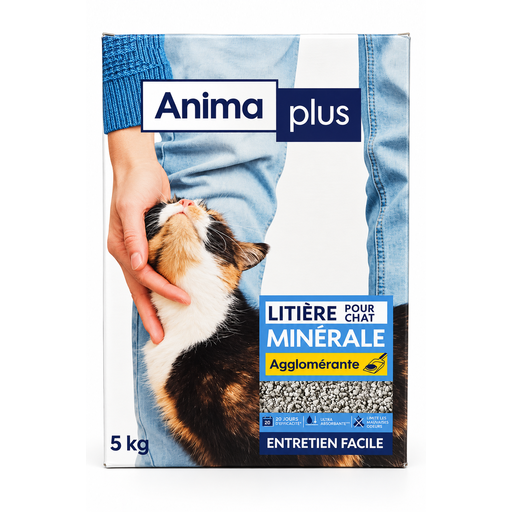
Why it suits this type of buyer : The 5 L size is a good way to try clumping mineral litter or suits a one-cat household. The bentonite forms clumps that need to be removed every day.
The smaller pack means you don’t have to buy a large bag before checking that your cat likes it. The manufacturer recommends a minimum 5 cm layer and removing clumps daily.
Natural bentonite, 5 L pack, firm clumps as claimed and an integrated pouring spout, according to the product listing.
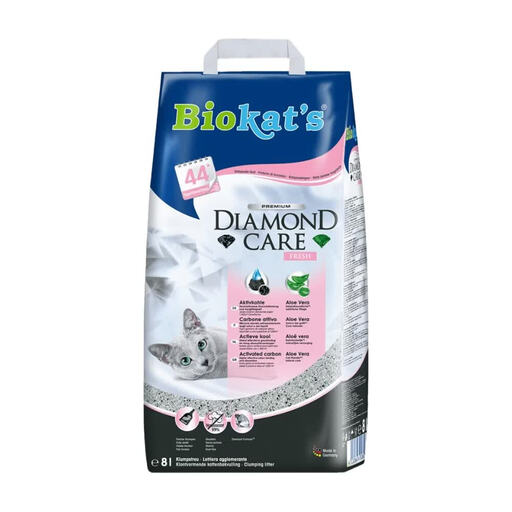
Why it suits this type of buyer : This 8 L natural clay litter combines activated charcoal, aloe vera and clumping action. It’s designed for households that prioritise odour control and easy spot cleaning.
The product listing explains how deep to fill the tray, how often to remove waste and when to replace all the litter. That way, you won’t mistake odour control for a lack of upkeep.
Natural activated charcoal, clumping texture and an 8 L pack. However, check whether it contains fragrance if your cat is sensitive to it.
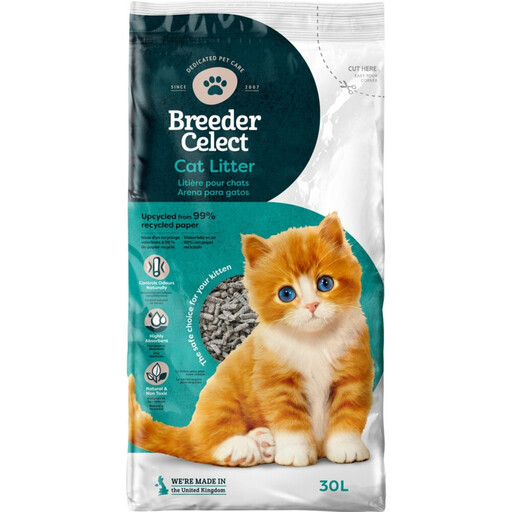
Why it suits this type of buyer : Made from more than 99 % recycled paper, these pellets come in a large pack for households looking for biodegradable, lightweight and low-dust litter.
It doesn’t claim to form clumps: the product listing makes clear that this is non-clumping litter, which needs to be stirred and replaced regularly.
30 L pack, recycled paper, low weight and low dust as claimed. When switching litter, a gradual transition is still recommended.
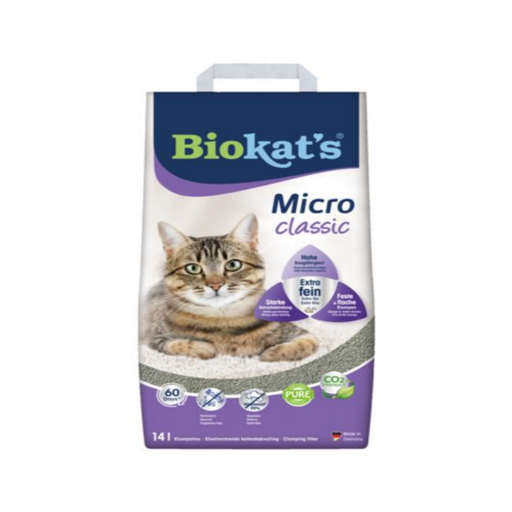
Why it suits this type of buyer : This clumping natural clay litter is advertised as having no added fragrance. Its fine granules are said to reduce dust by up to 99 %, according to the product listing.
The product listing distinguishes between having no added fragrance and controlling odours with clay. The 14 L pack also means fewer trips to buy more litter for a multi-cat household.
Natural clay, flat clumps and a fine texture. The manufacturer recommends a 5 to 7 cm layer and storing the litter in a dry place.
We’ve brought together a comprehensive selection, updated in real time, of products that meet these strict criteria and comply with European safety regulations.
The depth depends on the type of litter and the manufacturer’s recommendations. Clumping mineral litter often needs a 5 to 7 cm layer, while some plant-based pellets can be used in a thinner layer. If the layer is too shallow, it reduces absorption and makes litter more likely to stick to the bottom of the tray.
Choose an easy-to-clean clumping formula, optionally with added activated charcoal. Silica litter can also hold moisture, but works differently and may not suit every cat. Whatever type you choose, remove waste every day and follow the recommended replacement schedule.
It depends on its composition and the rules in your local area. Some paper or plant-fibre litters are described as compostable, but soiled waste shouldn’t automatically be added to compost intended for growing food. Check the packaging and local guidance before disposing of it.