
Livraison le jour même ou le lendemain

Qualité garantie

Débloquez vos offres de bienvenue: Livraison GRATUITE | Jusqu'à -80 % | 30 jours d'essai gratuits à JoyPlus
Téléchargez l'application
Choosing cat litter seems simple… until you’re faced with unpleasant smells, granules scattered throughout the house or a cloud of dust around the tray. The price of the bag alone doesn’t tell you the true cost, either: how often you need to replace it, how much you use and how easy it is to maintain all matter just as much.
It’s worth taking some marketing claims with a pinch of salt:
Mineral cat litter, often made from bentonite clay, usually forms clumps that make it easier to clean specific areas. It’s a good choice if you want to remove soiled litter each day without emptying the whole tray.
Plant-based litter is made from materials such as wood fibre, tofu, corn or other plant matter. It’s lightweight and often marketed as biodegradable or compostable. However, check the end-of-life instructions on the packaging.
Silica litter is made from absorbent crystals. It’s generally non-clumping, so you’ll need to remove solid waste regularly and replace the contents of the tray according to their condition, the number of cats and the manufacturer’s recommendations.
Clumping litter turns wet areas into solid clumps. A good clump should be easy to remove without breaking apart, so you don’t end up throwing away clean litter unnecessarily. Fine granules are often comfortable under your cat’s paws, but they also tend to scatter more easily.
Non-clumping litter means you don’t need to remove wet patches as often, but you’ll generally need to replace it completely more frequently. It may suit owners who prefer a simple routine and a quick litter-tray change.
For cats that are sensitive to change, texture matters just as much as absorbency. Very fine granules feel more like sand, while larger granules can sometimes reduce scattering and the amount that gets caught between your cat’s paws.
Dust-free or low-dust litter may be a good option in homes where people are sensitive to airborne particles. Read the manufacturer’s guidance carefully and always pour the contents of the bag slowly. Not all cats like fragrances, either, so an unscented formula is often a better choice if your pet turns its nose up at a freshly filled tray.
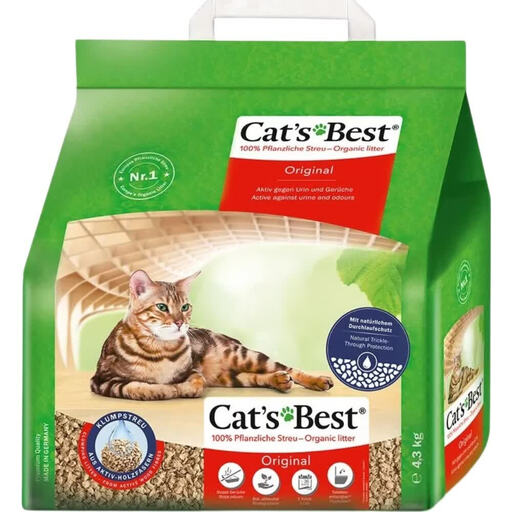
Why it suits this type of household : This clumping litter made from plant fibres weighs 4,3 kg for 10 litres, making it easy to carry and store.
Removing clumps means you don’t have to replace the entire contents of the tray. However, the claimed lifespan of 4 to 6 weeks will vary depending on the number of cats and how often you clean the tray.
Plant fibres, effective clumping, claimed absorption of up to seven times its volume and a composition described as compostable.
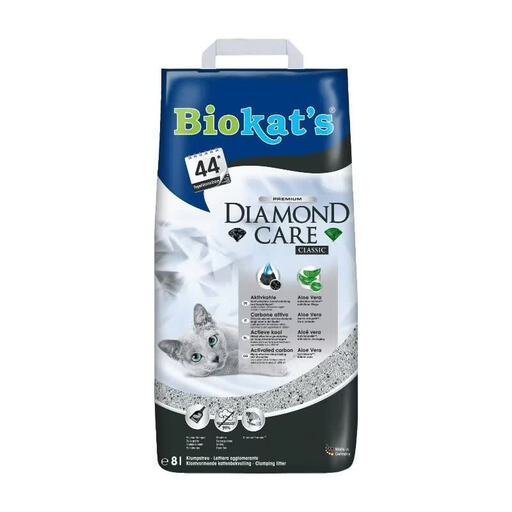
Why it suits this type of household : Made with natural clay, activated charcoal and aloe vera, this formula is designed for households looking for a precise, regular cleaning routine.
The flat clumps are designed to make targeted removal easier and can help reduce the amount of clean litter thrown away with wet patches.
Porous activated charcoal, a clumping texture and a claimed lifespan of up to 54 days, depending on use.
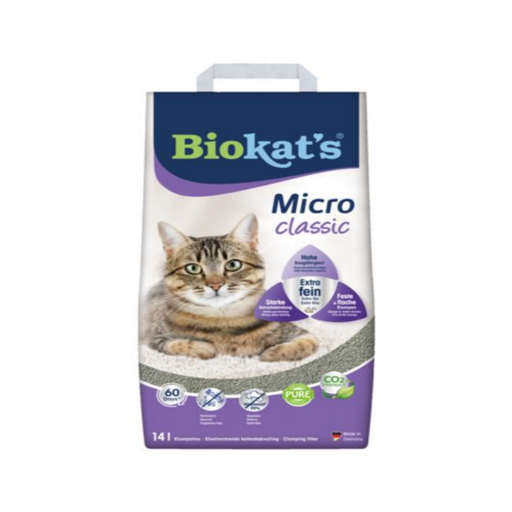
Why it suits this type of household : Its very fine granules and lack of added fragrance make it a good fit for those who care about texture and want to avoid artificial scents.
The brand claims up to 99 % less dust, but it’s still best to pour the bag slowly to minimise airborne particles.
Natural clay, no added fragrance, flat clumps and a 14 litre pack suitable for regular use.
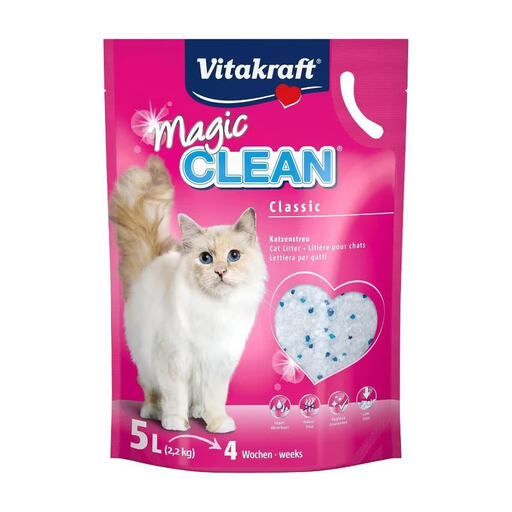
Why it suits this type of household : This non-clumping mineral bead litter is lightweight and is said to last for up to a month with one cat.
The 5 litre pack lets you try the product without committing to a large bag straight away.
Absorbent mineral beads, low weight and daily removal of solid waste without having to scoop out clumps.
We’ve put together a comprehensive selection, updated in real time, of products that meet these criteria and European safety requirements.
For clumping litter, a layer of around 5 to 7 cm is generally recommended. Paper litter and some plant-based products may need a different depth. Follow the instructions on the label and make sure your cat can dig without reaching the bottom of the tray.
How long it lasts depends on the material, the size of the tray, the number of cats and how regularly you clean it. You can top up clumping litter after removing the clumps, while non-clumping litter generally needs replacing completely more often. Manufacturers’ stated lifespans are estimates, not a guarantee that it will last the same amount of time in every home.
Compare the price per litre, but also consider how much litter you actually throw away each week. Litter that’s cheap to buy can end up costing more if you need to replace it frequently. Larger packs, absorbent plant fibres and targeted removal of clumps can help reduce how often you need to buy more, provided your cat likes the texture and you clean the tray every day.