
Livraison le jour même ou le lendemain

Qualité garantie

Débloquez vos offres de bienvenue: Livraison GRATUITE | Jusqu'à -80 % | 30 jours d'essai gratuits à JoyPlus
Téléchargez l'application
Choosing cat kibble seems simple… until you start comparing ingredients, pack sizes and feeding guidelines. Between a recipe that claims to be high in meat, a formula for neutered cats and an economical multi-kilo bag, the differences aren’t always where you’d expect them.
Three common pitfalls crop up time and again among cat owners in the UK:
A kitten’s needs are not the same as an adult cat’s. Kitten kibble should support growth, while adult cat kibble is generally suitable from 12 months, depending on the manufacturer’s instructions.
After neutering, activity levels and appetite can change. A formula designed for neutered cats may offer a different energy profile, but it doesn’t replace the need to monitor weight and portion sizes. For a cat that lives mainly indoors, indoor cat kibble should also be compared against its actual needs: activity, age, weight and any particular eating habits.
The ingredients list is presented in descending order by weight. Look closely at:
A recipe for chicken cat kibble, salmon cat kibble or beef cat kibble may also contain cereals, plant-based proteins or several animal derivatives. That’s not necessarily a bad thing, but it’s better to compare the whole composition rather than just focusing on the flavour highlighted on the pack.
Feeding tables are starting points, not universal doses. They should be adjusted based on weight, body condition, activity level and any treats given.
To keep your kibble in top condition:
A smaller pack lets you test how much your cat likes a recipe. A larger bag can be more practical for a multi-cat household, as long as it’s used up within a reasonable time.
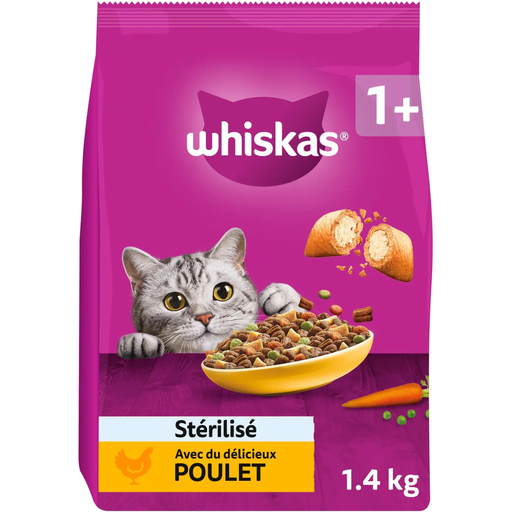
Why this choice suits this profile: This 1.4 kg bag lets you try a recipe designed for neutered adult cats without committing to a large pack straight away.
The label clearly states that this kibble is for neutered cats aged at least 1 year. The feeding amount should be adjusted according to weight and activity level.
The product details show 30% protein, 11.5% fat, 4.1% fibre and 1,340 mg/kg of taurine.
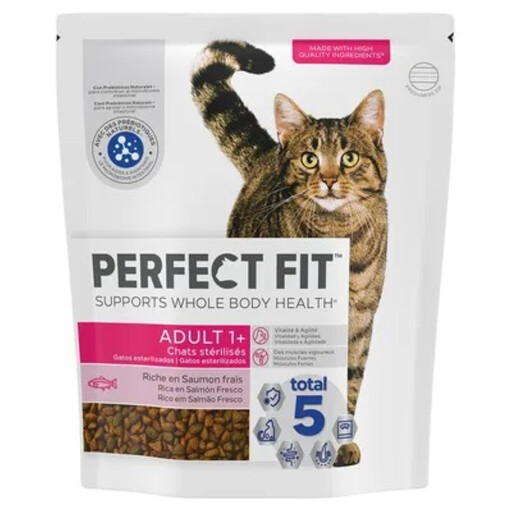
Why this choice suits this profile: This salmon recipe is for owners who want to examine a detailed ingredients list and a formula designed for neutered adult cats.
The ingredients list mentions 14% salmon, so you can actually verify the promise highlighted on the packaging.
The product details show 34% protein, 14.5% fat, 386 kcal/100 g and 1,390 mg/kg of taurine.
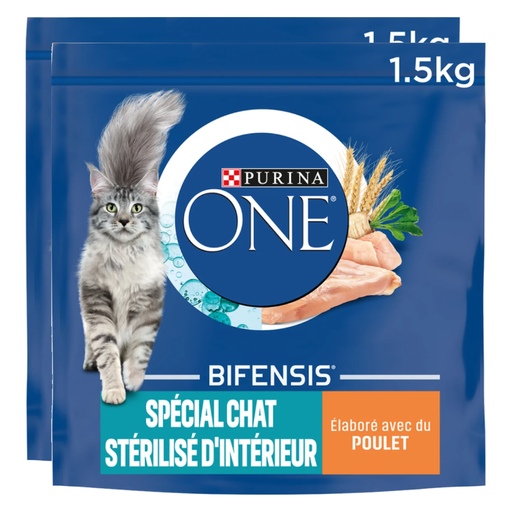
Why this choice suits this profile: This 3 kg multi-pack is ideal for a household that buys regularly for a neutered cat living mainly indoors.
The product details state that this kibble is suitable for neutered or spayed adult cats that live mainly indoors. It also recommends a 7-day transition period.
The recipe contains 15% chicken, 37% protein and 5.5% fibre, according to the information provided.
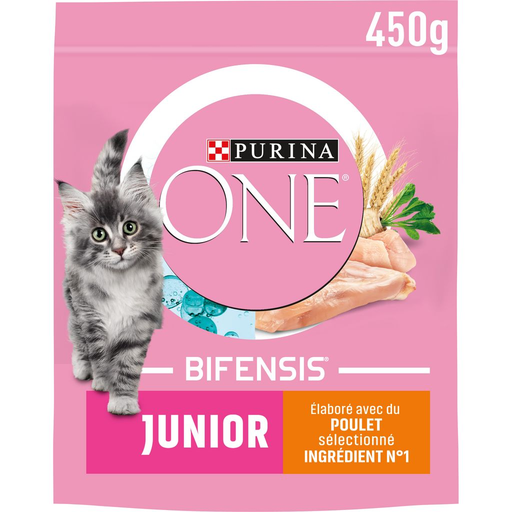
Why this choice suits this profile: This small pack lets you try a formula designed for kittens, from weaning up to 12 months, as well as for pregnant or nursing queens, according to the label.
The age range and feeding amounts for the different growth stages are clearly stated. This helps you avoid accidentally giving adult cat kibble to a young animal.
The product details mention 17% chicken, 41% protein, 20% fat and DHA in the analytical constituents.
We’ve put together a comprehensive, real-time updated list of products that meet these strict selection criteria and European safety standards.
It depends on the label and the pack size you choose. Seal the bag carefully and store it in a cool, dry place. If the smell, texture or appearance of the product changes, don’t feed it. Choosing a pack size that matches your household’s consumption usually prevents it from being stored for too long.
Yes. Gradually mix the new kibble with the old one over about 7 to 10 days, following the instructions on the product. This transition makes it easier to check that your cat accepts the recipe and digests it properly.
It’s better to choose a formula that matches the age stated on the packaging. A growing kitten’s needs are different from those of an adult or neutered cat. If you’re unsure, especially if your cat has a particular sensitivity, ask your vet for advice before changing its diet.