
Livraison le jour même ou le lendemain

Qualité garantie

Débloquez vos offres de bienvenue: Livraison GRATUITE | Jusqu'à -80 % | 30 jours d'essai gratuits à JoyPlus
Téléchargez l'application
Choosing the right cat food and treats isn't just about comparing flavours and promotions. Between dry kibble, wet food, mousses, fresh pouches and reward treats, each format affects your budget, storage and the balance of your cat's meals.
A product that looks particularly tempting on the shelf might not actually suit your cat's age, lifestyle or how you intend to use it. Here are the points to check before you place your order.
The term "complete food" means the product can form a balanced meal when served according to the manufacturer's recommendations. In contrast, a treat, a supplementary mousse or a liquid snack is generally a complementary food.
Chicken treats for cats, salmon treats for cats and liquid sticks therefore do not replace daily meals. Their quantity must be deducted from the daily ration to avoid overfeeding.
A product labelled "with chicken" or "with salmon" doesn't necessarily contain a large amount of the highlighted ingredient. Check the ingredients list and, where available, the quantitative ingredient declaration.
Some products in the Catisfactions range, for example, state 4% chicken or salmon. This information is far more telling than a simple picture of ingredients on the packaging.
Multipacks and boxes of cat food can sometimes lower the price per portion. The problem? Your cat might turn its nose up at a particular texture or flavour. Before opting for a pack of 24 or 48 portions, it's better to test a smaller box if you're not yet sure of its tastes.
With wet cat food, also think about the storage space available, the best-before date and how long it lasts once opened.
A kitten doesn't have the same needs as an adult cat. Start by checking the age category stated on the packaging. A wet food for adult cats, like some products shown below, isn't automatically suitable for a kitten.
For everyday meals, look for the phrase "complete food for adult cats". Kitten treats, on the other hand, may carry a specific indication, for example, suitable from 2 months of age.
Mousse for cats suits animals that prefer a smooth texture that's easy to lap up. Recipes in sauce and fresh pouches for cats offer a different experience, with more chunks and liquid.
As a guide, the wet foods shown here often have a moisture content between 78% and 86%. This value corresponds to the water content of the product, but isn't enough on its own to assess its nutritional quality.
Recommended quantities depend on your cat's weight, activity level and body condition. Use them as a starting point, then adjust based on the guidance on the label.
Once opened, wet food should generally be kept in the fridge and consumed within 24 to 48 hours, according to the manufacturer's recommendations. Dry treats should be stored in a cool, dry place, with the packet carefully resealed.
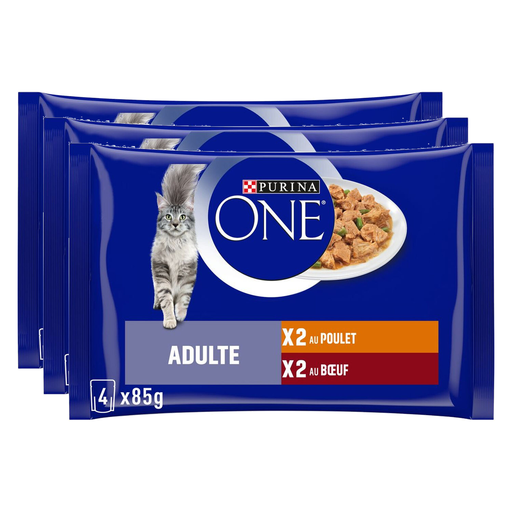
Why this choice suits this profile: This multipack of 12 x 85g pouches lets you try several recipes while enjoying easy-to-serve individual portions.
The listing presents it as a complete food for adult cats and specifies the quantities suitable for wet or mixed feeding.
12 portions of 85g, a stated moisture content of 78% and two recipes with chicken and beef.
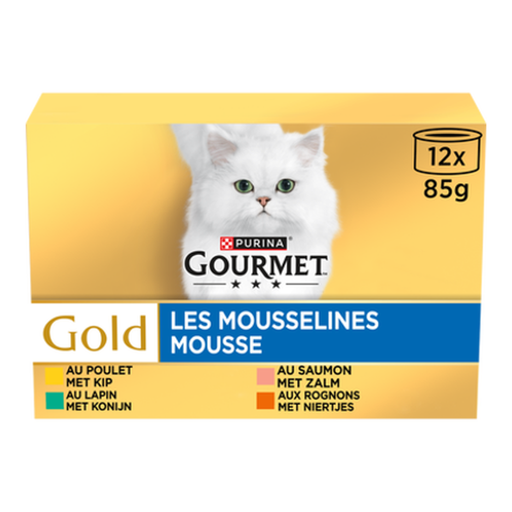
Why this choice suits this profile: Its mousse texture and recipes with chicken, salmon, kidney and rabbit are ideal for cats sensitive to consistency or bored of eating the same thing.
The listing details the different recipes and states that it is a complete food for adult cats, not just a treat.
A mousse texture, portioned 85g cans and an assortment of four flavours.
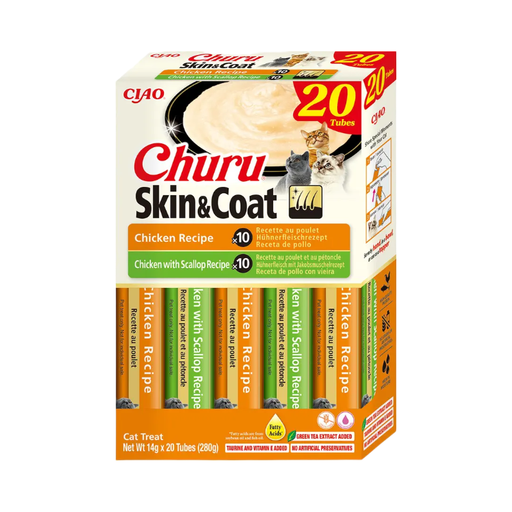
Why this choice suits this profile: The individual portions and purée texture make them easy to use for rewards, keeping your cat occupied or adding on top of kibble.
The listing states that it is a complementary food and recommends not exceeding 10% of the main dietary intake.
20 sticks of 14g, a stated moisture content of 86% and 30% chicken in the declared composition.
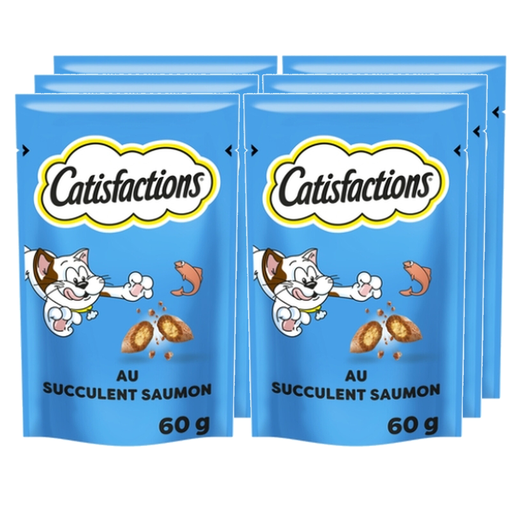
Why this choice suits this profile: This multipack is ideal for households that regularly give salmon treats, with separate recommendations for adult cats and kittens.
The packaging clearly states that it is a complementary food and specifies the daily limit according to age.
Six resealable pouches, fewer than 2kcal per treat according to the listing and a crunchy texture with a soft centre.
We've put together a comprehensive, real-time updated selection of products that meet these selection criteria as well as European safety requirements.
Yes, mixed feeding is perfectly possible, as long as you adjust the total amount served. Use the manufacturer's recommendations for both wet food and kibble, then regularly monitor your cat's weight and body condition. Fresh water should always be available.
Most product listings recommend storing wet food in the fridge and consuming it within 24 to 48 hours. Transfer the remaining portion to an airtight container and always refer to the product's own instructions.
Treats remain a supplement and should not replace meals. Stick to the maximum quantity stated on the packaging and slightly reduce the main ration if needed. If your cat tends to gain weight or is on a specific diet, ask your vet for advice before changing its diet.