
Livraison le jour même ou le lendemain

Qualité garantie

Débloquez vos offres de bienvenue: Livraison GRATUITE | Jusqu'à -80 % | 30 jours d'essai gratuits à JoyPlus
Téléchargez l'application
Choosing cat food can quickly become a headache when you’re faced with claims such as ‘with salmon’, ‘grain-free’, ‘high in meat’ or ‘premium’. But these promises alone aren’t enough to tell you whether a product is suitable for your pet’s everyday diet. For an adult cat, particularly one that is neutered or prone to food sensitivities, it’s best to check whether the food is complete, look at its ingredients and choose the most practical format for your household.
A tin of wet food, a treat or a pouch may sound appetising without being suitable as a meal replacement. The label ‘complete pet food for adult cats’ means the product is formulated to provide a cat’s daily food allowance, in line with the manufacturer’s recommendations. Cat treats, on the other hand, are generally complementary foods.
Catisfactions treats are a good example: they can complement a balanced diet, but shouldn’t replace main meals. Their ingredients include 4% salmon, and each treat is stated to contain fewer than 2 kcal. The amount you give your cat should still fit within their daily food allowance.
A salmon cat food pâté doesn’t necessarily contain mostly salmon. In the 400 g AP terrine, fish and fish derivatives make up the relevant ingredient group, with 4% salmon. This proportion allows the product to be labelled ‘contains salmon’, but it doesn’t mean salmon is the main ingredient.
The same caution applies to salmon cat biscuits. Whiskas biscuits for neutered cats state that the brown pieces contain 4% salmon, while cereals appear first on the ingredients list. So it’s best to read the whole label rather than judging by the picture on the pack or the flavour highlighted on the front.
A multipack of cat food can bring down the cost per portion, as long as it suits how much your household actually uses. Once opened, wet food will generally keep in the fridge for 24 to 48 hours, depending on the manufacturer’s instructions. Individual 85 or 100 g pouches make portioning easier and help reduce waste, while a 400 g tin may suit a cat that regularly eats wet food.
For an adult cat, start by choosing a product clearly labelled complete food. Dietary needs vary depending on age, activity level, weight and whether your cat has been neutered. Food for neutered cats may have a different energy density or recommended portion size, but you should always adjust the amount to your cat’s body condition.
If your cat has a known food sensitivity, check all the protein sources in the recipe. A ‘single-protein’ formula is only useful if its ingredients genuinely suit your needs. If your cat has a reaction to food or a specific health concern, ask your vet for advice.
Wet cat food, whether pâté or a pouch meal, generally contains much more water than dry food. Recipes in this category often have a moisture content of over 70%. They offer a variety of textures and meals, but need to be kept in the fridge once opened.
Dry cat food is easier to store and portion. You should still always leave fresh water available. The feeding guidelines on the pack are a starting point: adjust them to your cat’s weight, activity level and physical condition.
Ingredients are listed in descending order by weight. Claims such as grain-free, high in protein or premium cat food should be checked against the analytical constituents and full ingredients list.
For example, the Petty Croq.Chat salmon recipe contains 28% dehydrated fish, including 14% tuna and 14% salmon, as well as peas and potato. It’s described as complete food for adult cats, including neutered cats. Even so, you should still check the daily portion and how well your cat tolerates it.
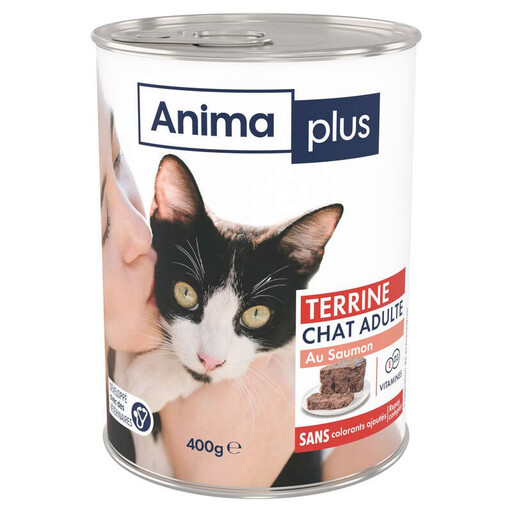
Why this suits this type of shopper: This 400 g terrine is complete food for adult cats, with a wet texture. The recommended amount is around one tin a day for a 4 kg cat with a normal activity level.
It’s clearly labelled as complete food. The salmon content is also specified as 4%, so you won’t overestimate how much of this ingredient it contains.
Pâté texture, stated moisture content of 82% and added taurine at 300 mg/kg.
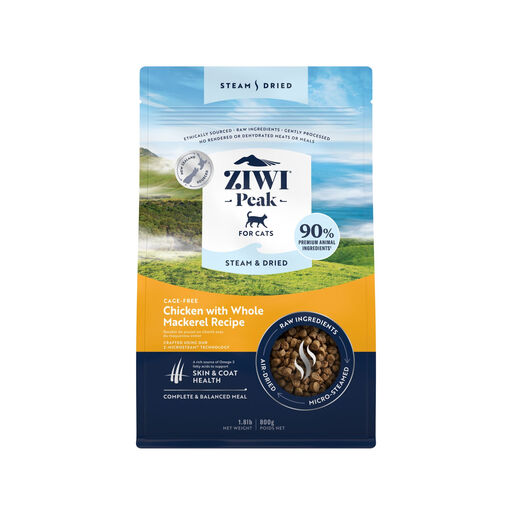
Why this suits this type of shopper: This 800 g pack is for households looking for a dry recipe rich in animal-based ingredients and easier to store than wet food.
The full ingredients list states that 90% of the ingredients are animal-based, going beyond a simple flavour claim.
Complete air-dried food, with chicken, offal, whole fish and animal fats clearly listed in the ingredients.
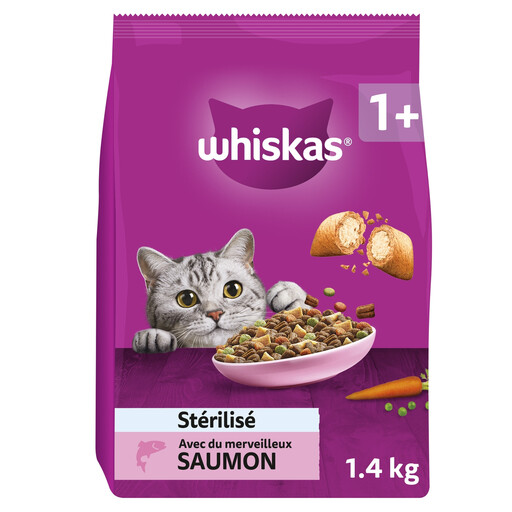
Why this suits this type of shopper: This product is described as cat food for neutered cats aged one year and over. It comes in a 1.40 kg bag, making it a practical choice for households that want easy storage and precise portioning.
The recipe is specifically intended for neutered adult cats. It’s still essential to follow the recommended portion and keep an eye on your cat’s weight.
Resealable dry-food pack, salmon recipe, and stated chicory and cellulose content of 2% each.
We’ve put together a comprehensive selection, updated in real time, of products that meet these strict selection criteria and comply with European safety regulations.
The amount depends on your cat’s weight, activity level and age, as well as the format and energy density of the recipe. Check the feeding guide on the packaging, then gradually adjust portions while keeping an eye on your cat’s body condition. If you feed a mixed diet, remember to include the calories from wet food, dry food and treats.
The two formats suit different needs. Wet food contains more moisture and often comes in individual portions that are easy to serve. Dry food is easier to store and can be portioned in advance. A combination of both can work well, as long as the total daily allowance is appropriate and fresh water is always available.
Put any leftovers in a sealed container in the fridge and follow the manufacturer’s instructions. Many products recommend using them within 24 to 48 hours. Serve the wet food at room temperature, and throw it away if its appearance, smell or packaging seems unusual.