
Livraison le jour même ou le lendemain

Qualité garantie

Débloquez vos offres de bienvenue: Livraison GRATUITE | Jusqu'à -80 % | 30 jours d'essai gratuits à JoyPlus
Téléchargez l'application
Choosing a cat food isn’t just about comparing the price of a bag of kibble or the flavour of a pouch of wet food. Your cat’s age, whether they’ve been neutered, their activity level and digestive sensitivity all play a part. And marketing claims can quickly muddy the waters.
A wet cat food labelled as a “complete food” is designed to be the main meal, following the feeding guidelines on the packaging. In contrast, a treat or a cat food supplement may not cover all of your cat’s nutritional needs.
INABA CHURU CAT Chicken, for example, is a lickable purée, ideal as a reward or a topper. It contains 30% chicken and up to 90.5% moisture, but the label clearly states it is a complementary food. Its quantity should not exceed 10% of the daily intake.
A high-protein cat food can suit certain cats, but the figure on the packet alone isn’t enough to judge a product. You also need to look at moisture, fat, fibre, minerals and whether it’s appropriate for your cat’s age.
The percentages shown for dry and wet foods can’t be compared directly: wet food contains much more water. It’s better to compare products of the same type and consider the daily portion rather than focusing on a single marketing claim.
Grain-free cat kibble usually replaces wheat or maize with potatoes, peas or other starch sources. This formulation may suit a preference or a specific need, but it doesn’t guarantee superior quality on its own.
Read the ingredients list in descending order of weight and check the legal designation: “complete food” or “complementary food”. If your cat has allergies, ongoing digestive issues or needs a therapeutic diet, ask your vet for advice.
Kitten food must support growth and meet specific nutritional needs. Purina One Bifensis Kitten Chicken is described as suitable for kittens after weaning and up to 12 months, as well as for pregnant or nursing queens. Its product information shows 41% crude protein and 20% fat.
For an adult cat, choose a recipe that matches their age and activity level. A kitten formula can be too energy-dense for a less active adult.
After neutering, a cat’s activity and energy needs can change. A food for neutered cats should therefore be measured according to weight, body condition and daily exercise, rather than being left out freely.
Purina One Bifensis Sterilised Adult with beef shows 37% protein and 13% fat, with a gradual transition recommended over seven days. ULTIMA Sterilized Digestive Health with trout shows 35% protein and 12.5% fat. These figures don’t mean one recipe will suit every cat: the portion guide on the packet is always the essential starting point.
Wet cat food provides more water than kibble, but it must be served and stored correctly. Once opened, pouches should generally be kept in the fridge and used within the time stated on the packaging, often 24 to 48 hours.
Serve wet food at room temperature and always leave a bowl of fresh water available. For kibble, reseal the bag carefully, store it in a dry place and use the contents preferably within a few weeks of opening to preserve its smell and texture.
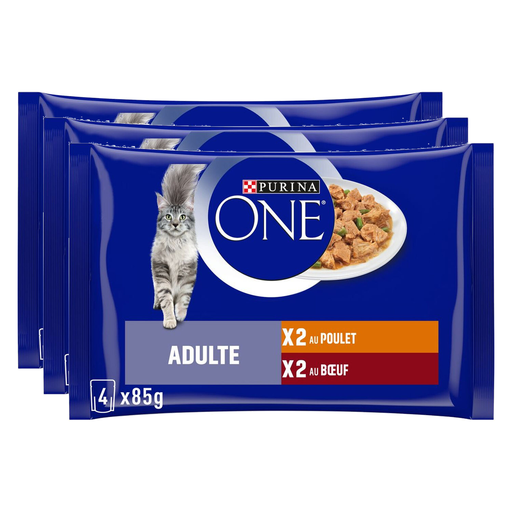
Why this product could suit your cat: Individual pouches, convenient for trying wet food or portioning out meals for an adult cat.
The product page clearly distinguishes the complete food from treats and provides a suggested portion for a cat of around 4 kg.
Complete food for adult cats, with 12% crude protein and 78% moisture according to the product information.
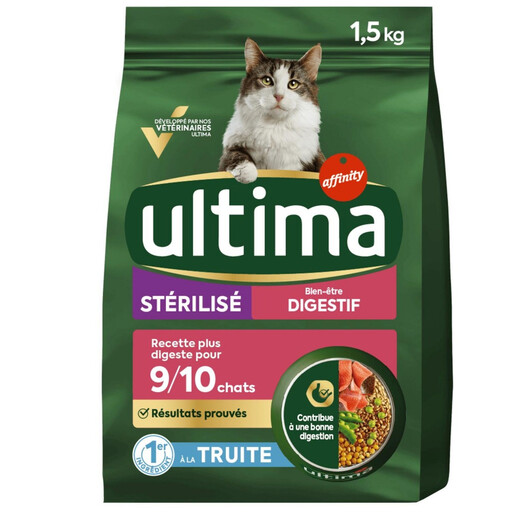
Why this product could suit your cat: A dry formula designed for neutered adult cats, with portions to adjust according to weight and activity level.
The “sterilised” label doesn’t mean you can skip weighing the portion or monitoring weight changes.
35% crude protein, 12.5% fat and taurine listed in the additives.
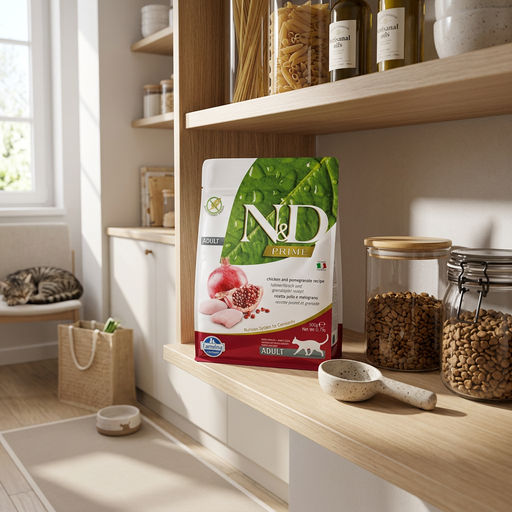
Why this product could suit your cat: The small pack size lets you test how your cat takes to a recipe without committing to a large bag straight away.
The recipe lists deboned chicken separately at 30% and dehydrated chicken protein at 28%, rather than relying on a vague claim.
44% crude protein, 20% fat and 8% moisture according to the data provided.
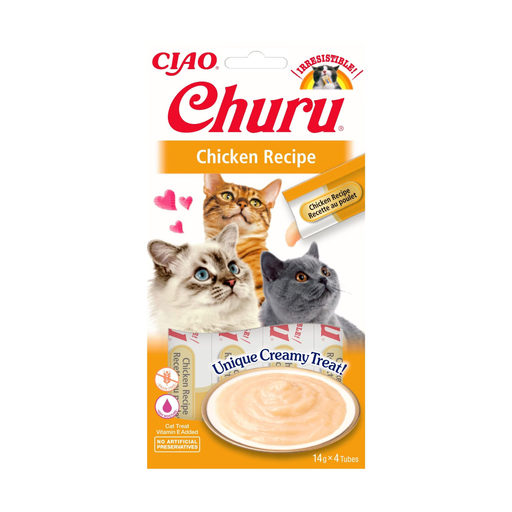
Why this product could suit your cat: A creamy, lickable texture, handy for rewarding a fussy cat or encouraging them to take in a little more water, without replacing a meal.
The product page states it is a complementary treat and recommends one to two sticks per day, not exceeding 10% of the daily portion.
30% chicken, 90.5% moisture and 0.5% fat according to the product information.
We’ve put together a regularly updated selection so you can compare formats and uses before placing an order.
Yes, a mixed diet is perfectly fine as long as both products suit the same cat profile and the total amount is controlled. When you add wet food, reduce the portion of kibble accordingly. The guidelines on each pack are a starting point, then you adjust based on your cat’s weight and activity.
There’s no one-size-fits-all portion. Check the table on the packet, weigh the food with scales and regularly monitor your cat’s body condition. Any change in diet should be made gradually, over several days, to minimise digestive upset.
No. Cat treats, whether creamy pastes or lickable sticks, are complementary foods. They should be given occasionally and deducted from the daily portion. A bowl of clean, fresh water must always be available.