
Livraison le jour même ou le lendemain

Qualité garantie

Débloquez vos offres de bienvenue: Livraison GRATUITE | Jusqu'à -80 % | 30 jours d'essai gratuits à JoyPlus
Téléchargez l'application
Juggling a busy schedule, travel, and your cat's meal times can be a real challenge. To ensure their well-being (and your peace of mind!), it's essential that they eat at fixed times and in the right amounts. This is where a cat food dispenser becomes an invaluable ally to automate this routine.
This guide is here to break down the essential selection criteria and present our pick of the best models, helping you find the device that will perfectly fit your daily life and your feline's habits.
The market is flooded with models, from the most basic to the most high-tech. To sort through the options and make an informed choice, here are the key points to consider.
The method for scheduling meals is a decisive factor. There are two main categories:
The hopper's capacity, measured in liters, determines how long you can go without refilling. To give you an idea, a 4-liter hopper can feed an adult cat for 20 to 30 days. Ideal for going on holiday with peace of mind.
Precise portion control is just as crucial for managing your cat's weight. Make sure the programmable dispenser you're considering allows you to finely calibrate the amount of kibble for each meal, so you can stick closely to your vet's recommendations.
Some models do more than just dispense kibble. A dispenser with a camera allows you to check in and even talk to your pet, a reassuring feature for everyone. Other options to consider include:
To guide you, we've selected three models with varied profiles that stand out for their features and design.
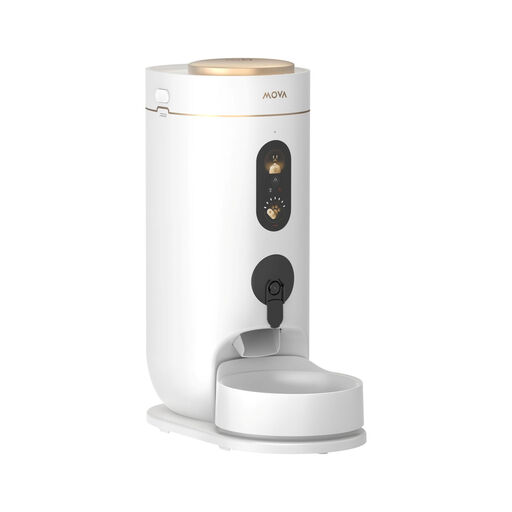
Why It Stands Out
This model stands out from the crowd with its 7-section supplement compartment, a unique feature for automatically dispensing your cat's dietary supplements or medication along with their food. Combined with its HD camera and app, it offers ultra-comprehensive nutritional tracking.
Pros
Who is it for?
For discerning owners looking for an all-in-one solution, especially if their pet needs regular supplements. A perfect choice for those who travel often and want to keep an eye (and an ear) on their four-legged companion.
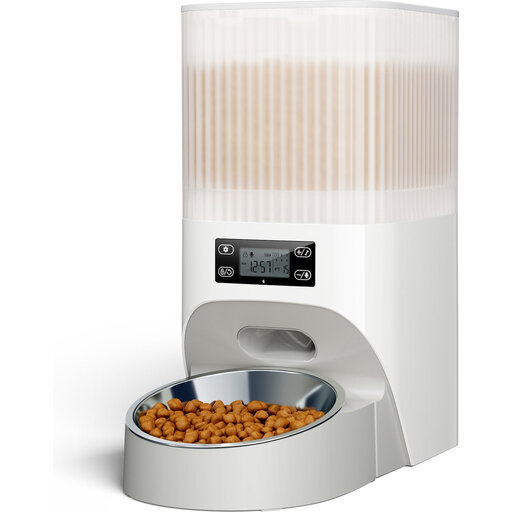
Why It Stands Out
The Faroro PF21 is all about simplicity and reliability. No Wi-Fi or app here: everything is programmed via the intuitive LCD screen and its buttons. Its dual power supply (mains and batteries) makes it a safe, completely self-sufficient bet.
Pros
Who is it for?
For those who want a reliable and effective automatic feeder without the hassle of connected features. The perfect solution for managing daily meals, whether you're at the office or away for the weekend.
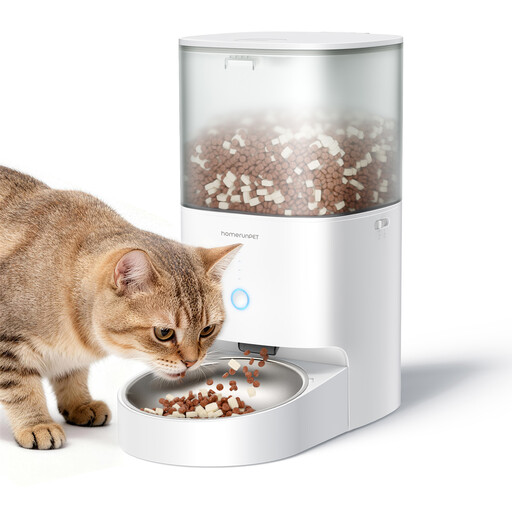
Why It Stands Out
This model successfully combines connectivity with record-breaking battery life. Controllable from an app, its very low power consumption gives it a battery life of up to 6 months! Its triple freshness-preservation system is another major asset for keeping kibble crunchy.
Pros
Who is it for?
For those who love the convenience of an app but want complete wireless freedom. Its extra-long battery life and preservation system make it a smart choice for ensuring fresh, timely meals, no matter what.
Our selection is just a starting point. Because every cat and every home is unique, don't hesitate to explore other options.
To discover a wider range of devices with different designs, capacities, and features, take a look at our complete category of cat food dispensers.
It all depends on the number of cats, their appetite, and the length of your absences. For a single adult cat, a 4-liter hopper is an excellent benchmark, offering 3 to 4 weeks of autonomy. If you have several furry friends or are planning a long holiday, a 5 or 6-liter model will be more convenient.
The usefulness of a dispenser with a camera is primarily a personal matter. For many owners, it's a source of peace of mind: you can check at any time that your cat is okay and has eaten. The two-way microphone can even help calm a slightly anxious pet. It's not essential, but it's a real plus for those who like to stay connected with their companion.
To reduce the risk of jamming, opt for a model with a proven dispensing mechanism (silicone paddle wheel, impeller...). Strictly adhere to the maximum kibble size specified by the manufacturer (often between 12 and 15 mm in diameter). Finally, regular cleaning of the hopper and mechanism is the best way to prevent the build-up of kibble dust, which is often the cause of blockages.