
Livraison le jour même ou le lendemain

Qualité garantie

Débloquez vos offres de bienvenue: Livraison GRATUITE | Jusqu'à -80 % | 30 jours d'essai gratuits à JoyPlus
Téléchargez l'application
Choosing cat food is not simply a matter of comparing prices per kilo. Between dry cat food, wet food, recipes for sterilised pets and multipacks with a range of flavours, it is easy to get confused. Whether your adult cat lives indoors or is particularly active, a few simple checks can help you avoid unsuitable purchases.
Wet food or dry food labelled “complete food” is designed to form the daily basis of your cat’s diet, provided you follow the manufacturer’s guidance. Cat treats, on the other hand, are complementary foods. They should only be given occasionally and must be deducted from the daily allowance.
For example, WHISKAS Temptations Salmon, 360 g are presented as a complementary food. The recommendation allows up to 12 treats per day for an adult cat, while reducing the main food allowance to avoid excessive energy intake.
A recipe “with chicken”, “with salmon” or “with beef” does not necessarily mean that the highlighted ingredient makes up most of the product. Instead, check the stated percentage and the order of the ingredients. For Gourmet Gold products, recipes labelled “with chicken”, “with salmon”, “with rabbit” or “with kidney” indicate 4% of the relevant ingredient.
This check helps you avoid paying more for a description that ultimately refers to only a small part of the recipe.
A 7 or 12 kg bag of dry cat food can reduce the cost per portion, but it must be properly resealed and stored in a dry place. Once opened, the aroma and texture may gradually deteriorate. For a household with just one cat, a smaller pack will often help avoid storing the food for too long.
For wet cat food, pouches and individual tins make portioning easier. Any opened portion should be stored in the fridge and used within the time stated on the packaging, usually within 24 to 48 hours depending on the product.
Kittens, adult cats and senior cats do not have the same nutritional needs. The products featured here are mainly intended as adult cat food, generally for cats aged 1 year and over. A sterilised-cat formula may be suitable if your cat tends to gain weight after sterilisation, but the portion should always be adjusted to its activity level and body condition.
An indoor-cat recipe may also take a less energy-demanding lifestyle into account. However, you should still monitor your cat’s weight and body shape regularly.
The fat content alone is not enough to compare two foods. Also check the recommended daily allowance, given in grams or pouches, then calculate the actual cost per day.
As a guide, WHISKAS Adult Sterilized with Chicken, 7 kg contains 30% protein, 11.5% fat and 4.1% crude fibre. The product information recommends portions of 30 to 75 g per day for cats weighing between 2 and 6 kg, adjusted according to their activity level and metabolism.
Wet foods naturally have a high moisture content. The Gourmet Gold Mousse, 12 × 85 g multipack, for example, states 82% moisture, 9% protein and 5% fat. Wet foods provide variety in texture and water intake, while dry food is easier to store and serve.
In all cases, check:
If your cat has a food sensitivity, urinary problem, significant change in weight or digestive issue, ask a vet for advice before changing its allowance.
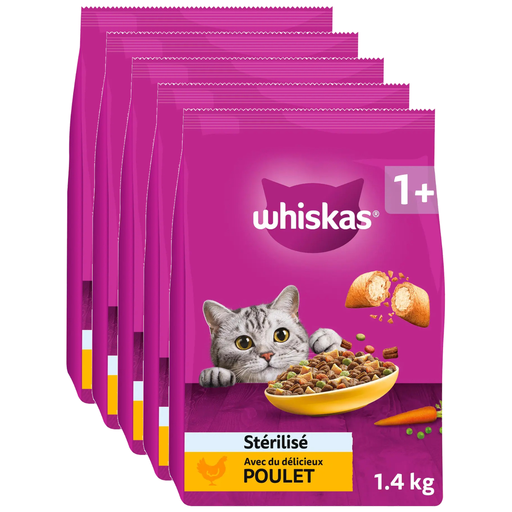
Why this choice suits this profile : This large bag of dry food for sterilised cats is ideal for households looking for a simple routine and a family-sized pack.
The product information specifies the cat’s age, portions based on weight and storage conditions, rather than relying solely on a general claim about sterilisation.
7 kg pack, 30% protein, 11.5% fat and a gradual changeover recommended over 7 to 10 days.
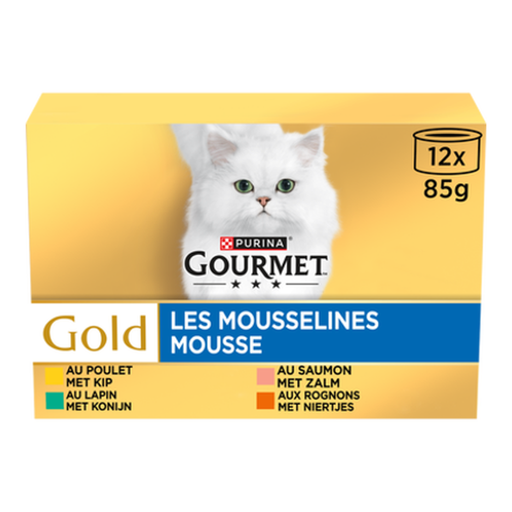
Why this choice suits this profile : Its mousse texture and four recipes add variety to mealtimes, which is ideal for households that value diversity in their cat’s bowl.
Its complete-food status and analytical constituents are clearly stated, helping you distinguish a tasty meal from a simple treat.
12 × 85 g tins, 82% moisture and recipes with chicken, salmon, kidney and rabbit, depending on the variety.
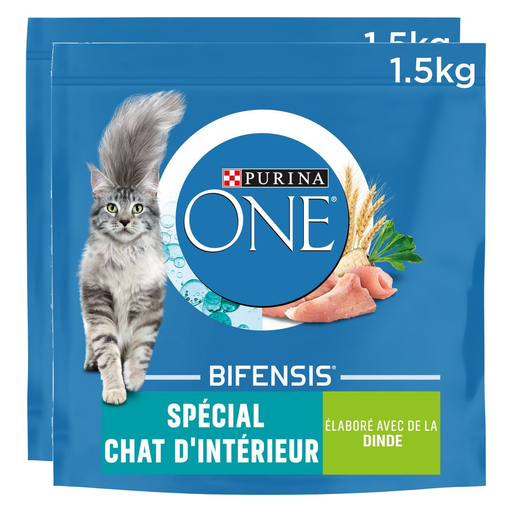
Why this choice suits this profile : This indoor-cat formula is designed for owners who want dry food with features suited to a less active lifestyle.
Its suitability for indoor cats is clearly stated, and the product information recommends a gradual dietary change over 7 days.
3 kg pack, 36% protein, 13% fat and 2% chicory root in the ingredients.
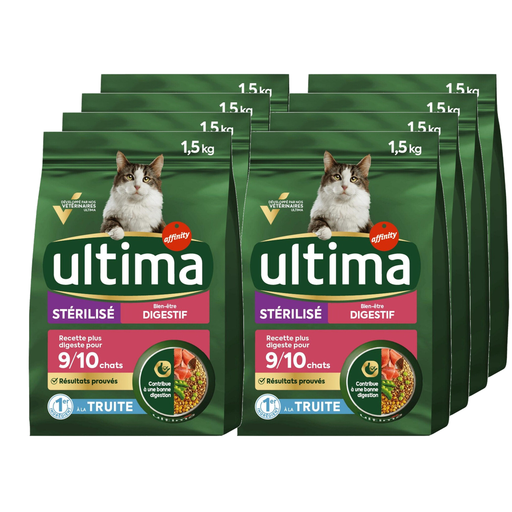
Why this choice suits this profile : This large pack is well suited to regular consumption, particularly in households with several sterilised cats.
The ingredients and analytical values are detailed, with clear guidance to keep the product dry and ensure fresh water is always available.
12 kg, 35% protein, 12.5% fat and 16% trout according to the stated composition.
We have put together a complete, real-time updated list of products that meet these strict selection criteria and European safety regulations.
Both formats can easily be part of a complete diet. Dry food is easy to portion and store, while wet food provides a different texture and plenty of moisture. A mixed diet may suit some cats, provided you adjust the total quantity and follow the guidance given on the packaging.
It depends on the date shown on the pack, the size chosen and the storage conditions. Reseal the bag after each use or transfer the dry food to a clean, airtight container, kept in a cool, dry place away from direct sunlight. There is no need to automatically buy the largest pack if your cat eats only small amounts.
Plan a gradual changeover over around 7 days, mixing increasing amounts of the new recipe with the old one. Monitor your cat’s appetite, stools and behaviour. If a reaction persists or a particular problem develops, ask a vet for advice.