
Livraison le jour même ou le lendemain

Qualité garantie

Débloquez vos offres de bienvenue: Livraison GRATUITE | Jusqu'à -80 % | 30 jours d'essai gratuits à JoyPlus
Téléchargez l'application
Choosing cat food is not simply a matter of comparing flavours or bag sizes. Between “rich in…” claims, recipes designed for a specific age and family-sized formats, certain mistakes can lead to an unsuitable purchase — or even waste.
Here are the main points to check before choosing dry cat food, kitten food or cat treats.
Complete food is formulated to meet an animal’s daily nutritional needs when given according to the manufacturer’s recommendations. A treat, by contrast, is a complementary food: it does not replace the main meals.
Catisfactions chicken treats, for example, are presented as treats for adult cats. The recommendation is up to 12 pieces a day, depending on the animal’s weight, activity level and metabolism. Their calories should be deducted from the usual daily ration to avoid overfeeding.
The presence of an ingredient in a product name does not necessarily mean it is the main component of the recipe. Check the ingredients list and the percentage shown on the packaging. In Catisfactions salmon treats, salmon accounts for 4% of the composition. This is therefore a flavour, rather than a recipe made primarily from fish.
European regulations on pet food labelling govern claims relating to ingredients. The quantitative ingredient declaration, or QUID, can help you verify descriptions such as “with chicken” or “with salmon”.
A 7 kg bag can be worthwhile in a household with several cats. However, it may be less suitable if your pet quickly tires of its food or if its needs are likely to change. Also check its age and neutering status. A recipe for a neutered adult cat is not suitable for a kitten or a pregnant or nursing female.
For everyday meals, look for the wording complete food for cats or complete food for kittens. Treats, reward bites and snacks generally carry the wording complementary food.
This distinction is particularly important for the following products:
A growing kitten does not have the same nutritional needs as an adult. The Purina One Bifensis Kitten chicken recipe is advertised for kittens from weaning to 12 months, as well as for pregnant or nursing females. Its product information includes 41% crude protein and 20% crude fat.
For a neutered adult cat, the Whiskas range shown here is indicated from 1 year onwards. The recommended quantities range from 30 to 45 g per day for a cat weighing 2 to 3 kg, up to 65 to 75 g for a cat weighing 5 to 6 kg. These figures are only a guide: monitor your cat’s weight and adjust the ration if necessary, seeking advice from a vet or another animal health professional where appropriate.
Do not focus solely on the protein level. Also check the fat, fibre, crude ash and nutritional additives. Water content is another useful indicator when comparing dry cat food with wet food.
After opening, reseal the bag or pouch carefully. The product information for the items featured recommends storing them in a cool, dry place and consuming them within four weeks for certain products. Always make sure your cat has access to a bowl of fresh water.
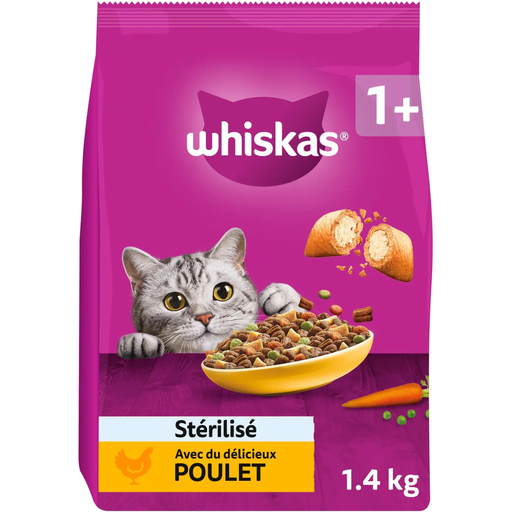
Why this choice suits this profile : Its 1.4 kg format lets you try it out without tying up a significant part of your budget in a large bag.
The product information specifies that this is a complete food for neutered adult cats aged 1 year and over, rather than a recipe intended for kittens.
30% crude protein, 11.5% crude fat and feeding recommendations based on weight.
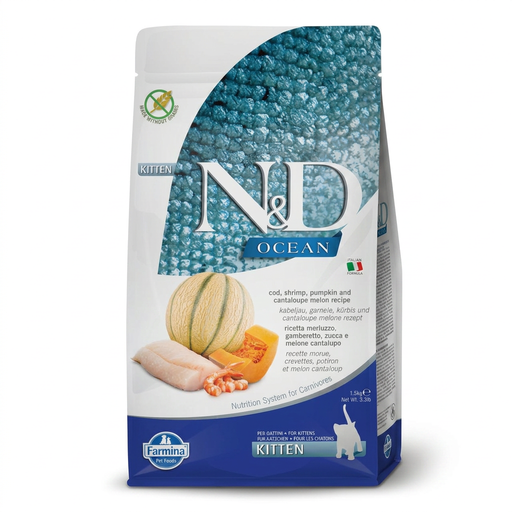
Why this choice suits this profile : Its 1.5 kg format is ideal for owners who prefer to try a specific recipe before moving on to a larger bag.
This product is clearly intended for kittens. Even so, check the composition and feeding quantities shown on the packaging before buying.
A cod-based recipe in a medium-sized format, making it easy to test whether your kitten enjoys it.
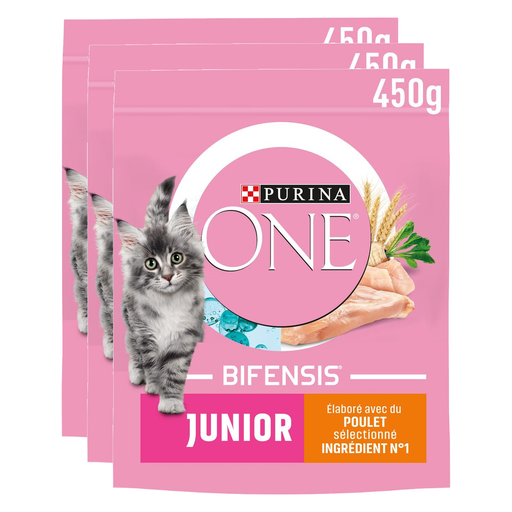
Why this choice suits this profile : The feeding recommendations for each age range make it easier to monitor a kitten throughout its growth.
The recommended age range is clearly stated as from weaning to 12 months, helping you avoid accidentally choosing adult cat food.
17% declared chicken, 41% crude protein and a 1.35 kg format.
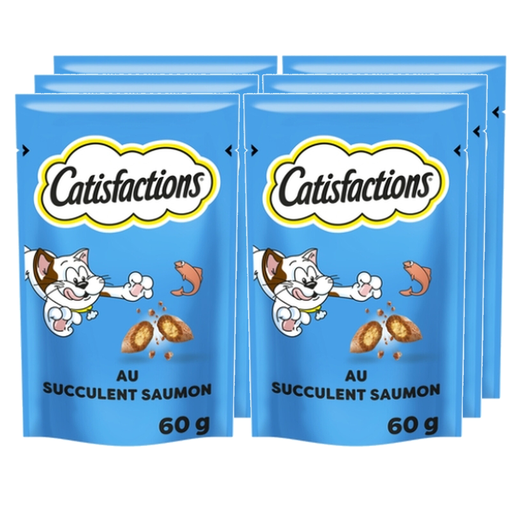
Why this choice suits this profile : The resealable pouches and six-portion pack make it practical to give rewards regularly.
The product information confirms that these are complementary treats, with a stated limit of 20 pieces per day for an adult and 6 for a kitten.
4% declared salmon, fewer than 2 kcal per treat according to the product information, and easy-to-store resealable pouches.
We have put together a complete selection, updated in real time, of products that meet these selection criteria and comply with European safety regulations.
The amount depends on weight, age, activity level, recipe and neutering status. Refer to the table on the packaging, then regularly monitor your cat’s body shape and weight.
A kitten recipe is designed to support growth and may be richer in nutrients. It should not be chosen as an adult’s everyday food without a specific reason. Always check the target age stated by the manufacturer.
No. Both Catisfactions chicken and salmon treats are complementary foods. They are intended as rewards or snacks and should remain a small part of your cat’s daily food intake.